
Waterproof Coatings for Container Houses
The selection of waterproof coatings for container houses should be based on a comprehensive consideration of waterproof performance, weather resistance, construction convenience, and cost. Here are specific recommendations and construction points:
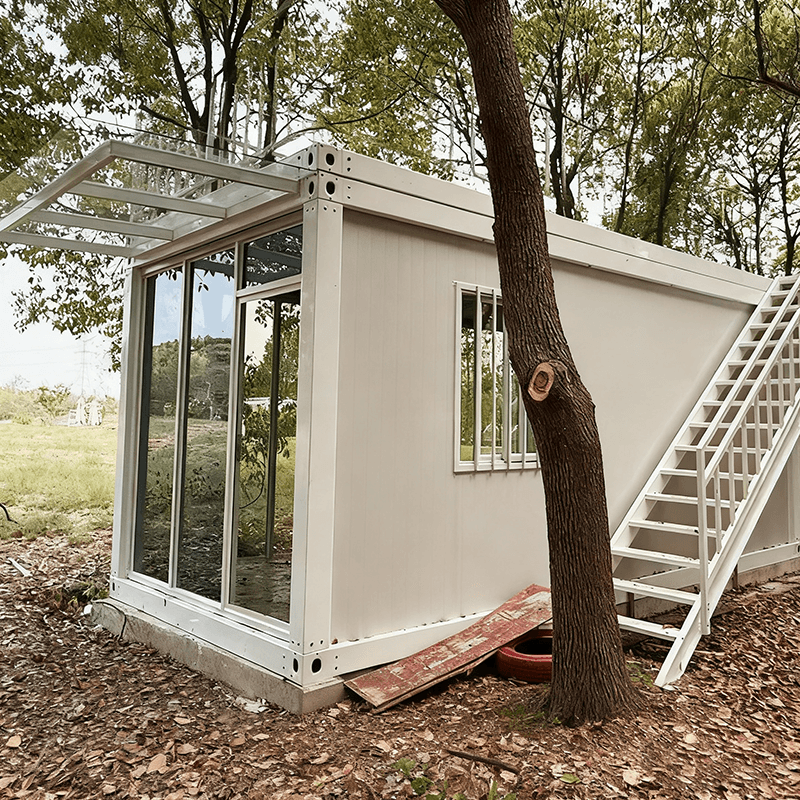
I. Types of Waterproof Coatings and Their Applicable Scenarios
Anti-radiation Insulation Waterproof Coating With polymer glass microspheres as the core material, it has a low thermal conductivity of 0.026W/(m·K), combining both insulation and waterproof functions. It reduces indoor temperature by reflecting solar radiation, making it suitable for container house roofs in hot and rainy regions or those exposed to sunlight for long periods, effectively minimizing structural damage caused by thermal expansion and contraction.
Acrylic Waterproof Coating With a purity of up to 99%, it has good water solubility, dries quickly, and is easy to apply (either by brushing or spraying). It has strong weather resistance and outstanding environmental friendliness, making it suitable for temporary housing, office containers, and other scenarios with high requirements for indoor air quality.
Rubber Asphalt Waterproof Coating It has excellent elasticity and crack resistance, adapting well to complex-shaped roofs (such as curved or angular structures). With strong aging resistance, it is suitable for frequently moved temporary buildings, capable of withstanding vibrations and deformations during transportation.
Polyurethane Waterproof Coating It has strong stability and outstanding compressive waterproof performance, especially suitable for container door panels and other parts that need to withstand mechanical pressure. Priced at approximately 35 yuan per square meter (in Laiwu, Shandong, etc.), it offers good cost-effectiveness.
Specialized Anti-radiation Insulation Coatings (e.g., Shuanghong, Naiboshi) Shuanghong coating (210 yuan per barrel, Guangzhou, Guangdong) is suitable for cement roofs, color-steel tiles, and containers, combining insulation and waterproof functions; Naiboshi coating (333 yuan per kilogram, Guangzhou, Guangdong) additionally has the function of weakening radar electromagnetic waves, suitable for the special needs of vehicle and container roofs.
II. Key Construction Considerations
- Surface Preparation: Thoroughly clean the roof before construction to remove oil, dust, and loose materials, ensuring good adhesion between the coating and the substrate.
- Application Technique: It is recommended to use brushing or spraying, with a thickness controlled between 0.4-0.6mm. Apply in two coats with an interval of no less than 4 hours to avoid coating cracking.
- Environmental Conditions: Construction should be carried out at temperatures between 5-35℃, avoiding rainy days or periods of high-temperature exposure to prevent the coating from being washed away by rain before curing or performance degradation due to rapid evaporation at high temperatures.
III. Selection Recommendations For hot and humid regions, prioritize anti-radiation insulation coatings; for scenarios with high environmental requirements, choose acrylic coatings; for frequently moved buildings, recommend rubber asphalt coatings; for door panels and other pressure-bearing parts, polyurethane coatings are suitable. Before construction, conduct a comprehensive assessment based on budget, usage environment, and functional requirements, and consult professional suppliers or conduct small-area tests if necessary.



