
Container House Villa
A container house villa is a low-cost, personalized living space formed by transforming and combining containers as the basic structural units. It features green environmental protection and flexibility, but attention should be paid to issues such as thermal insulation, rust prevention, and approval procedures.
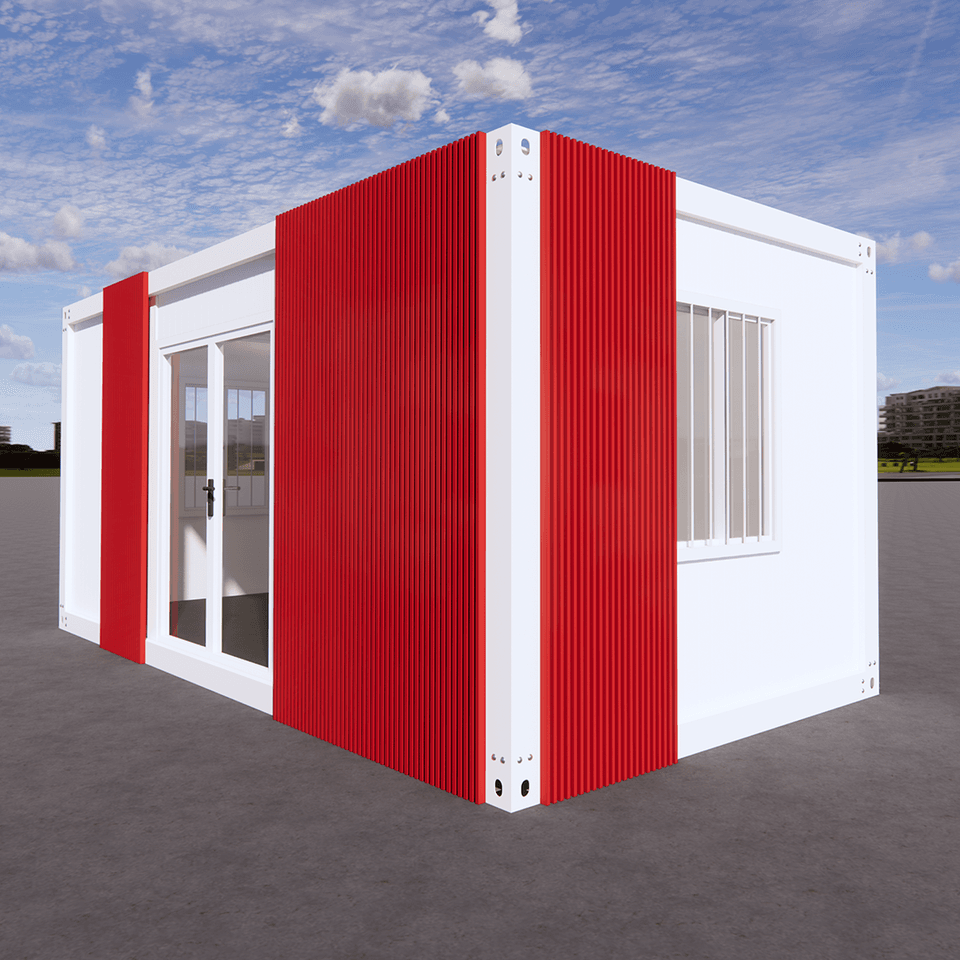
I. Design Features and Space Utilization
Container house villas typically adopt a modular design, allowing for the expansion of functional areas through splicing and staggered stacking. For example,打通 (connecting) two containers can create a flat layout integrating a living-dining room, two bedrooms, and a bathroom with a bathtub (approximately 100㎡); for small units (such as 15㎡), integrated furniture like foldable beds and tables can enhance space flexibility. Additionally, the exterior facade can shed its industrial feel and cultivate a villa-like ambiance through paint spraying, glass curtain walls, or thematic murals.
II. Core Advantages
- Low Cost: Compared to traditional houses, the renovation costs for container houses are significantly reduced. For instance, renovating a 15㎡ mini home costs only 110,000 yuan.
- Green and Environmentally Friendly: They utilize recyclable steel, have a short construction period (e.g., 7-day replacement, 48-hour delivery), and generate less construction waste.
- Flexible Mobility: They can be relocated as a whole to different sites, adapting to scenarios such as temporary residences and vacation villas.
III. Key Challenges and Solutions
- Thermal Insulation and Lighting: Inner thermal insulation layers need to be added to walls/roofs, and triple-glazed windows should be selected to enhance thermal insulation performance; lighting can be improved through large floor-to-ceiling windows and skylights.
- Rust Prevention and Waterproofing: During construction, cutting and welding areas should be polished and coated with epoxy primer + topcoat. Regular inspections of welds and corners are necessary, and in humid southern regions, anti-corrosion coatings need to be reapplied every 7-10 years.
- Approval Procedures: For rural homesteads, structural drawings are required, and construction approvals must be obtained; leased land can only be used for temporary structures, and the contract must specify the nature of use.
IV. Application Scenarios and Cases
Container house villas have been widely applied in beach temporary constructions, scenic area B&Bs, forest vacations, and other fields. For example, the cantilevered container house at Prairie Lake in Canada and the Starburst House in Joshua Tree, California, achieve a combination of functionality and aesthetics through innovative design.



