
Container House Villa
Container house villas are low-rise residential buildings transformed from container modules as their foundation, featuring flexible adaptability and controllable costs, but requiring attention to approval procedures, rust prevention, and insulation issues.
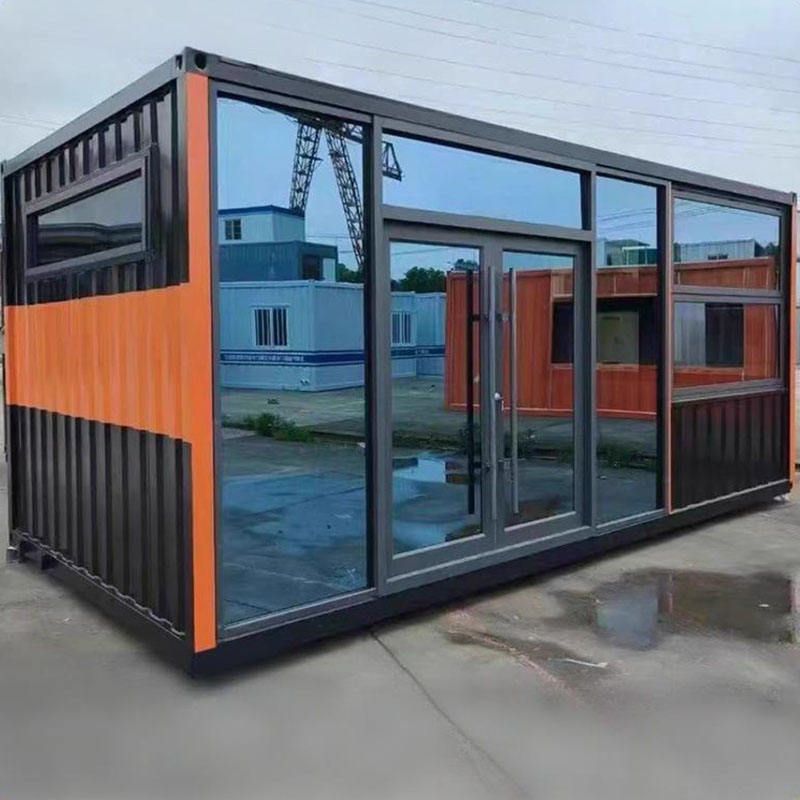
I. Structural Characteristics and Advantages Container villas use standard containers as basic units, expanding space through splicing and stacking. For example,打通 (connecting) two containers can create a flat layout of approximately 100㎡, including a living-dining room, two bedrooms, and a bathroom with a bathtub; staggered stacking designs can create richer spatial layers and leave leisure courtyards or aisles on the ground floor. Their core advantages lie in:
- Modular Flexible Combination: They can be freely spliced according to needs, adapting to different scenarios.
- Controllable Costs: Compared to traditional brick-and-mortar structures, container villas have shorter construction periods, lower foundation costs, and recyclable materials.
- Rapid Construction: Factory-prefabricated components and efficient on-site assembly, such as the Suzhou Zhongnan team completing the delivery of 1000 accommodation modules in three months.
II. Design Considerations and Precautions
- Insulation and Lighting: Inner insulation layers need to be added to walls/roofs, and triple-glazed windows should be selected to enhance thermal insulation; lighting can be improved through large floor-to-ceiling windows and roof skylights.
- Rust Prevention and Waterproofing: During construction, cut and welded edges should be polished and coated with epoxy primer + topcoat; areas around doors and windows and container splices should have their sealant regularly replaced to prevent rainwater infiltration.
- Approval Procedures: If building on rural homestead land, construction approval must be obtained according to local requirements, providing structural drawings; for leased land, the nature of use must be clarified to avoid the risk of illegal construction.
III. Applicable Scenarios and Limitations Container villas are suitable for people pursuing low costs, personalization, and who can accept a modular appearance, such as for temporary offices, accommodations, and vacation homes. However, their limitations include:
- Living Experience: Their thermal insulation and sound insulation performance are inferior to traditional residences, requiring design optimization (such as adding insulation layers and selecting soundproof materials) for improvement.
- Industrial Appearance: Their industrial look from containers needs to be overcome through exterior beautification (such as paint spraying and glass curtain walls) to create a villa-like atmosphere.



