Container House Video in 2026: Buying Guide & Recommendations
The 2026 container house buying guide should focus on core advantages, product categories, performance indicators, customization services, and supplier selection, making comprehensive decisions based on technological trends and cultural backgrounds.

Core Advantages Driving Demand
The popularity of container houses stems from three core advantages:
- Economy: With global housing prices continuing to outpace income growth, container houses cost only 1/5 to 1/3 of traditional homes, making them ideal for entry-level housing needs with limited budgets.
- Sustainability: By reusing retired shipping containers, they directly reduce carbon emissions and construction waste, aligning with global climate action goals. Some products use over 90% recyclable materials.
- Lifestyle Adaptability: Integrating concepts of “minimalist living” and “remote work,” they support rapid transformation into mobile homes, vacation rentals, or temporary office spaces, meeting young people's demand for flexible living.
Product Categories and Key Considerations
Structural Types
- Refurbished Type: Directly uses retired shipping containers, retaining industrial aesthetics and structural strength, suitable for users pursuing a vintage style or low-cost renovation.
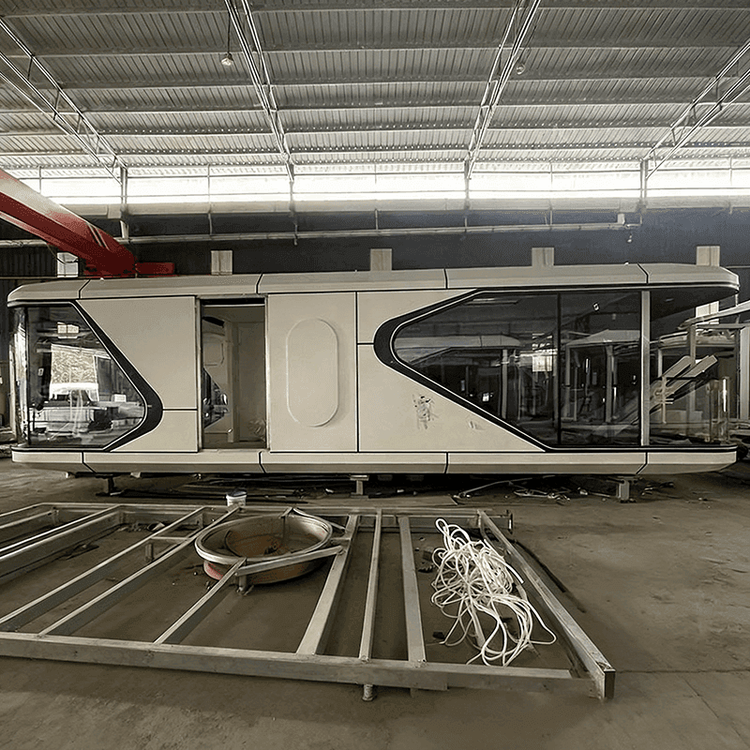
- Prefabricated Modular Type: Adopts standardized dimensions (e.g., 6058×2438×2591mm) for prefabricated modules, supporting fully customizable sizes for large-scale deployment or high-end needs.
Key Performance Indicators
- Disaster Resistance: Designed to withstand earthquakes up to magnitude 8 and wind speeds of 210-220 km/h, suitable for earthquake-prone or typhoon-frequent regions.
- Thermal Insulation: Offers insulation materials such as EPS, PU, rock wool, and glass wool, with PU providing the best thermal performance for extreme climates.
- Electrical Systems: Comes standard with lighting, switches, sockets, and distribution boxes, with some products supporting solar integration for off-grid living.
Customization Services
- Size Adjustment: Length, width, and height can be extended based on project requirements, with maximum module lengths up to 12 meters.
- Component Upgrades: Roof systems integrate 70mm-thick PU foam insulation, wall systems offer 50/75/100mm-thick sandwich panels, and chassis systems can opt for glass wool insulation.
- Door and Window Options: Supports steel doors, fire doors, aluminum alloy shutters, etc., meeting safety and ventilation needs.
Typical Suppliers and Product Recommendations
Zhejiang Putian Integrated Housing Co., Ltd. offers two product lines:
- Basic Model: Starting at $1,000, includes customizable dimensions, 4 insulation materials, magnitude 8 earthquake resistance, and 220 km/h wind resistance, suitable for budget-conscious users.
- Luxury Model: Starting at $2,500, adds a 2-year warranty, rapid on-site installation services, and higher wind speed protection, ideal for high-end needs or post-disaster reconstruction projects.
Market Trends and Cultural Impact
Technological advancements have shortened modular design deployment times to weeks, accommodating post-disaster reconstruction or temporary housing needs. The popularity of “mobile living” and “DIY renovation” content on social media further amplifies their appeal as lifestyle symbols. Before purchasing, industry platforms like Alibaba.com can provide local warehouses, 48-hour shipping, and AI product selection services to reduce procurement risks.