Uses of Container Houses
Container houses have a wide range of uses, covering both temporary and permanent construction needs, and are mainly applied in four major fields: engineering construction, urban public services, commercial operations, and special scenarios.

I. Engineering Construction Field
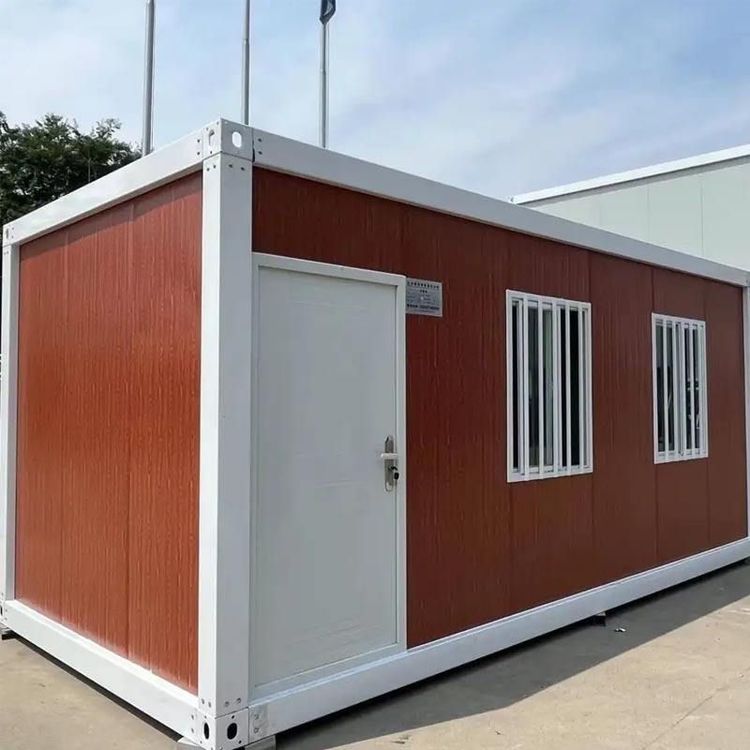
Container houses, with their advantages of rapid deployment and controllable costs, have become a core solution for temporary housing on construction sites. For example, standard container houses, after modification, can serve as workers' dormitories or project office spaces. They are structurally sturdy, easy to transport, and commonly available in 20-foot or 40-foot sizes, supporting single-unit use or multi-unit assembly. The packing boxes from Suzhou Zhongnan Steel Structure Co., Ltd. are prefabricated with interiors and facilities in the factory and can be put into use immediately after on-site hoisting, suitable for long-term on-site projects. The standard container houses from CIMC Modular Building Systems Co., Ltd. shorten the installation cycle through modular design, meeting the rapid delivery needs of engineering camps.
II. Urban Public Services Field
Container houses play an important role in emergency shelters and public management scenarios. Their structural stability complies with building seismic design codes and can withstand extreme weather conditions. For example, when simulating a Category 12 typhoon in coastal areas, the deformation rate of container houses with all-steel structural frames is far below the industry threshold. In addition, public facilities such as mobile police stations and community service centers also widely adopt container houses, achieving functional zoning through customized designs, such as integrating office equipment and surveillance systems.
III. Commercial Operations Field
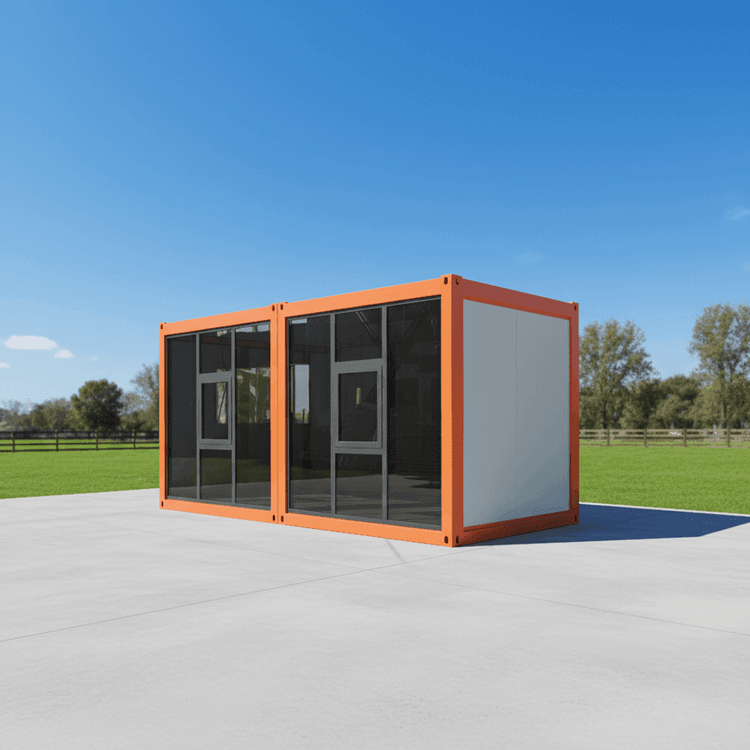
Container houses, through creative modifications, have become innovative carriers for commercial spaces. For example, foldable office houses support rapid deployment, suitable for the frequent relocation needs of exploration teams and temporary command centers. Assembled office houses, combining light steel keels and color steel plates, can flexibly expand space according to event planning requirements. In the cultural and tourism sector, container guesthouses enhance thermal insulation performance through curved exterior designs and thermal-break lining structures, becoming characteristic accommodation units in seaside and mountainous areas. Commercial pop-up stores utilize the industrial aesthetic symbols of containers to attract young consumers, reducing decoration costs while achieving "instant setup and use."
IV. Special Scenario Applications
For extreme climates or special industry needs, container houses can be equipped with special structures such as thermal insulation layers and fireproof materials. For example, plateau workstations enhance box sealing to cope with low-temperature environments, and mobile laboratories adopt anti-corrosion coatings to adapt to chemical industry scenarios. In addition, the full-lifecycle recyclability of container houses aligns with environmental protection needs. Their steel consumption carbon emissions are only 1/2.3 of those of traditional concrete buildings, and the disassembly and assembly loss rate is controlled within 5%, supporting camp relocation or overall hoisting and reuse after project completion.