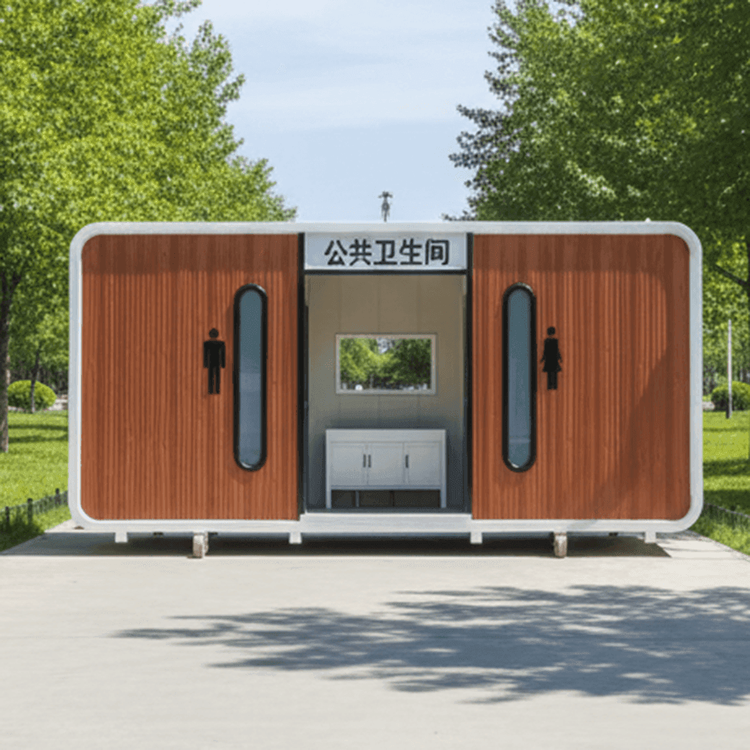
Two-Story Container House
Container houses can be designed as two-story structures, offering multiple advantages and suitable for various scenarios.

I. Characteristics of Two-Story Container Houses
Two-story container houses expand usable space vertically while maintaining the rapid assembly features of modular construction. Their key advantages include:
- High Space Utilization: Compared to single-story structures, double-story designs double the usable area, making them ideal for scenarios requiring more space, such as guesthouses, offices, or temporary accommodations.
- Significant Cost Efficiency: Containers, as standardized components, have lower bulk purchase costs; double-story structures reduce land use costs by minimizing foundation footprint through stacking.
- Easy Assembly: Modular design allows factory-prefabricated components to be quickly assembled on-site using bolts or welding, shortening construction periods and reducing labor costs.
II. Material and Style Options
The materials and styles of two-story container houses directly impact their performance and appearance:
- Materials:
- Sandwich Panels: With polystyrene or rock wool cores, they offer both thermal insulation and soundproofing, suitable for cold regions.
- Color-Coated Steel Sheets: Galvanized or coated surfaces provide strong corrosion resistance and lower costs, commonly used in temporary buildings.
- Rock Wool Panels: High fire resistance and excellent sound absorption make them ideal for safety-critical locations.
- Styles:
- Modular Assembly: Combines standard container units for flexible layout adjustments, supporting personalized designs.
- Flat-Pack Style: Compresses containers into flat packages for easy transportation, suitable for remote areas or temporary projects.
III. Typical Application Scenarios
- Temporary Accommodations: Such as construction site dormitories or post-disaster relief housing, double-story structures can quickly accommodate more people.
- Guesthouses and Hotels: Through aesthetic enhancements (e.g., painting, window designs) and interior renovations, they create unique lodging experiences.
- Office Spaces: Modular layouts meet needs for open-plan offices, meeting rooms, etc., and support rapid relocation.
- Mobile Houses: Combined with movable chassis, they enable whole-unit relocation, suitable for tourist attractions or temporary exhibitions.
IV. Practical Case References
One case shows a user built a double-story container courtyard on vacant land, integrating living and leisure functions within budget constraints; another involves a post-90s individual constructing a movable double-story container house in his village, adopting lightweight design for both practicality and aesthetics. These cases demonstrate that double-story container houses can meet diverse needs through rational planning.