
Container House Transport to Home
Container houses can be transported to homes by professional logistics companies, with the transportation process involving factory manufacturing, sea freight, and on-site assembly.
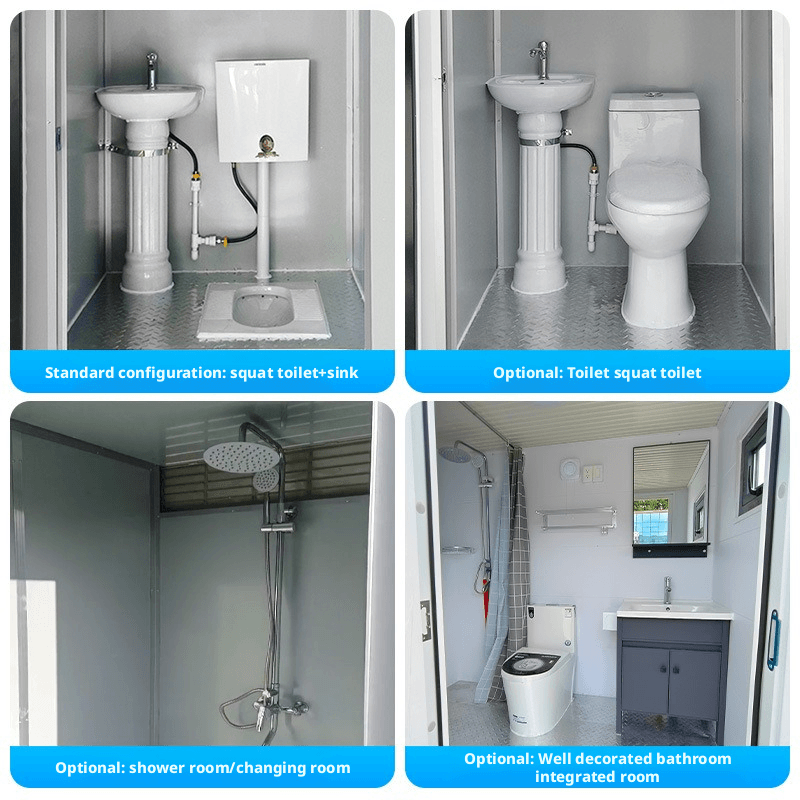
I. Manufacturing and Transportation Process of Container Houses Container houses adopt a modular design, dividing the entire building into independent 'room modules' that are manufactured on factory assembly lines, including the integration of water and electricity, decoration, and interior soft furnishings. For example, the modular houses produced by China Construction Integration Building Intelligent Manufacturing (Shenzhen) Co., Ltd. for an Australian project completed all preliminary processes in the factory and were then transported a short distance to Xiaomo International Logistics Port, 20 kilometers away, for loading onto ships. After approximately 20 days of sailing, they arrived in Australia. This 'Shenzhen R&D + Shenshan Manufacturing + Direct Port Dispatch' model ensures transportation timeliness and cost optimization.
II. Transportation Methods and Service Provider Selection
- Sea Freight as the Primary Method: Container houses are typically transported by ocean-going cargo ships, suitable for long-distance cross-border or cross-regional transportation. For example, the modular house project from Shenzhen to Australia used full-container transportation to ensure the integrity of the modules.
- Types of Service Providers:
- Construction Logistics Enterprises: Companies like China Construction Integration provide one-stop services from manufacturing to transportation, leveraging their own logistics networks to optimize timeliness.
- Professional International Moving Companies: For small container houses used by individuals, the model of cross-border moving service providers can be referenced. For example, Jiashida International Moving uses a 'fixed-price all-inclusive' contract to clarify the costs of the entire chain, including on-site packing, sea freight, customs clearance, and home delivery, avoiding hidden charges.
III. On-Site Assembly and Adaptability After arriving at the destination, container houses require on-site assembly. Taking the Australian project as an example, the modules are assembled in combination with steel structure roof trusses upon arrival, requiring only the connection of water and electricity for 'move-in readiness,' with the installation period shortened to just a few days. Additionally, the modular design supports repeated disassembly and relocation, significantly reducing construction waste, dust, and noise pollution compared to traditional construction methods.
IV. Cost and Efficiency Advantages Modular construction shortens the construction period of container houses by more than half compared to traditional methods, with lower transportation losses. For example, the Shenshan Special Cooperation Zone uses a 'port-industry linkage' model to enable modules to be quickly transported directly to the dock after coming off the production line, further reducing logistics costs.



