
Container House Transport
Container house transport is efficient, flexible, and economical; its modes, traits, and cost advantages are as follows:
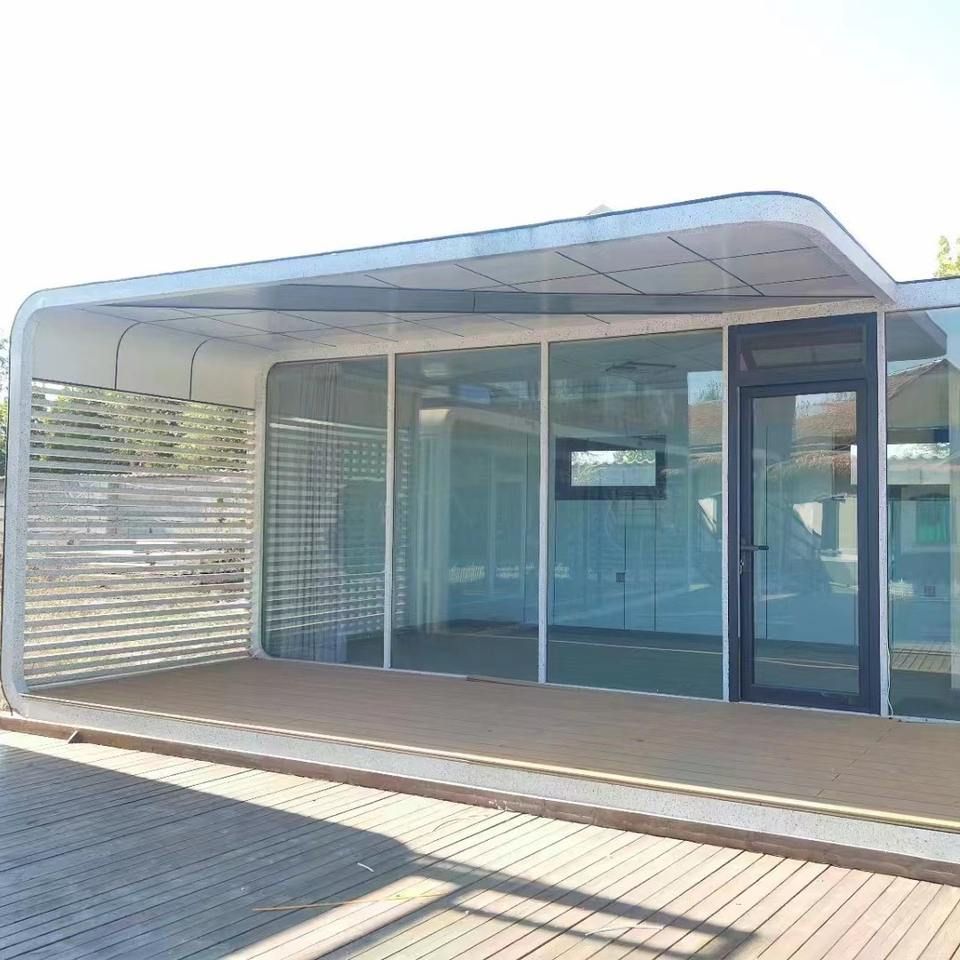
I. Transport modes and modular design
Container houses use modular design; the main structure is steel-framed, with mobility and rapid assembly. For transport, a house can be compressed to under 50% of its original volume and loaded into a standard shipping container for export with one-piece packing. For example, when exporting to Sydney, Australia, modules of different sizes and models can be chosen to match ocean-container specs directly, with no extra modification. This design simplifies loading and unloading, cuts transport space use, and raises logistics efficiency.
II. Core traits and transport adaptability
- Structural safety and durability: The steel main structure offers wind resistance, seismic resistance, and corrosion resistance; air-gap thermal design supports sound and heat insulation, keeping the structure stable in transit and reducing environment-related damage.
- Flexible stacking and size matching: Houses can be stacked in multiple layers for varied transport needs. Modular layout can cut ocean freight cost by nearly 40% per set, especially for long-haul international shipping.
- Anti-corrosion and rust protection: Dedicated coatings or processes on surfaces extend service life and lower maintenance cost during transport and storage.
III. Transport cost and price reference
Transport cost for container houses varies sharply by model, material, and configuration. For example:
- Basic demountable container houses: about $277, suited to short-term site dorms or temporary rooms, with lower transport cost for domestic short hauls or LCL ocean shipping.
- High-end assembled frame houses: up to $1,111, using quick-assemble box frames; they need whole-unit packing for transport but perform better after assembly, suited to long-term use or international export projects.
IV. Brands and market choice
Mainstream brands such as Zhongkang, Zhexia, Hetaoyuan, and Haiwangda all offer container houses that meet international transport standards. Users can choose brand and model by project needs (distance, service life, budget) to balance performance and cost.
Summary: Through modular design, steel framing, and anti-corrosion treatment, container houses optimize both transport efficiency and economy. Flexible stacking and size matching further cut international freight cost, making them a preferred option in temporary building.



