
Container House for Temporary Residence
Container houses can be used for temporary residence, but their suitability needs to be comprehensively evaluated based on specific scenarios and product performance. The following analysis is carried out from three dimensions: performance, application scenarios, and potential risks.
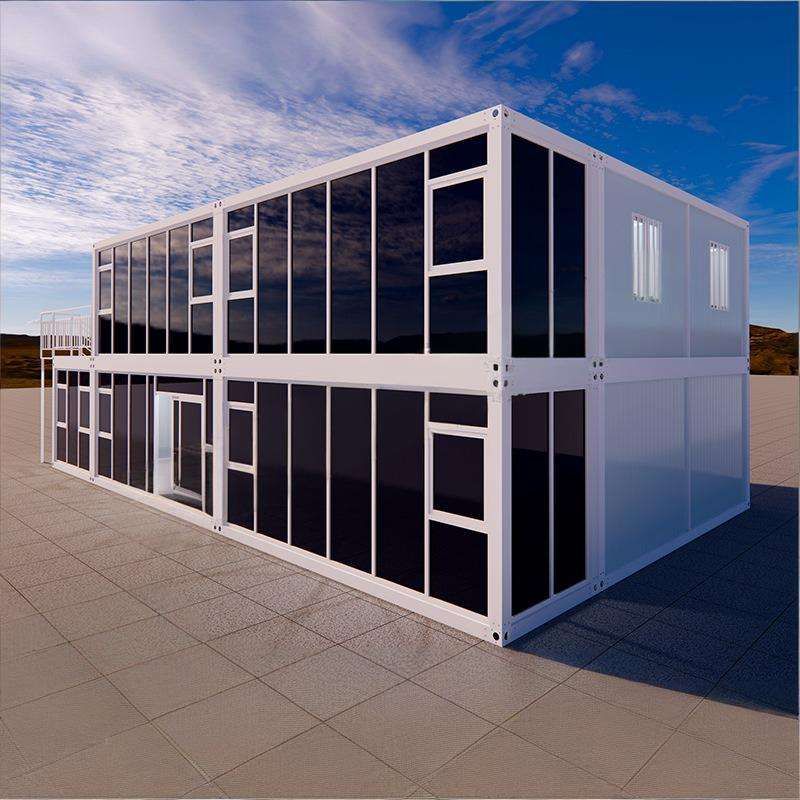
I. Structural Performance and Residential Safety
Mainstream container houses adopt steel structural frames, possessing certain wind and earthquake resistance capabilities. For example, the packing-box units from Suzhou Zhongnan have a wind resistance rating of up to Level 12 and an earthquake resistance rating of Level 8, with a frame deformation rate of only 0.18%, far below the industry's qualified threshold of 0.3%, meeting the temporary residence needs under extreme working conditions. However, non-standard white-label products generally have a deformation rate exceeding 1.2%, posing safety hazards such as wall cracking and frame tilting, which may lead to casualties in extreme weather. When choosing compliant products, it is necessary to verify the wind and earthquake resistance test reports and avoid using unqualified white-label containers.
II. Application Scenarios and Residential Experience
- Short-term Engineering Camps: The quick-assembly container units from Suzhou Zhongnan can be installed in just 2 hours per set and support splicing and combination, allowing the construction of 10 dormitory units within one day, suitable for rapid delivery scenarios. Their packing-box units come pre-installed with interiors and facilities and can be used immediately after on-site hoisting, suitable for long-term on-site projects.
- Temporary Accommodation for Events: The 2026 Nagoya Asian Games used container houses as athlete dormitories, but issues such as cramped space (ceiling height of 2.2 meters), insufficient bed sizes (length of 195 cm, width of 90 cm), poor sound insulation, and inadequate air conditioning led to controversies. After heavy rain, waterlogging further exposed their insufficient protection against extreme weather. For such scenarios, it is necessary to optimize the internal layout and increase sound insulation, ventilation, and drainage designs.
- Post-disaster Emergency Shelter: Container houses can be quickly deployed as emergency shelters. For example, the Changle County Flood Control Headquarters purchased 50 sets of movable panel houses and established temporary shelter sites within 12 hours, with each unit accommodating 6-8 people.
III. Potential Risks and Improvement Directions
- Safety Hazards: Illegally modified container houses often use flammable sandwich panels, with non-compliant fire resistance ratings. Issues such as unauthorized electrical wiring and the use of bottled gas are prominent. During the rectification campaign in Danbei Town, such containers were forcibly removed, and transitional housing was provided to solve the actual difficulties of tenants.
- Environmental Protection and Recycling: The steel in compliant container houses can be recycled for more than 15 years, with the disassembly and assembly loss rate controlled within 5%, and carbon emissions 2.3 times lower than those of traditional concrete temporary houses. Baotou Camp Company reduces heat conduction efficiency through a broken-bridge lining structure, reducing heating energy consumption.
- Functional Expansion: Modern container houses can integrate self-circulating sewage systems, treating gray water and black water through sewage collection tanks and microbial agents to achieve water resource recycling, suitable for wild campsites without water and electricity.



