
Back to blog
Article
Container House Sunshade Roof
Admin September 15, 2026
The sunshade roof for container houses should be selected based on a comprehensive consideration of material properties, design, installation, and maintenance requirements.
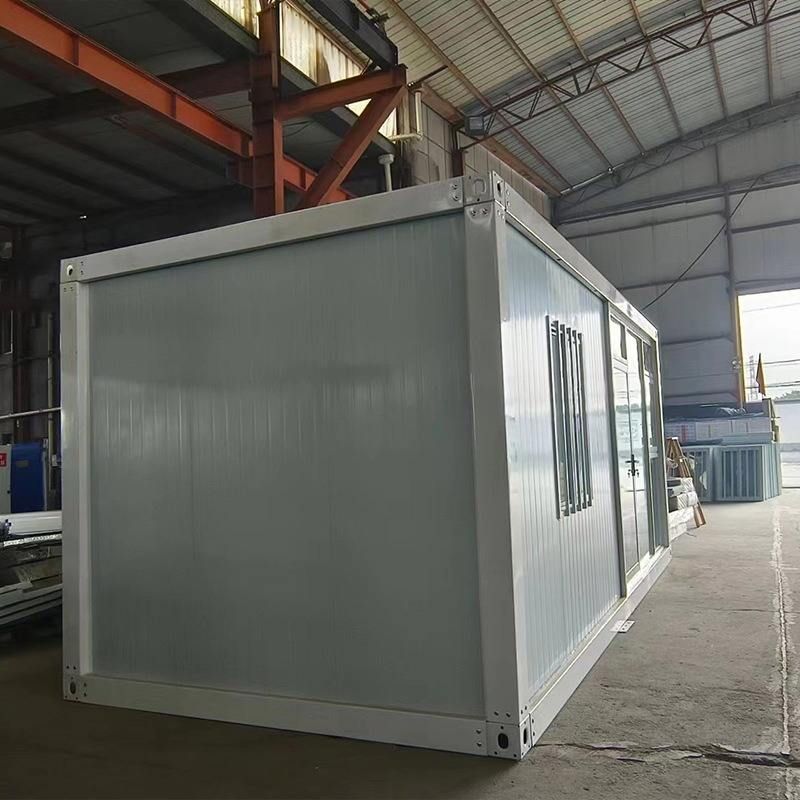
Material Selection
The materials for the sunshade roof of container houses should balance sunshade, heat insulation, wind pressure resistance, and corrosion resistance. Common materials include:
- Tempered Glass: High transparency and a wide field of view, but with average heat insulation in summer, suitable for areas with high lighting requirements and mild climates.
- Polycarbonate Sheet: Lightweight and with strong heat insulation, but prone to yellowing and brittleness over long-term use, requiring regular replacement, suitable for scenarios with limited budget and high heat insulation requirements.
- Laminated Glass: Balances safety and sound insulation, with strong impact resistance, suitable for container houses with high safety requirements.
- FRP Glass Fiber Reinforced Polyester Sheet: Features insulation and corrosion resistance, with a corrugated design that enhances drainage performance, suitable for coastal or humid areas.
- Sandwich Panel (with Aluminum Foil Reflective Layer): The outer layer of anti-corrosion color-coated steel plate reflects sunlight, the middle polyurethane foam layer blocks heat conduction, and the inner layer of fire-resistant gypsum board helps control humidity and stabilize temperature. Actual measurements show that the temperature inside the container rises 22 minutes slower than outside in summer, and the indoor temperature only drops by 1.3℃ after being closed for 8 hours in winter, suitable for scenarios with extremely high heat insulation requirements.
Design and Installation Points
- Slope Design: The slope of the roof directly affects drainage speed. Insufficient slope can lead to the accumulation of rain and snow, increasing the load on the frame, and should be designed reasonably based on local rainfall.
- Sealing Treatment: The sealing strips at connections are prone to aging and require regular inspection and replacement to prevent water leakage. Professional services usually include on-site surveys and customized designs, rather than simply applying fixed sizes.
- Ventilation Design: Ventilation slots at the bottom can enhance air circulation, reduce the temperature inside the container, and improve comfort.
Maintenance and Use
- Regular Cleaning: Timely removal of fallen leaves and dust to prevent clogging of drainage channels.
- Sealing Strip Inspection: Check for cracks in the sealing strips before the windy seasons in spring and autumn to eliminate potential hazards in advance.
- Material Replacement: Regularly replace aging materials such as polycarbonate sheets to ensure sunshade and heat insulation effects.
Related


