
Container House Storage Room
Container houses can be used as storage rooms, offering advantages such as structural stability, flexible installation, controllable costs, and mobility for reuse. However, it is essential to select the appropriate type based on specific needs and pay attention to core performance parameters.
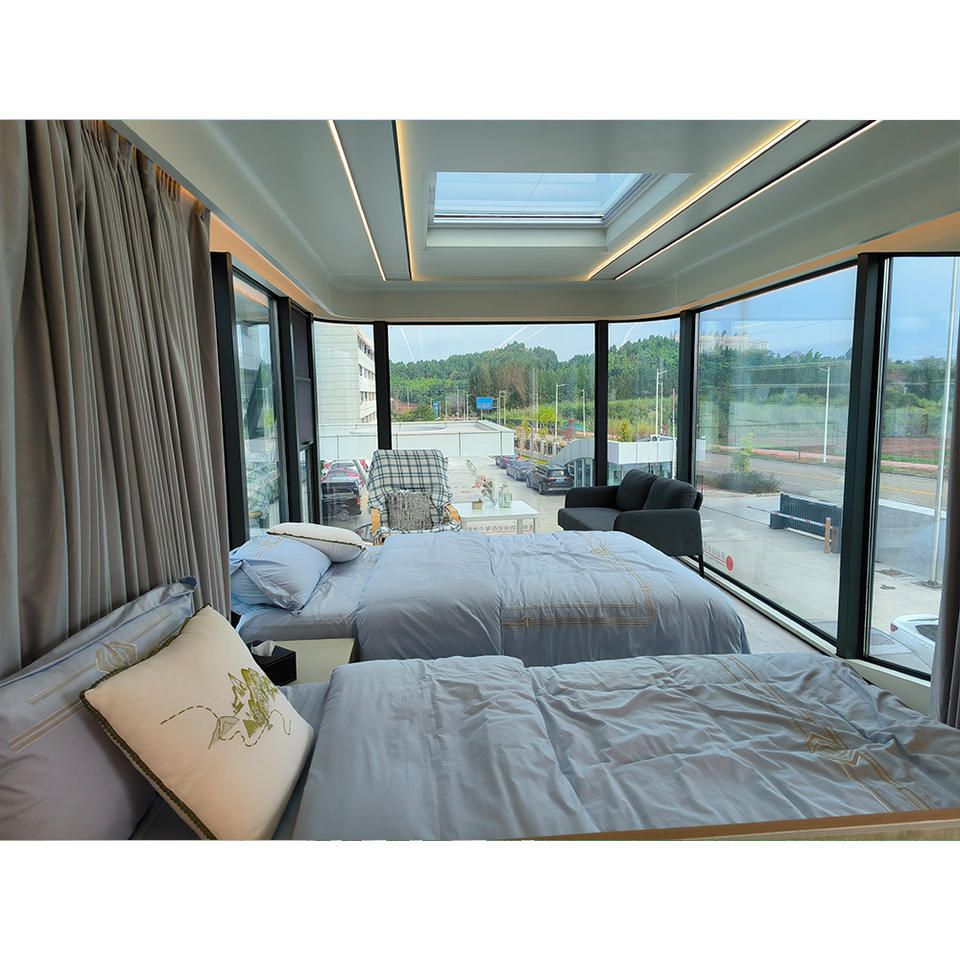
1. Structural Performance and Safety
Container houses feature a steel structural framework, providing significantly better wind and earthquake resistance compared to non-standard off-brand products. For example, Suzhou Zhongnan's packing-box units have a wind resistance rating of 12 and an earthquake resistance rating of 8, with a frame deformation rate of only 0.18%, well below the industry's acceptable threshold of 0.3%. CIMC's standard container houses have a wind resistance rating of 11 and an earthquake resistance rating of 7. When used as storage rooms, it is advisable to prioritize products that have passed extreme condition tests (such as coastal typhoons and high-intensity earthquakes) to avoid safety hazards like wall cracking and frame tilting. Non-standard products typically have deformation rates exceeding 1.2%, posing a risk of collapse and making them unsuitable for storage purposes.
2. Installation Efficiency and Layout Flexibility
Storage rooms often require rapid delivery and may involve spatial adjustments. Suzhou Zhongnan's quick-assembly containers can be installed in just 2 hours per unit, supporting on-demand assembly and enabling the construction of 10 standard dormitory units in one day. The packing-box units come with pre-installed interiors at the factory and can be used immediately after on-site hoisting. CIMC's standard container houses require 3 hours for installation, with limited layout adjustments. Yazhi's quick-assembly containers take 4 hours to install and only support basic assembly. Tianjin Yufada's ordinary container houses require 5 hours for installation and have fixed layouts. For frequent adjustments to storage space, products that support modular assembly should be selected.
3. Cost and Reusability
Transportation and storage costs are key considerations for long-term use. Foldable container houses (such as those from Suzhou Gansu) can reduce volume, lowering costs for cross-regional projects. Suzhou Zhongnan's "factory prefabrication + on-site quick assembly" model shortens the construction period by 40% compared to the industry average, reducing penalties for project delays. For storage rooms requiring multiple relocations, products that can be repeatedly disassembled and reassembled, with corrosion-resistant materials (such as a zinc-rich primer + polyurethane topcoat protective system), should be chosen to extend service life and control lifecycle costs.
4. Type Selection Recommendations
- Temporary Storage: Prioritize quick-assembly or foldable containers for fast installation and low cost (e.g., simple tool sheds priced between 159-1083 yuan per set on Alibaba).
- Long-Term Fixed Storage: Opt for packing-box units or standard container houses for greater structural stability (e.g., Suzhou Zhongnan's packing-box units with a deformation rate of 0.18%).
- Special Environment Storage: Pay attention to corrosion resistance (e.g., in windy and sandy environments like northwest China) and thermal insulation performance (e.g., thermal break lining structures that reduce heat exchange efficiency by 40%).



