
Container House Standard Sizes
The standard sizes of container houses are mainly based on standard shipping container dimensions. Common specifications include 20-foot, 40-foot, 40-foot high cube, and 45-foot containers. Some special sizes such as 10-foot and 30-foot units are used less often due to manufacturing and transport constraints.
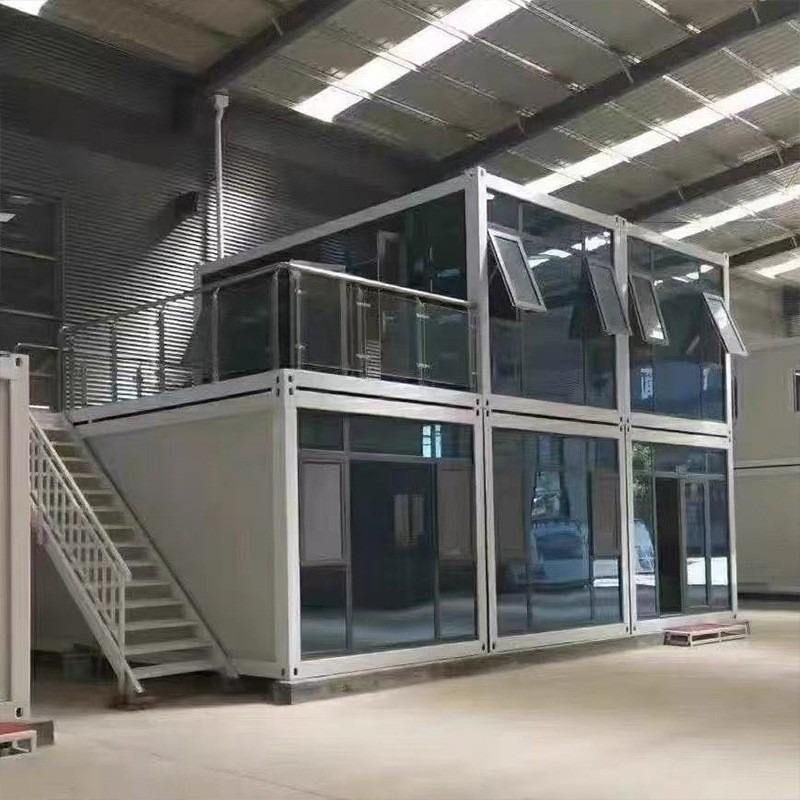
The 20-foot container is the most basic specification among container houses. Its external dimensions are 6.06 m in length, 2.44 m in width, and 2.59 m in height, with an internal volume of about 28.3-33.2 cubic meters. This size comes from the universal design of international standard containers, making it easy to move by road, rail, and sea. The interior space can meet basic living or office needs, such as a single-room dormitory or a small office. It offers high structural stability and relatively low cost, and is a common choice for temporary buildings or emergency housing.
The 40-foot container has external dimensions of 12.2 m in length, 2.44 m in width, and 2.59 m in height, with an internal volume of about 67.6-67.7 cubic meters. Compared with the 20-foot model, its length is doubled and the interior space is significantly larger, allowing more functional zones such as a bedroom, kitchen, and bathroom. It is suitable as a modular house for long-term living or as a small commercial space. Because of its larger size, transport must take into account road height limits, turning radius, and similar constraints.
The 40-foot high cube adds height on top of the standard 40-foot container. Its external dimensions are 12.2 m in length, 2.44 m in width, and 2.9 m in height. The greater vertical clearance makes it better suited to scenarios that need higher ceilings, such as installing a suspended ceiling, loft, or large equipment. This specification is often used for industrial storage, exhibition display, or living spaces that demand higher space utilization, though transport costs rise slightly because of the added height.
The 45-foot container has external dimensions of 13.72 m in length, 2.44 m in width, and 2.89 m in height, with an internal volume of about 86 cubic meters. As a representative of longer containers, it exceeds ordinary container length and can provide a longer continuous space, making it suitable as a multifunctional complex or as a modular unit for large public facilities. However, because it is a non-standard size, transport and stacking require special planning, manufacturing costs are higher, and its application range is relatively limited.
In addition, the market also offers special-size container houses such as 10-foot, 30-foot, 48-foot, and 53-foot units. These specifications often face greater manufacturing difficulty, higher transport costs, and poorer compatibility due to non-standardized design, and are usually used only in specific projects or customized requirements. When choosing a container house size, you should comprehensively consider the use case, transport conditions, and cost budget to balance functionality and economy.



