
Container House Staff Dormitory
Container houses can be used as staff dormitories, featuring rapid construction, mobility, environmental protection, and cost-effectiveness, making them suitable for construction sites, temporary camps, and other scenarios. Here is a detailed analysis:
1. Applicability of Container Houses as Staff Dormitories
Container houses adopt a modular design with a steel frame structure paired with fire-resistant and thermal insulation panels (such as rock wool sandwich panels), providing high structural strength and stability. Over 90% of the prefabrication processes for standard units are completed in the factory, requiring only foundation leveling and hoisting assembly on-site, shortening the construction period by more than 60% compared to traditional prefabricated houses. For example, Zhejiang Hangxing's container dormitory units can complete the construction of a 20-person dormitory within 8 hours, and a single container can withstand a roof load of 1.2 tons, meeting the rapid deployment needs of construction site dormitories.
2. Functional Configuration and Safety
Container dormitories can be customized with functional modules according to usage scenarios:
- Basic Type: Equipped with electrical systems, lighting, and ventilation facilities to meet basic living needs on construction sites;
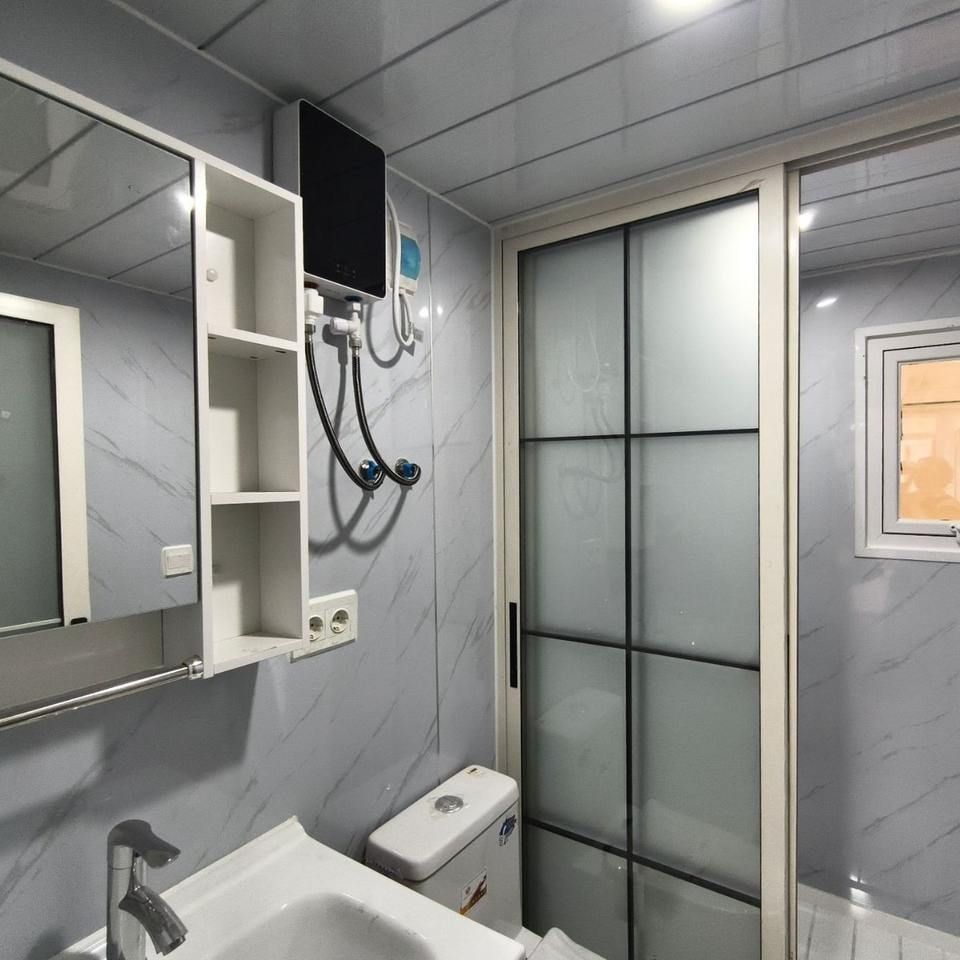
- Upgraded Version: Adds independent bathroom modules, sound insulation layers, and pre-embedded air conditioning pipelines, suitable for long-term驻扎 (stationed) projects;
- Special Type: For special environments such as high altitudes and coastal areas, oxygen supply systems, anti-corrosion coatings, or double-layer thermal insulation structures can be configured.
All products have passed B1-level fire resistance tests, with wall panels filled with flame-retardant rock wool, maintaining stable temperatures in environments ranging from -20℃ to 40℃. Additionally, container houses use recyclable galvanized steel plate bodies, complying with green building standards, and can be compressed to one-third of their original volume when idle, reducing storage and transportation costs.
3. Cost-Effectiveness and Flexibility
Although the initial cost of container dormitories is higher than that of traditional prefabricated houses, the total lifecycle cost is lower. Their modular design supports rapid disassembly, reassembly, and relocation for reuse, with a single container having a service life of over 15 years. Relocation does not require complete dismantling; only hoisting and transportation are needed for redeployment. Furthermore, leasing models (such as 6 yuan/day/10 people) can further reduce financial pressure for short-term projects, while also providing customized services such as door and window partition modifications and electrical system renovations to meet the needs of projects of different scales.
4. Typical Application Cases
Zhejiang Hangxing's container dormitories have been successfully applied in scenarios such as the supporting projects of the Hangzhou Asian Games, the Ningbo Photovoltaic Power Station Project, and the Tibetan Plateau Research Camp, verifying their adaptability and reliability in different environments.



