
Sound Insulation Treatment for Container Houses
Sound insulation treatment for container houses can be achieved by adding sound insulation layers, optimizing wall structures, selecting soundproof doors and windows, and implementing sealing measures. Specific measures are as follows:
Adding Sound Insulation and Damping Sealing Layers
Ordinary iron sheet container panels are thin and have poor sound insulation, allowing external wind and human voices to easily penetrate indoors. High-quality container houses incorporate sound insulation and damping sealing layers on walls and ceilings, using materials such as acoustic panels, sound insulation felt, and rock wool. These materials exhibit excellent sound absorption and insulation properties, significantly reducing noise transmission and diffusion. For example, energy storage containers form sound barriers by covering their inner and outer surfaces with sound insulation materials, effectively reducing noise levels.
Optimizing Wall Structures
Noise transmission paths are blocked by increasing wall thickness or designing sound insulation cavities. For instance, sound insulation layers can be installed in the middle layer of walls, or double-wall structures can be adopted, filled with high-density thermal insulation rock wool and other sound insulation materials. Container space capsules used in cultural tourism attractions improve both thermal insulation and sound insulation by filling with high-density thermal insulation rock wool and incorporating thermal break insulation technology.
Selecting Soundproof Doors and Windows
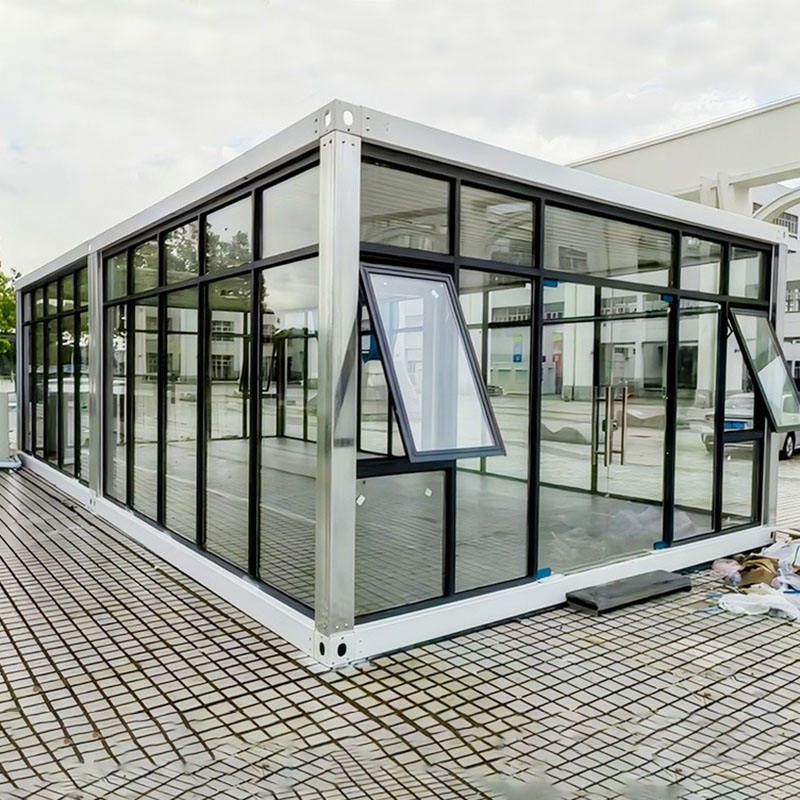
Doors and windows are the main channels for noise transmission, necessitating the use of materials with good sound insulation properties. For example, broken bridge aluminum double-glazed doors and windows offer superior sealing and sound insulation compared to ordinary doors and windows, effectively blocking external noise. Energy storage containers ensure the sealing between doors, windows, and the container body by optimizing sealing structures and using high-performance sealing materials, preventing noise from escaping through gaps.
Sealing Treatment
The airtightness of containers is optimized to reduce air and sound penetration. This is achieved by fully sealing panel joints, door and window edges, and roof splices with waterproof membranes and sealants, and designing reasonable drainage slopes to ensure continuous sealing at joints. For example, container space capsules in rainy southern regions enhance waterproofing at roof and corner edges while improving sealing to reduce noise transmission.



