Features of Soft Decoration in Container Houses
The features of soft decoration in container houses are mainly reflected in modular design, personalized customization, diverse styles, functional versatility, and environmental and economic sustainability:

Flexible Combination through Modular Design
Container houses use standardized containers as basic units, achieving spatial expansion through horizontal splicing, vertical stacking, and container overhangs. For example, a wind power project camp in Xinjiang arranged 180 containers in an 'H' shape, constructing a living area for 500 people within 7 days, including dormitories, a canteen, and meeting rooms. This design supports on-demand layout adjustments, with internal partitions that can be quickly disassembled and reorganized, meeting the dynamic spatial needs of temporary offices, commercial pop-up stores, and other scenarios.
Deep Integration of Personalized Customization
Soft decoration design breaks through the industrial attributes of traditional containers, achieving differentiation through customization in three dimensions: structure, interior, and function. Structurally, it can achieve a container window opening rate of 40% (compared to only 10% in conventional containers), supporting curved roofs, pitched roofs, and other irregular modifications. The interior offers 12 types of wall materials, such as bamboo-wood veneer, cement fiberboard, and metal brushing, and can be pre-installed with underfloor heating and smart home systems. Functionally, it pioneers the 'container + expansion module' model, using hydraulic telescoping structures to expand usable area by 100%-200%. For example, in a cultural tourism project, a single container expands to form a 60㎡ LOFT space with bedroom, living room, and observation deck functions.
Visual Expression of Diverse Styles
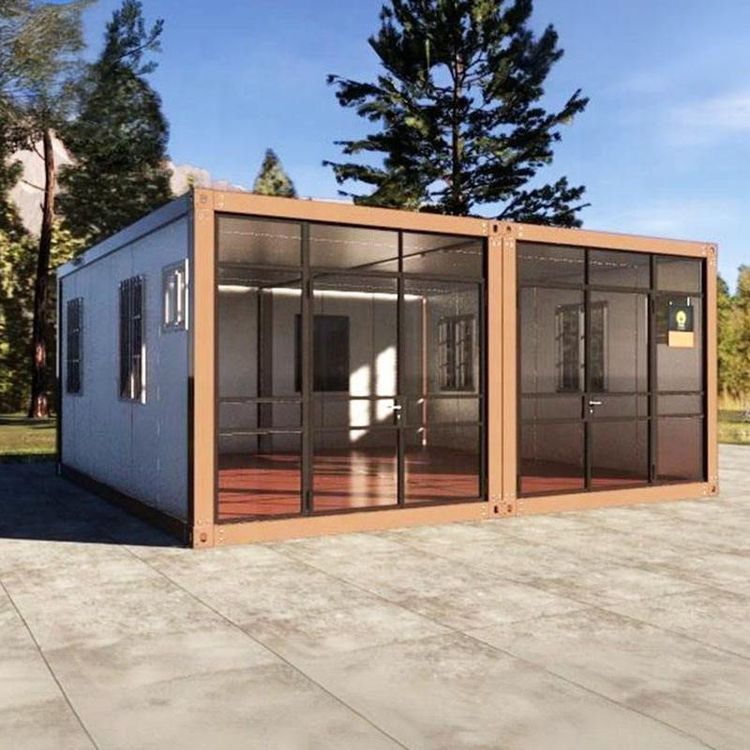
Soft decoration styles cover various types such as industrial, minimalist, and pastoral. Industrial style retains the original steel plate texture and rivet structure, paired with gradient graffiti or suspended LED light strips. Minimalist style creates a tidy space through solid-color walls and hidden storage design. Pastoral style uses natural wood decorations, floor-to-ceiling glass windows, and green plants, such as in the 'Bamboo Whisper Mountain Retreat' project in Moganshan, Zhejiang, where 12 containers are embedded in a bamboo forest, with metal frames and natural wood creating a unique aesthetic.
Scene Adaptation through Functional Versatility
Soft decoration design enhances specific functions according to different scenario needs. Construction site dormitories focus on practical configurations such as modular bathrooms, centralized heating, and smart access control. Homestay scenarios emphasize lighting design (e.g., full-height floor-to-ceiling glass), sound insulation (double-layer rock wool + insulated glass), and landscape integration (rotatable balcony modules). Commercial spaces improve space utilization through open layouts and multifunctional display systems, such as a pop-up store for a trendy brand in Shanghai, which retains the original steel plate texture, exposes steel structural beams, and uses LED light strips to create visual impact, increasing social media exposure by 400%.
Sustainable Advantages of Environmental and Economic Sustainability
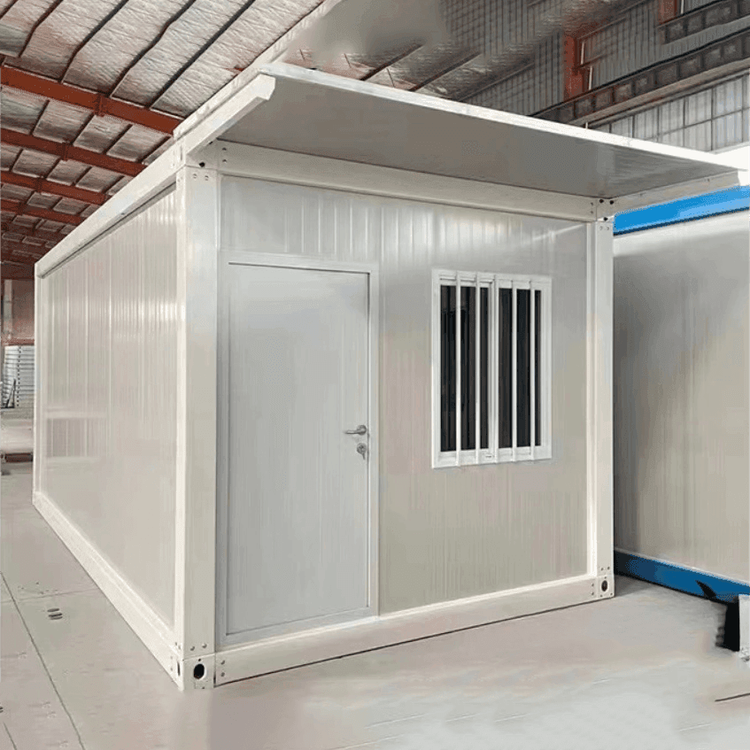
Container houses adopt factory prefabrication, reducing on-site wet work and compressing construction errors from the centimeter level to the millimeter level. Materials include galvanized steel frames and rock wool sandwich panels, combined with a three-layer structure (outer galvanized plate, middle rock wool insulation layer, inner PVC-coated steel plate) to improve thermal performance, reducing indoor temperature fluctuations by 40% compared to traditional color steel plate houses. Additionally, containers can be transported as a whole, with a single relocation cost of approximately 15-25 yuan per kilometer. Upon arrival at a new site, they only need to be connected to water and electricity for immediate use, aligning with low-carbon environmental protection concepts.