Snow on Container House
When it snows on container houses, it is crucial to focus on roof snow removal, structural safety inspections, and fire hazard prevention. Here are the key points:
Roof Snow Should Be Cleared Promptly to Avoid Overloading and Collapse
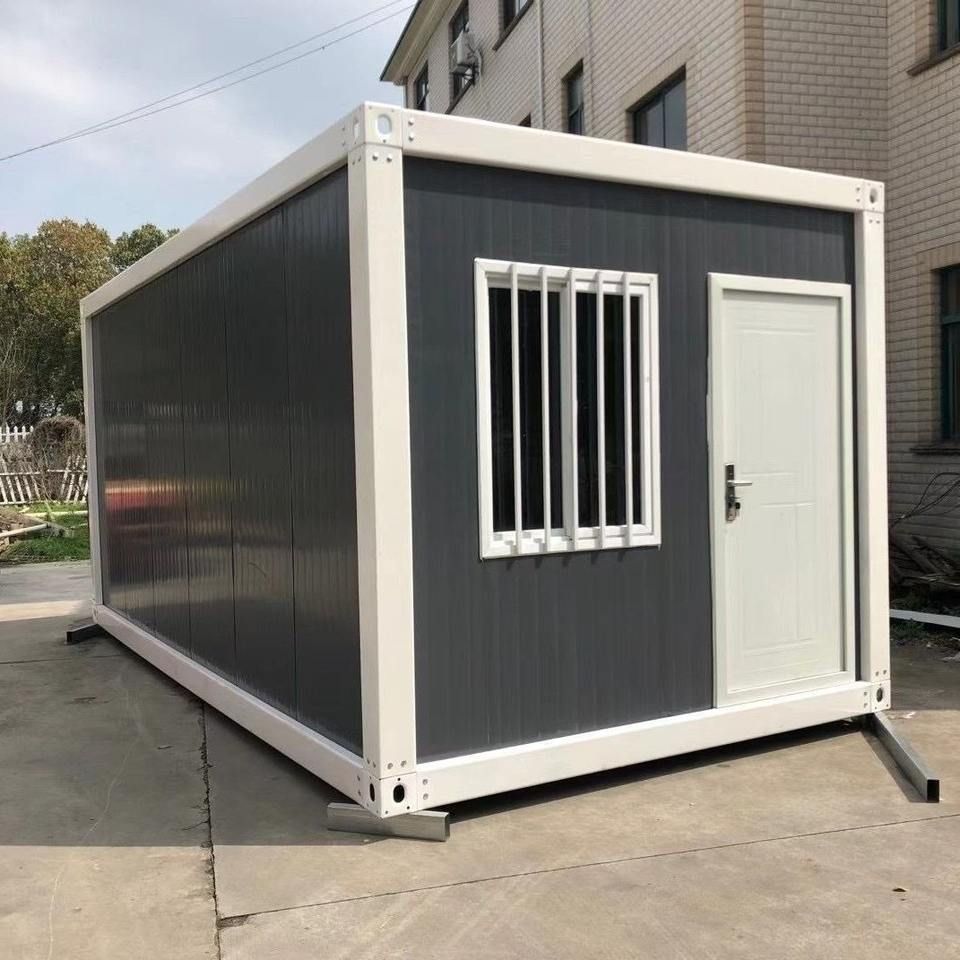
Container houses are mostly constructed with lightweight steel structures, and their roofs have limited load-bearing capacity. According to the 'Code for Loads on Buildings and Structures', when snow thickness exceeds 15 centimeters, the snow load may surpass the designed safety threshold. This is particularly true for older buildings and color-steel sheds, where continuous snow accumulation can easily lead to deformation, leakage, and even partial collapse. For example, the roof collapse of the gymnasium at the No. 34 Middle School in Qiqihar, Heilongjiang Province, was caused by excessive snow load. When clearing snow, use specialized tools (such as thickened PE board snow shovels) to avoid damaging the roof structure with sharp tools, and follow the order of 'from the eaves to the ridge, from both gable walls to the center' to remove snow in sections.
Structural Safety Should Be Thoroughly Inspected to Guard Against Extreme Weather Risks
Winter conditions, including low temperatures, heavy snowfall, and strong winds, can impact the structure of container houses. Regularly check for the formation of icicles (ice dams) on roofs, parapet walls, and billboards to prevent falling injuries. Also, monitor the condition of steel and wooden roof structures; if significant deformation, unusual noises, or ceiling detachment are observed, evacuate immediately and contact professionals for repairs. For instance, a severe snowstorm in Gongan County, Hubei Province, caused the collapse of multiple steel sheds, resulting in losses exceeding one million yuan for some enterprises, highlighting the importance of proactive prevention.
Fire Hazards Must Be Strictly Prevented to Ensure Electrical Safety
Container houses pose a high fire risk due to issues such as non-compliant construction materials and rapid combustion rates. Some temporary buildings on construction sites use flammable materials like polystyrene and polyurethane foam as core materials to save costs, which, once ignited, produce toxic combustion products and make escape difficult. Therefore, container houses should be constructed using Class A fire-resistant materials such as rock wool boards and fireproof cotton, and be equipped with simple fire extinguishing equipment. Electrical wires and cables should be protected with sleeves to prevent unauthorized connections; heat sources and open flames should be kept away from the buildings, and safe distances should be maintained during hot work operations.