How to Securely Lock a Container House
Container houses can be secured by installing multi-point locking mechanisms, locks with Class C anti-theft lock cylinders, along with high-security seals and structural reinforcements.

Lock Selection and Installation
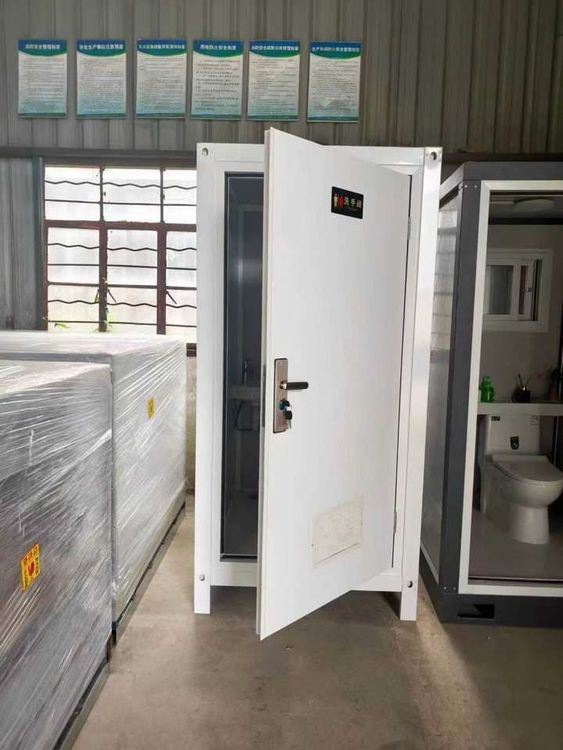
The door lock of a container house is a core component for ensuring security. It is recommended to use locks with multi-point locking mechanisms, which have multiple locking points distributed vertically and horizontally. Compared to single-point locks, they can more evenly press the door panel, resist strong wind pressure, prevent the corners of the door panel from warping, and ensure a tight seal. For example, the Cositec container protective door locking system adopts such a design, effectively dispersing external forces and enhancing anti-prying capabilities. The lock cylinder should be a Class C anti-theft lock cylinder, which has better anti-theft performance than ordinary lock cylinders and can significantly improve anti-theft ability. In addition, the lock assembly process is also crucial. It is necessary to ensure that the lock box and lock rod guide seats are welded with reinforcing plates, the lock rod running guide slots are flat to avoid jamming, and the lock rod, lock block, and lock seat are installed in precise positions so that the locking points fully engage when locked. After assembly, repeatedly test the opening and closing actions and adjust the position of the lock seat to ensure smooth engagement of the lock rod.
Seals and Structural Reinforcement
Loaded containers need to be sealed with high-security seals, and all seals should meet or exceed the current PA standards to prevent illegal opening during transportation or storage. For long-term use of container houses, you can refer to the customs-certified 'seven-point inspection method' to regularly check the physical integrity and reliability of the container structure, including the door locking system, front wall, left side, right side, floor, roof, inner/outer doors, external/landing gear, etc., to ensure there is no damage or modification. In terms of structural reinforcement, semi-automatic twist locks and other fasteners can be used at the container connections to prevent shaking or misalignment. For outdoor environments, stainless steel hardware or anti-corrosion treatment is required to avoid rusting and jamming.
Protective Measures for Special Scenarios
If the container house is used for storing valuable items or as an escape route, it needs to be equipped with a push-bar escape lock to meet fire safety requirements, ensuring that it can be opened from the inside in an emergency to prevent people from being trapped. For coastal or high-humidity environments, the anti-corrosion treatment of hardware should be strengthened to avoid lock failure due to rusting. In addition, regular maintenance of locks, such as checking the movement of connecting rods and applying lubricating oil, can extend the service life of locks and ensure long-term smooth operation.