
Soundproofing of Container House Roof
Soundproofing of a container house roof can be achieved by filling high-density soundproofing materials, adding soundproofing and shock-absorbing sealing layers, and optimizing the roof structure design.
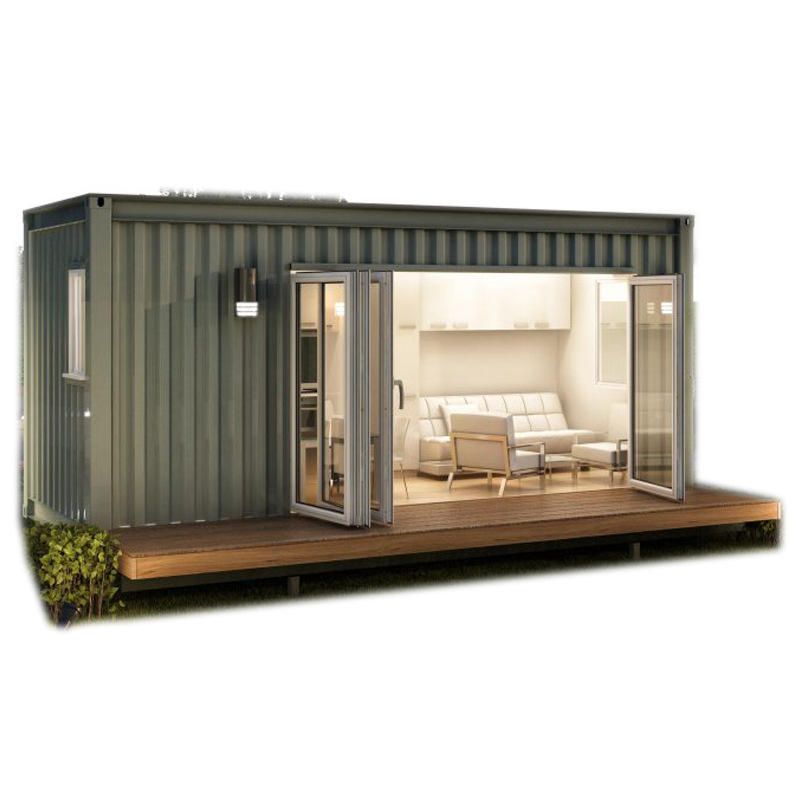
1. Filling high-density soundproofing materials
Fill the interior of the roof with high-density thermal insulation rock wool or glass wool blankets. These materials have dual functions of sound absorption and thermal insulation. For example, the thickness of glass wool blankets should be no less than 5cm, and centrifugal glass wool with a bulk density of 12 - 48kg/m³ should be selected, which can effectively block medium and high-frequency noise. If higher performance is desired, gradient sound-absorbing cotton can be used. Its density is distributed in a stepped manner, enabling it to absorb low, medium, and high-frequency noise simultaneously. Moreover, it is lightweight, waterproof, and fireproof, making it suitable for the limited space of the roof.
2. Adding soundproofing and shock-absorbing sealing layers
Install soundproofing blankets or shock-absorbing pads between the roof structural layer and the decorative layer to reduce sound vibration transmission through elastic materials. For example, after filling soundproofing cotton in a light steel keel frame, cover it with a 3mm-thick soundproofing blanket and then seal it with gypsum board. This can significantly improve the blocking effect of low-frequency noise. At the same time, all joint seams should be sealed with weather-resistant sealant to prevent sound from penetrating through the seams.
3. Optimizing the roof structure design
Adopt a double-layer roof structure with an air layer of 10 - 15cm left in the middle, utilizing air damping to further weaken the noise. For example, on the basis of the original roof, build a second roof with light steel keels and fill it with rock wool boards in the middle to form a “soundproofing - air layer - soundproofing” sandwich structure. If the floor height allows, perforated gypsum sound-absorbing boards can be installed in the air layer to absorb specific-frequency noise through micro-hole resonance.
4. Selecting soundproofing roof materials
If the roof materials need to be replaced, give priority to composite panels with soundproofing layers. For example, FRP fiberglass sandwich roof panels have an internal EPS sandwich layer that combines thermal insulation and soundproofing functions, reducing the efficiency of noise transmission. For metal roofs, damping coatings can be sprayed on the surface to reduce vibration noise by increasing the internal damping of the material.
You may also like

Portable Toilet Eco-Friendly: MOQ, Samples & Quotation Guide
Read More
Top Portable Toilet Color Steel Manufacturers: How to Choose a Factory Partner
Read MorePortable Toilet Picture: Types, Features & Buying Tips
Read More