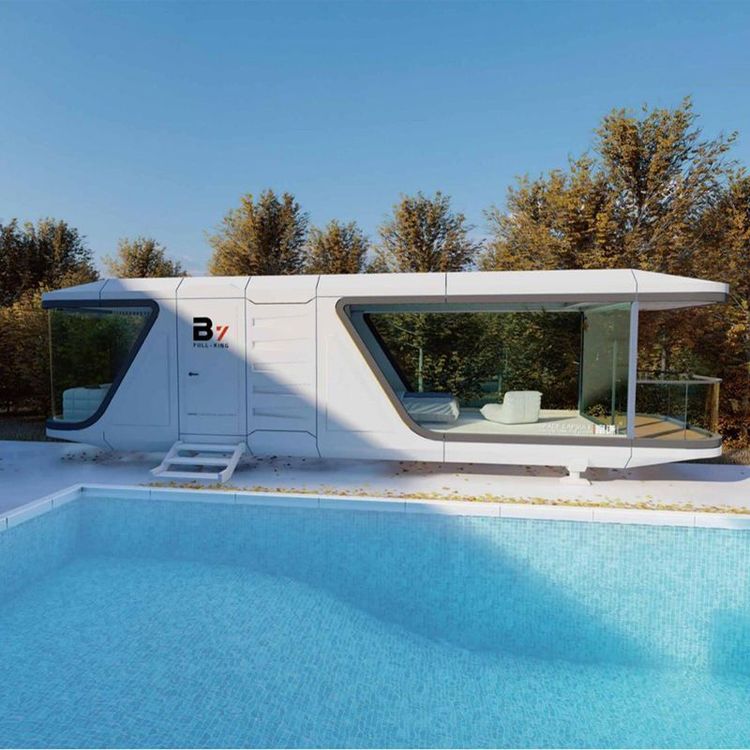
Container House Roof Material Requirements
The roof materials of container houses must meet four basic functions: waterproofing, corrosion resistance, load-bearing capacity, and thermal insulation, and their performance parameters need to be adjusted according to environmental conditions. Specific requirements are as follows:

1. Weather Resistance and Lifespan
Roof materials must withstand extreme temperature variations from -30℃ to 80℃ and comply with the ASTM G154 standard, which requires a UV radiation intensity of ≥1000 w/m² to resist aging caused by long-term outdoor exposure. In commercial settings, the material lifespan should be at least 10 years without maintenance, with high-end materials like fluorocarbon-coated steel sheets lasting up to 25 years, significantly reducing long-term maintenance costs.
2. Weight and Load-Bearing Safety
The single-layer thickness of the material is typically controlled between 0.5 and 2mm, with a total weight of ≤15kg/m² to prevent structural deformation of the container due to overloading. In terms of load-bearing capacity, a single-layer roof must meet a live load of ≥0.5kN/㎡ (as per the national standard GB 50009-2012). Standard container roofs must also withstand additional snow loads of ≥1.5kN/m² in cold regions and resist wind pressures equivalent to a Category 10 typhoon (approximately 0.5kN/m²) in coastal areas, ensuring structural stability under extreme weather conditions.
3. Waterproofing and Sealing Treatment
Roof joints should be filled with polyurethane sealant, and a 5% drainage slope should be reserved to prevent rainwater accumulation and leakage. In rainy regions, a pitched roof design (with a slope of ≥15°) is recommended, paired with waterproof materials such as asphalt felt or metal tiles to further reduce leakage risks.
4. Environmental Adaptability Optimization
- High-temperature regions: Install reflective coatings (e.g., white polyurethane) or hollow thermal insulation layers to reduce indoor temperatures by 3-5℃ by reflecting solar radiation and blocking heat conduction, enhancing living comfort.
- Cold regions: Use double-layer sandwich panels (filled with polyurethane, with a thermal conductivity of ≤0.022W/(m·k)) to effectively block heat exchange between indoors and outdoors, preventing condensation that could corrode materials.
- Coastal regions: Materials must have stronger resistance to salt spray corrosion, such as aluminized zinc steel sheets or stainless steel, to extend service life.
5. Material Selection Recommendations
Common roof materials include galvanized steel sheets, aluminum alloy sheets, fluorocarbon-coated steel sheets, and composite sandwich panels. Among them, fluorocarbon-coated steel sheets offer both weather resistance and self-cleaning properties, making them suitable for long-term outdoor use. Composite sandwich panels, filled with polyurethane or rock wool, can simultaneously meet thermal insulation and load-bearing requirements, making them the preferred option for various environmental scenarios.