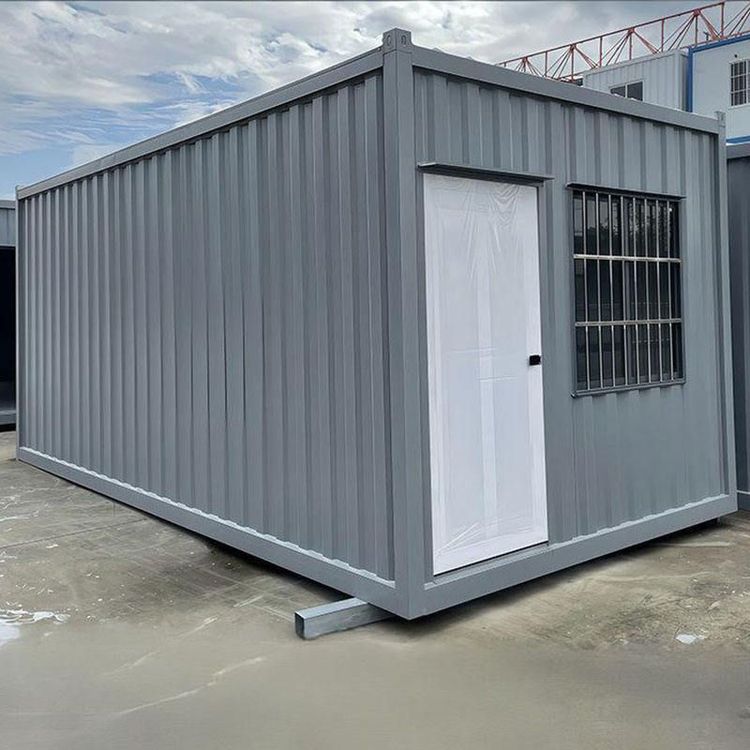
Container House Roof Drainage Pipe
The handling of drainage pipes on the roof of container houses can be achieved by designing drainage slopes, installing drainage gutters and downspouts, selecting appropriate materials, and ensuring the effectiveness of the drainage system.

Designing Drainage Slopes: The roof of a container house requires a reasonable drainage slope, generally controlled between 2% and 5%. This can be achieved by placing wedge-shaped blocks on the top of the container or adopting a sloped roof design. Such slope design enables rainwater to naturally flow towards the drainage outlets under the force of gravity, preventing water accumulation from damaging the roof while reducing rainwater erosion and extending the roof's service life.
Installing Drainage Gutters and Downspouts: Install drainage gutters along the edges of the container roof to collect rainwater. The gutter material is usually metal, such as galvanized steel sheet or aluminum alloy, which offers strong corrosion resistance and ensures long-term use. The size of the gutter should be selected based on the area of the container house and local rainfall to ensure timely collection and drainage of rainwater. The collected rainwater is discharged to a designated location on the ground through downspouts, which should be installed securely to prevent detachment due to rainwater impact or external forces, while ensuring smooth drainage to prevent blockages.
Selecting Appropriate Drainage Pipe Materials: There are various materials for roof drainage pipes, with common metal materials including cast iron, color-coated steel sheet, iron, aluminum alloy, and stainless steel. Among them, DN50 ductile cast iron pipes for drainage are commonly used for roof rainwater pipes. Their smooth inner walls, combined with cement mortar linings or anti-corrosion coatings, can reduce dirt adhesion and water flow resistance, ensuring smooth drainage. Moreover, ductile cast iron exhibits good performance in terms of impact and compression resistance, adapting to different environmental conditions.
Ensuring the Effectiveness of the Drainage System: Design and establish an appropriate drainage system, including sewers and drainage pipes, to ensure the rapid and effective discharge of sewage and rainwater from the container house, preventing water accumulation and pollution issues. At the same time, regularly inspect and maintain the drainage system, checking for smooth pipes and unblocked drainage outlets, and promptly clearing debris to ensure the normal operation of the drainage system.