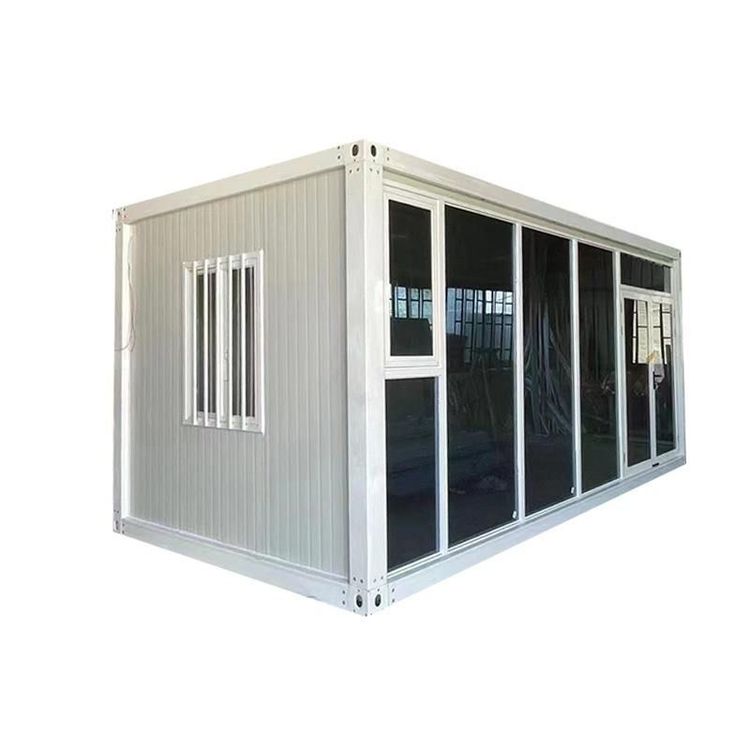
Container House Roof Drainage Channel
The roof drainage channel of a container house usually adopts an internal drainage structure. Taking a box-type movable packaged container house as an example, drainage channels are set around the top, and downspouts are installed inside the columns to direct rainwater underground.

Drainage Channel Structure Characteristics
Taking a common box-type movable packaged container house as an example, its roof drainage channel is designed as an internal drainage structure. Around the top of the house, a circle of drainage channels is specially set up. These drainage channels can effectively collect rainwater flowing down from the roof. Compared with external drainage, this internal drainage structure reduces, to a certain extent, the direct impact of rainwater on the external structure of the house, lowers the risk of rainwater erosion, and helps extend the service life of the house.
Downspout Installation
Four downspouts are installed around the inside of the columns. These downspouts are connected to the top drainage channels and serve to guide the rainwater collected by the drainage channels to the ground in an orderly manner. Through this design, rainwater does not accumulate around the house, avoiding problems such as foundation subsidence and house dampness that may be caused by water accumulation, ensuring the stability of the house and the comfort of living.
Leakage Cause Analysis
Well-made container houses generally do not experience leakage. However, if leakage occurs, there are mainly two workmanship issues. One is that the structural adhesive at the seams at both ends of the iron sheet layer on the top of the container is not applied properly. Structural adhesive plays a crucial role in the waterproofing treatment of container houses. It can fill the gaps at the seams of the iron sheet layer and prevent rainwater from penetrating. If the structural adhesive is applied unevenly, is not thick enough, or has not fully cured, rainwater will seep into the interior of the house through the seams. The other is that the moisture-proof film is not properly adhered and sealed. The moisture-proof film can prevent moisture from rising and also plays a certain waterproofing role to a certain extent. If the moisture-proof film is not firmly adhered, has air bubbles, or is damaged, the waterproofing effect will be greatly reduced, leading to leakage problems.