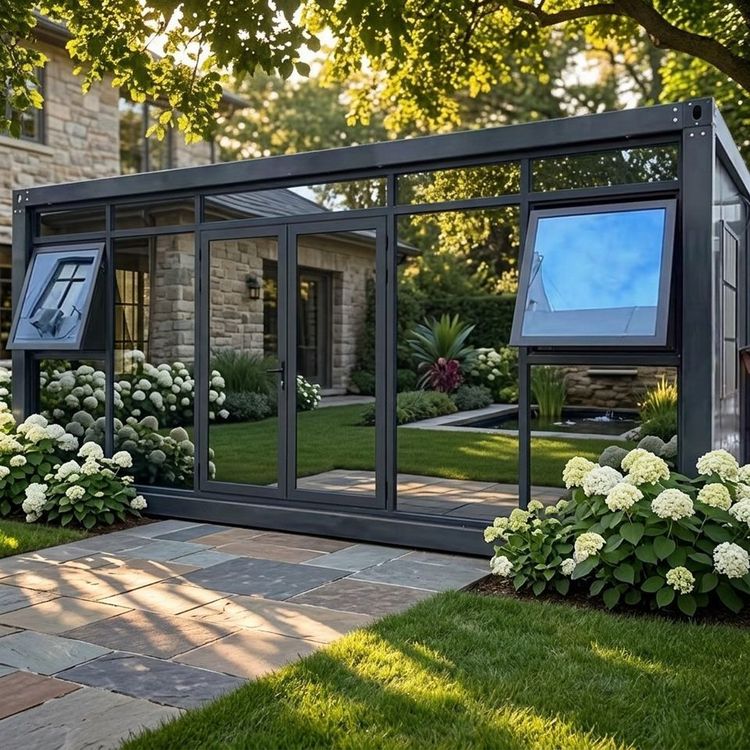
Container House Roof Design
Container house roof designs are diverse, with common types including curved roofs, triangular roofs, and flat roofs. Design considerations must comprehensively account for drainage, insulation, ventilation, lighting, and structural stability.

Curved Roof Design: Curved roofs are commonly seen in modular container buildings like Apple Pods. Their rounded appearance and smooth lines are not only aesthetically pleasing but also effectively disperse rainwater, reducing the risk of water accumulation and enhancing waterproofing performance. The curved roof structure is typically integrated with metal wall panels, creating a harmonious blend of rounded edges and angular features that enhance overall stability.
Triangular Roof Design: Triangular roofs are particularly suitable for tropical climates, as exemplified by the OostKampville project in Bangkok. The top metal panels provide heat and rain protection, while the semi-transparent middle section allows natural light to penetrate. The lower steel louvered windows block rainwater and strong sunlight while maintaining ventilation to prevent heat buildup indoors. This design ensures ample indoor lighting while effectively regulating indoor temperature.
Flat Roof Design: Flat roofs are simple and practical, facilitating the installation of solar photovoltaic panels and other equipment for self-sufficient energy generation. Some container houses incorporate skylights on flat roofs to enhance lighting while maintaining a flat surface for easy maintenance and cleaning.
Roof Material Selection: Roof materials must possess excellent waterproofing, insulation, and weather resistance properties. Common materials include galvanized aluminum-zinc color-coated steel sheets, composite rock wool panels, and glass wool panels, which not only provide effective waterproofing but also efficient thermal insulation, improving indoor comfort. In cold regions, additional insulation layers, such as high-density polyurethane insulation, are required to withstand extreme low temperatures.
Structural Design Considerations: Roof structural design must ensure a clear load transfer path, with roof loads effectively transmitted through sidewall columns to the bottom sill and then evenly distributed to the ground. For welded container bodies, the entire structure is welded into shape, providing a direct load path. In contrast, bolt-connected modular containers require secure fastening at each connection node to maintain overall stability.