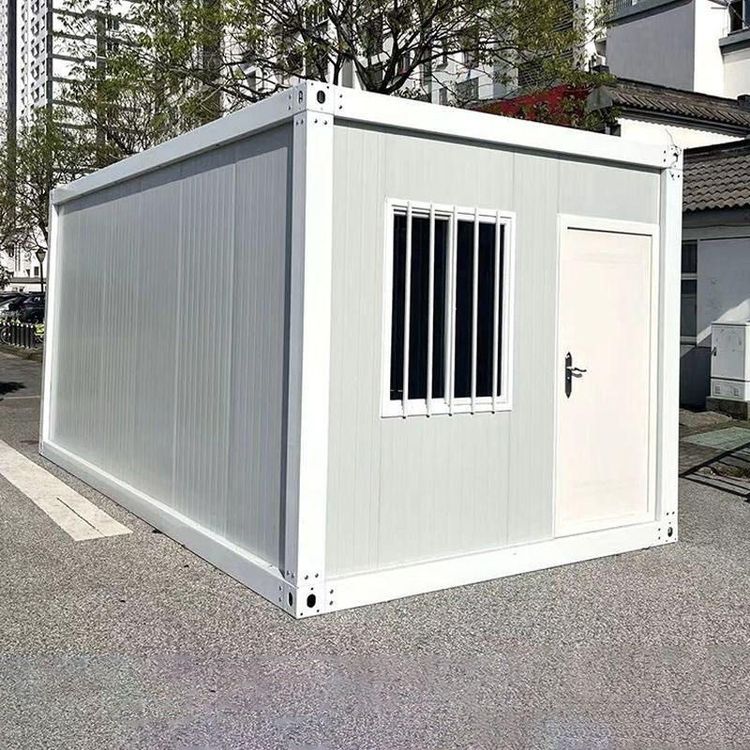
What Are the Risks of Container Houses
Container houses pose risks in terms of structural safety, fire prevention, thermal insulation, legality, and environmental adaptability.

Structural Safety Risks
In extreme weather conditions, non-standard or low-quality container houses are prone to structural deformation, wall cracking, and even collapse. For example, a regular container purchased online by a man in Haiyan, Zhejiang, fell apart in an 8-level wind, while compliant products like the packing-box units from Zhongnan in Suzhou have a wind resistance rating of up to level 12, with a deformation rate of only 0.18%. When purchasing, it is necessary to verify wind and earthquake resistance test reports and avoid using unqualified products from unknown brands.Inadequate Fire Performance
Container houses are mostly made of color-coated steel plates and foam boards, which have poor high-temperature resistance. Under high temperatures, the steel structure may melt, affecting overall stability. It is essential to equip them with fire-fighting equipment, keep them away from open flames, and avoid using open flames for heating or cooking indoors.Thermal Insulation and Heat Preservation Issues
Due to differences in materials, low-end products cannot guarantee thermal insulation performance, making them prone to being stuffy in summer and cold in winter. It is advisable to choose products from manufacturers with quality assurance or improve the situation by adding insulation layers or using energy-saving materials.Legality and Planning Risks
Unauthorized modifications of container houses may involve illegal construction and face the risk of demolition. For example, Chongming District in Shanghai conducted a special rectification of container houses that had been modified into residential structures, emphasizing the need to obtain rural construction planning permits. Before use, it is necessary to confirm the land nature and planning permits to avoid encroaching on public land or violating urban and rural planning laws.Environmental Adaptability Risks
In open areas, wind speeds may far exceed weather forecasts, and ordinary containers need reinforcement to withstand high winds. During installation, it is necessary to adjust the structure according to the environment, such as adding wind-resistant cables and reinforcing enclosure materials, to ensure safe use.