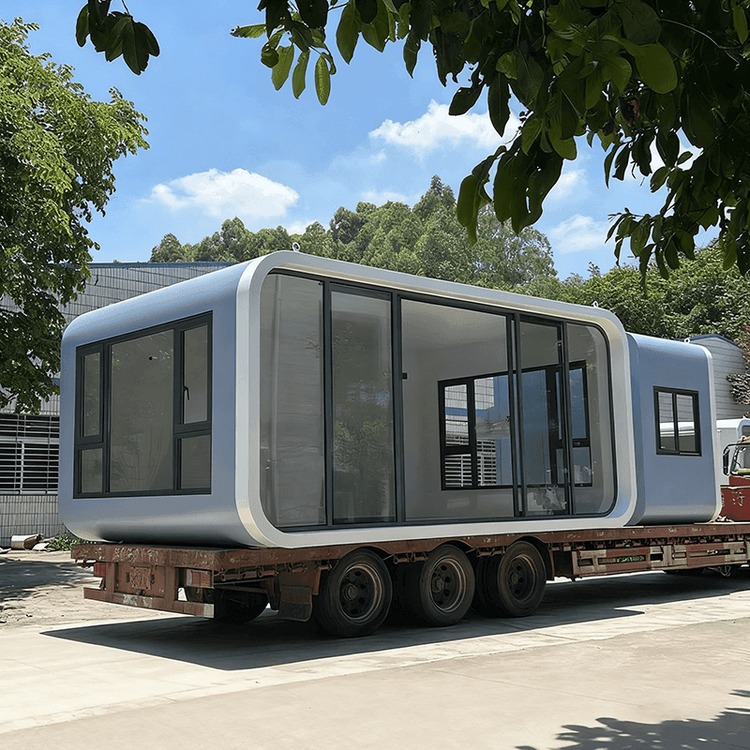
Container House Repair Requirements
The repair of container houses should be systematically carried out from four aspects: materials, structure, functionality, and compliance. The specific requirements are as follows:

I. Material Quality Inspection During the repair of container houses, the quality of steel, accessories, and other materials must be strictly inspected. The steel should comply with current national standards, with a focus on testing the strength and corrosion resistance of key components such as corner posts, side beams, and skin structures to ensure there is no rust, deformation, or cracks. Accessories such as bolts and rivets should match the original design to avoid structural loosening due to incompatible materials. Other materials, such as insulation layers and waterproof membranes, should have fire-resistant and waterproof properties and be accompanied by quality certificates. For example, Anhui Fandian Construction Engineering Co., Ltd. used low-VOC water-based paint in the renovation of color steel tiles, which has strong adhesion and corrosion resistance, serving as a reference for material selection in repairs.
II. Structural Safety Reinforcement If the house shows signs of wall cracking, joint separation, or foundation settlement (such as in the case of Mr. Gao's house, which cracked due to its proximity to a rice paddy), a professional agency should be commissioned to conduct a structural inspection. The inspection should cover beams, columns, steel structures, and foundation bearing capacity, with load calculations used to assess structural safety. For areas with insufficient bearing capacity, reinforcement solutions such as adding steel supports, repairing cracks, or foundation grouting should be adopted. If the house is rated as a Class C dilapidated building (such as in the case of Grandpa Liu's house) and cannot be repaired through reinforcement, it should be entirely replaced with a compliant container house, ensuring the new structure meets seismic and wind resistance design requirements.
III. Functional Restoration and Upgrades Repairs should address functional issues such as roof leaks, aging electrical wiring, and damaged doors and windows. Roof waterproofing should use weather-resistant materials, such as SBS modified bitumen membranes or polymer waterproof coatings, ensuring tight sealing at joints. The electrical system should replace aging wiring, install leakage protection devices, and reserve sufficient capacity to meet future electricity demands. Doors and windows can be replaced with broken bridge aluminum alloy materials to improve thermal insulation. Additionally, ventilation, lighting, or sound insulation designs can be added based on usage needs, such as installing skylights on the container roof or adding sound insulation cotton.
IV. Compliance Inspection After repairs are completed, a three-stage inspection should be conducted in accordance with the "Container House Construction Quality Inspection Standards":
- Factory Production Inspection: Check the manufacturing process of container units to ensure welding, corrosion protection, and other aspects comply with standards;
- On-Site Installation Inspection: Confirm there is no structural damage during transportation and that the installation location, fixing method, and connection nodes meet design requirements;
- Overall Quality Inspection: Use BIM models for comparison to check the pass rates of main control items (such as structural safety and fire rating) and general items (such as appearance flatness). Inspection records should be signed and confirmed by the construction unit, supervision unit, and factory representative and retained for quality traceability.
Special Scenario Considerations: If the house is located in a historical and cultural district (such as the case of the Huaxin Cement Site in Huangshi, Hubei Province), repairs should preserve the original appearance using traditional materials and techniques. If used for temporary offices or entrepreneurship, ensure the repairs comply with fire safety, environmental protection, and other regulations for business premises.