
Movable Container House Rental
Container house rental indeed offers mobility, with its core advantages lying in the flexibility of structural design and transportation methods, meeting the rapid relocation needs of temporary housing. Here is a detailed analysis:
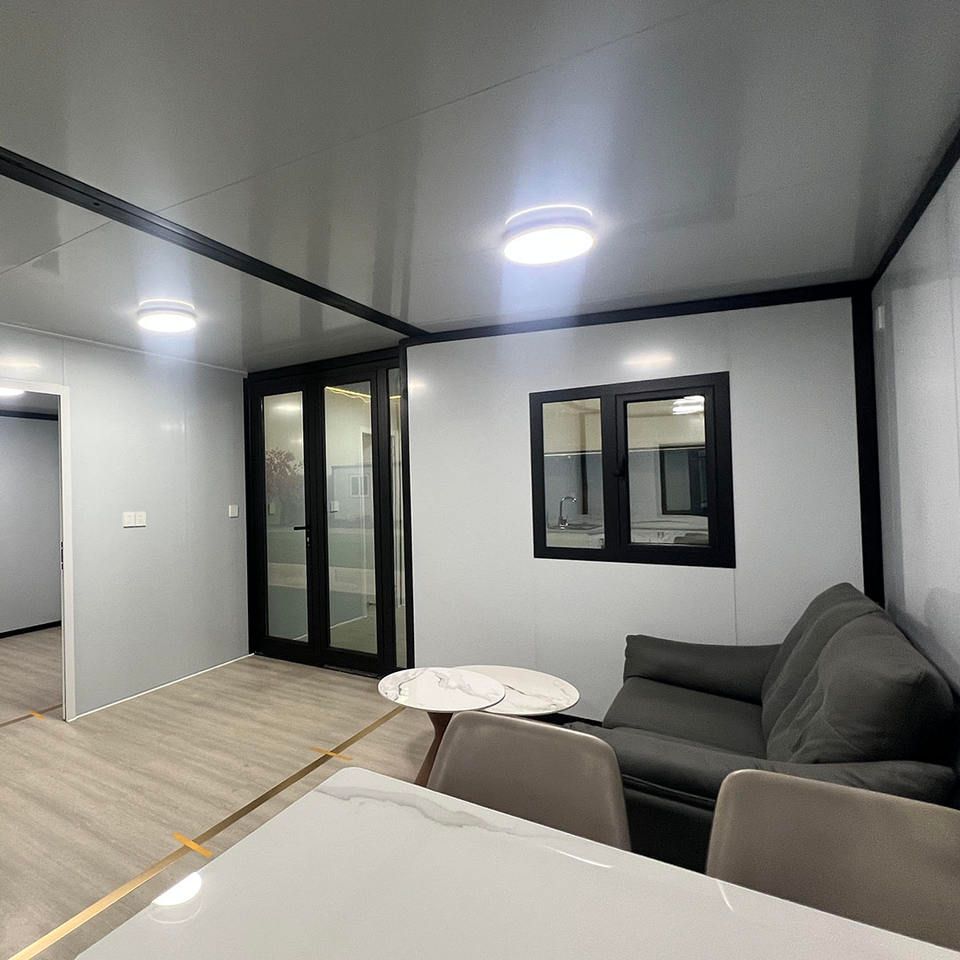
1. Structural features support mobility
Container houses use standard containers as carriers and adopt all-steel structural frames (e.g., products from Suzhou Zhongnan Steel Structure Co., Ltd. can withstand wind speeds of up to 12 and earthquakes of magnitude 8). They are structurally robust and highly modular. The containers are connected by bolts and can be used individually or combined in multiple units. They can even increase usable area through side or end expansion modules (with an area increase of 30%-50% after expansion). This design allows them to maintain integrity during transportation, reducing losses from disassembly and reassembly while meeting spatial requirements in different scenarios.
2. Transportation and installation efficiency optimize relocation costs
Folding container houses (e.g., the folding models from Suzhou Zhongnan) have a volume of only 1/5 of their expanded state when folded. A single freight truck can carry 20 units, reducing transportation costs by 40%. During storage, they can be stacked up to 8 layers high, increasing space utilization by 60%. Additionally, highly prefabricated products (e.g., quick-assembly containers) require only 2 hours for single-unit installation, and the deployment period for a 100-unit camp can be shortened to 7 days, significantly reducing time and labor costs and providing economic guarantees for frequent relocations.
3. Rental services cover full-lifecycle mobility needs
Many companies offer integrated services covering 'production-transportation-installation-maintenance', supporting rapid deployment in different locations. For example, Beijing Falilai provides door-to-door services across Beijing with flexible rental terms (daily rent starting from 3-10 yuan, with a minimum rental period of 120 days). Moreover, container houses use cold-formed thin-walled light steel structures, which are lightweight and easy to install (6 skilled workers can install 200㎡ in a day), further enhancing their mobility.
4. Application scenarios validate the value of mobility
Container houses have been widely used in scenarios requiring temporary relocation, such as construction sites, disaster reconstruction areas, and commercial pop-up stores. For example, Suzhou Zhongnan's customized interior pre-installation technology enables a 20㎡ pop-up store to be set up in 2 days, 3 days faster than competitors. Shanghai Ninggang's 40-foot expandable container houses with bathrooms and kitchens are suitable for the tourism rental market. These cases demonstrate that their mobility not only meets functional needs but also creates economic value by quickly responding to market changes.



