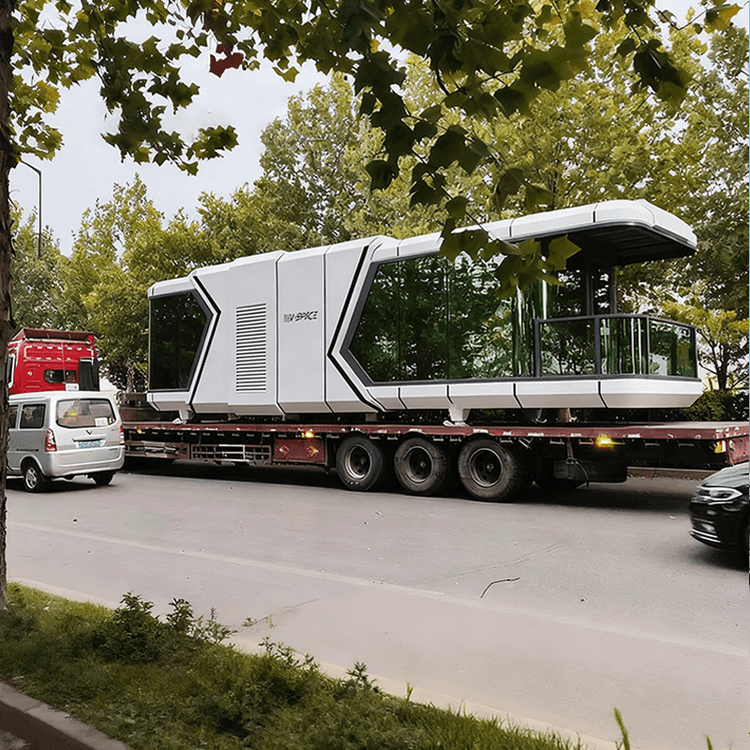
Raising Tortoises in Container Houses
Raising tortoises in container houses requires designing an environment that combines the tortoise's habits, focusing on space, water quality, temperature and humidity, and functional zoning, while also ensuring safety protection and daily maintenance.

1. Space and Container Design
Container houses offer ample space for flexible planning of tortoise activity areas. Choose escape-proof and structurally sturdy containers, such as thickened plastic storage boxes, logistics turnover boxes, or custom-made tortoise tanks, to prevent tortoises from climbing out. The container height should exceed twice the tortoise's body length, with smooth inner walls to prevent shell scratches. If space allows, divide the area into water and land zones: the water zone for swimming and the land zone paved with soil, stones, or bedding material for resting and basking. For example, in a balcony tortoise-raising case, an independent turnover box is used to divide the land zone, paired with green plants to create a natural environment.
2. Water Quality Management
Tortoises are sensitive to water quality. Use tap water or well water that has been left to stand in the sun to remove harmful substances like chlorine. The water level should be 0.5-1 times the length of the tortoise's carapace for easy breathing. Regularly change the water and use a filtration system to reduce the risk of water quality deterioration. For example, a three-tier turnover box filtration system can be used for 24-hour water circulation and purification, while planting money plants to help absorb impurities. When changing the water, ensure the new and old water temperatures are consistent to prevent the tortoise from catching a cold due to temperature differences.
3. Temperature, Humidity, and Light Control
Tortoises require a stable temperature and humidity environment: the water temperature should be maintained at 25-30℃, and the land temperature can be slightly higher by 2-3℃. Adjust the temperature inside the container using heating lamps, air conditioners, or floor heating, and cover with insulation cotton in winter to reduce heat loss. For lighting, provide 8-12 hours of natural light or UVB lamp exposure daily to promote vitamin D3 synthesis and prevent soft-shell disease. If the container has insufficient natural light, additional basking lamps should be installed, and shaded areas should be provided to prevent heatstroke.
4. Functional Zoning and Safety Protection
Design functional zones according to the tortoise species: semi-aquatic tortoises need larger land zones, while aquatic tortoises need deep-water zones and climbing platforms. For example, when raising small green tortoises and spotted tortoises together, place large stones in the water zone for climbing and pave the land zone with soil and stones. All areas should avoid sharp edges and corners to prevent tortoise injuries. Additionally, install escape-proof nets on container doors and windows to prevent tortoise escapes or the invasion of foreign organisms.
5. Daily Maintenance and Observation
Regularly clean the container, completely change the water 1-2 times a week, and clean the filtration system. Observe the tortoise's behavior and health status: if symptoms such as refusal to eat, floating in water, or shell softening occur, adjust the environmental parameters or seek medical attention promptly. Record the tortoise's growth data, such as weight and carapace length, to facilitate optimizing the feeding plan.