
Back to blog
Article
Container House Rail Installation
Admin September 16, 2026
The installation of container house rails should be carried out in accordance with structural characteristics and safety requirements, following standardized procedures to ensure stability and durability.
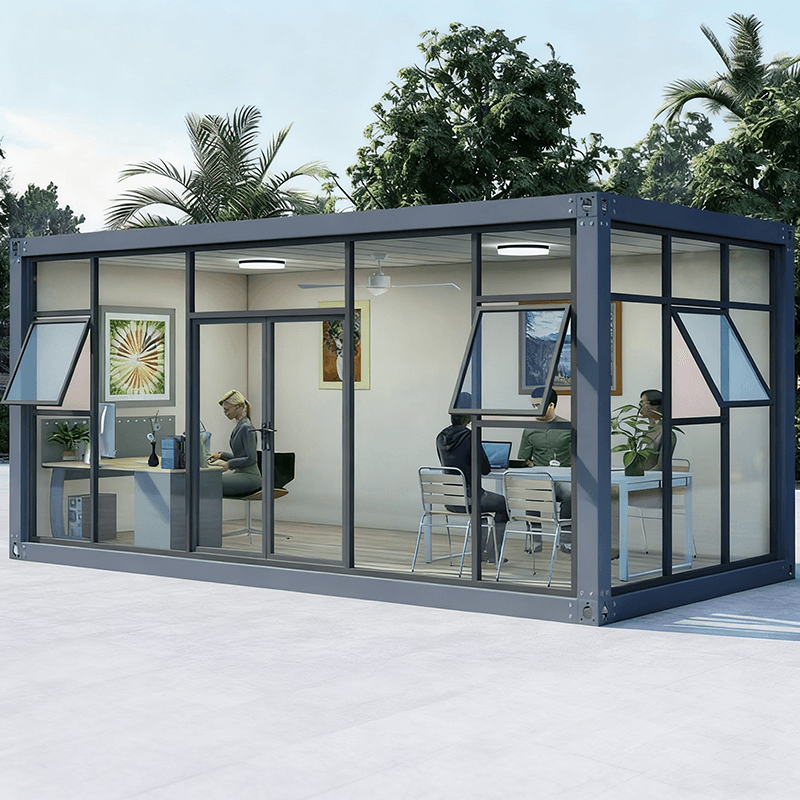
I. Pre-installation Preparations
- Material Selection
Container house rails are typically made of galvanized steel pipes or aluminum alloy materials, which must possess corrosion resistance and high strength properties. The reference information frequently mentions “high-corrosion-resistant galvanized steel materials,” which can extend the rail's service life to over 20 years, making them suitable for outdoor environments.- Tool Preparation
Essential tools include an electric drill, spirit level, wrench, welding equipment (if fixed connections are required), and safety gear (such as gloves and goggles). - Site Inspection
Examine the wall material (e.g., color-coated steel sheets or corrugated sheets) and thickness of the container house, and confirm the locations of embedded parts or connection points. If the wall is thin, expansion bolts should be used for reinforcement; if it has a steel structural framework, direct welding is possible.
- Tool Preparation
II. Installation Steps and Key Points
- Positioning and Marking
Determine the rail height (usually 1.1-1.2 meters) and spacing according to the design drawings. Use a spirit level to mark connection points on the wall, ensuring the rail's verticality error is ≤3mm.- Fixing Connectors
- Wall Drilling: Use an electric drill to create holes at the marked positions. The hole diameter should match the expansion bolts (e.g., a 10mm hole for an M8 bolt).
- Base Installation: Align the metal base (such as angle steel or a flange plate) with the holes and secure it with expansion bolts. The torque should reach 30-40N·m to prevent loosening.
- Assembling the Rail Body
Insert the vertical rods into the base slots and fix the cross-points of the horizontal and vertical rods with screws or welding. For detachable rails, reserve movable joints and install locks. - Corrosion Protection
Smooth and paint the welded areas with anti-rust paint. The entire rail can be sprayed with outdoor-specific fluorocarbon paint to enhance weather resistance.
III. Safety and Acceptance Criteria
- Stability Testing
After installation, apply a horizontal force (≥200N). The rail should remain stable without shaking or deformation.- Detail Inspection
Ensure all screws are tightened without looseness, welding points are free of cold welds, and the rail surface is smooth without burrs. - Compliance Verification
According to the Technical Specifications for Container Houses, the rail gap should be ≤110mm to prevent children or objects from falling.
- Detail Inspection
Tip: If you lack professional installation experience, it is advisable to contact the supplier (such as Xi'an Tengdaxing Housing Engineering Co., Ltd., mentioned in the reference information) for technical support to ensure the rails meet seismic and wind resistance safety standards.



