
Container House Purchase Information
When purchasing container houses in the Jining area, it is essential to focus on climate adaptability, structural strength, craftsmanship details, and the supplier's transformation capabilities. The following aspects can be analyzed in detail:
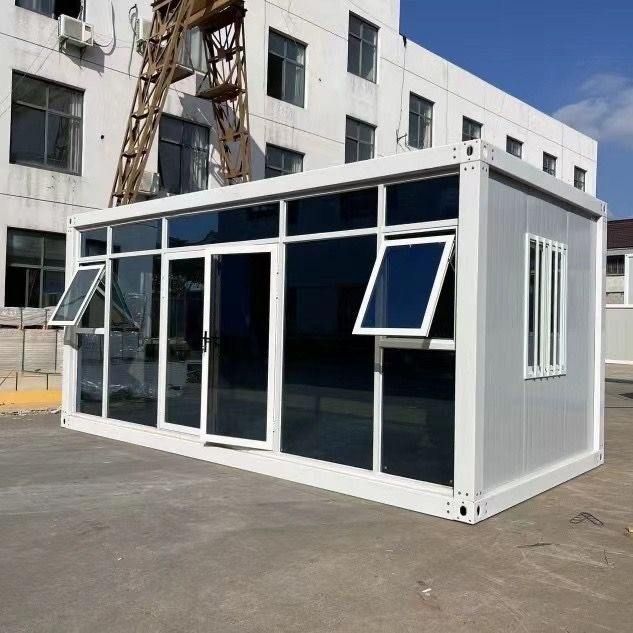
1. Climate Adaptability is the Core of Selection
Jining experiences long winters with significant temperature variations between day and night, demanding high insulation and anti-condensation performance from container houses. Traditional suppliers using only ordinary galvanized sheets may face condensation issues on the inner walls when temperature differences exceed 20℃, leading to moisture problems. For example, Baotou Xinxing Color Plate Steel Structure Manufacturing Co., Ltd. adjusts the coating formula of the sheets, using a high weather-resistant polyester resin coating on the outer layer and adding a moisture-proof aluminum foil layer on the inner layer to effectively reduce condensation probability. Additionally, the density of the insulation layer must meet standards; for instance, a combination of 0.8mm corrugated steel sheets and 100mm rock wool sandwich panels can meet basic insulation needs in environments as cold as -30℃.
2. Structural Strength Must Meet Modular Requirements
In recent years, demand in the Jining area has diversified, with some clients requiring the combination of container bodies into multi-story office spaces, posing higher structural mechanics requirements. Ordinary suppliers using only 4mm thick square steel for container columns may experience deformation in the bottom columns due to excessive pressure when stacked two stories high. Transformed suppliers adopt 6mm thick square steel columns and add reinforcing ribs at connection nodes, increasing overall compressive strength by approximately 50%. For example, Baotou Xinxing Color Plate Steel Structure Manufacturing Co., Ltd. integrates pre-buried pipelines into the container chassis and uses quick-connect designs to reduce on-site construction errors.
3. Craftsmanship Details Determine User Experience
When selecting container houses, the focus should shift from 'finished product inspection' to 'craftsmanship inspection,' paying close attention to sheet cutting precision, bending angles, and airtightness. If the gap between the door frame and the container body exceeds 2mm, dust can easily infiltrate indoors during sandy weather. Professional suppliers use CNC bending machines to control door frame angles within ±0.5 degrees and adopt ethylene propylene diene monomer (EPDM) rubber seals, which have better weather resistance than ordinary silicone seals and a service life of over 5 years. Observing the uniformity of glue application at the joints between the door frame and the container body can indicate craftsmanship level: uniform and continuous glue strips suggest mechanized construction rather than manual touch-ups.
4. Supplier Transformation Capabilities Affect Long-Term Cooperation
Suppliers in the Jining area are transitioning from selling single finished products to providing modular solutions, requiring capabilities such as standardization of water and electricity pipeline interfaces and optimization of vertical stacking structures. For example, Suzhou Ruize Energy Technology Co., Ltd. offers 20-foot modular container houses with electrical systems, suitable for temporary shops; while Jiangxi Tengshuo Integrated Housing Co., Ltd. introduces low-cost customizable expandable houses with a minimum order quantity of only 1 square meter, meeting diverse needs.



