
Container House Production Equipment
Container house production equipment involves multiple stages, including design, manufacturing, processing, and installation. The core equipment includes welding equipment, cutting equipment, forming equipment, and assembly equipment, among others.
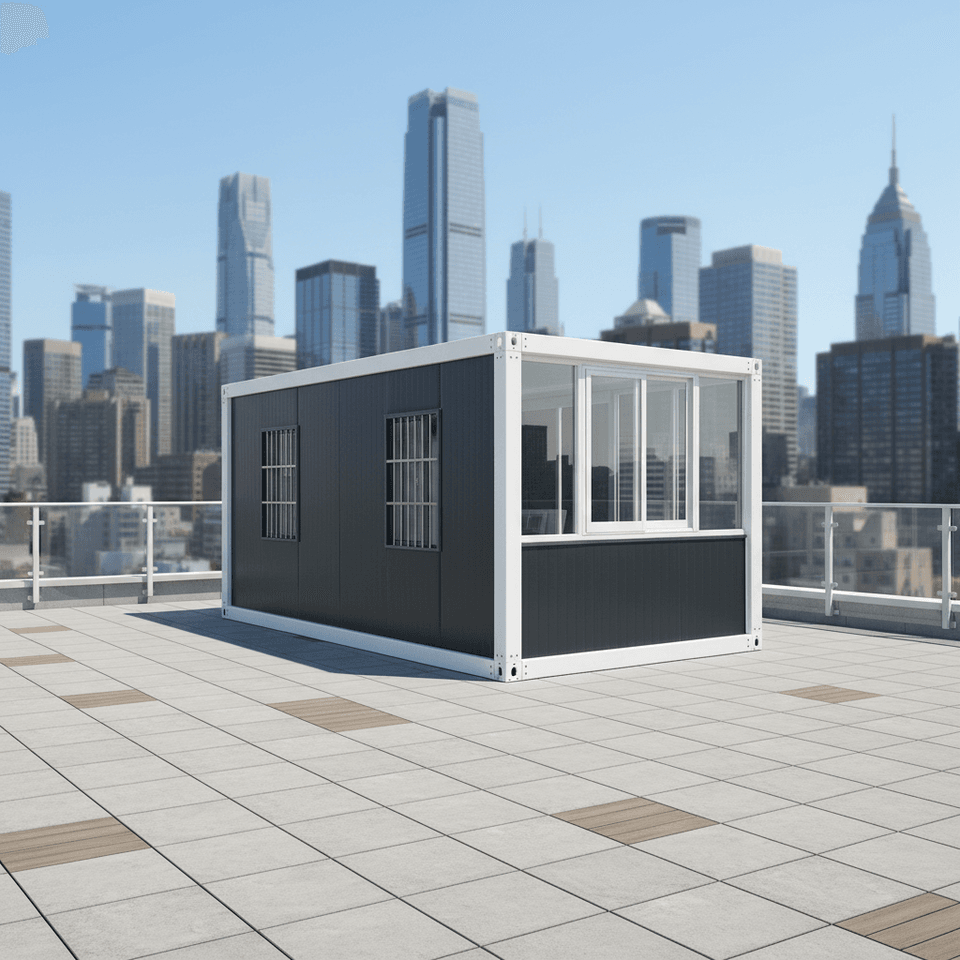
Welding Equipment: The main frame of container houses is mostly made of steel structures, and the welding quality directly affects structural stability. Fully automatic welding equipment can ensure that the weld strength meets standards (such as GB/T 19001-2016). For example, Suzhou Zhongnan Steel Structure Co., Ltd. uses fully automatic welding processes to achieve a deformation of only 2mm under 12-level strong winds, well below the national standard limit. Semi-welding and semi-bolt connection equipment is suitable for some modular designs, but attention should be paid to the risk of bolt loosening after long-term use.
Cutting Equipment: Used for precise cutting of steel materials, including laser cutting machines, plasma cutting machines, etc. These devices must meet high precision requirements to ensure that the dimensions of each component of the container body comply with design specifications, avoiding structural instability or poor sealing due to cutting errors.
Forming Equipment: Such as tile presses, cold roll forming machines, used for producing walls, roofs, and other components of container houses. For example, a fully automatic single-layer color steel tile press can quickly form roof tiles and is equipped with hydraulic cutting functions to improve production efficiency. Forming equipment for foldable containers needs to support modular design for easy transportation and assembly.
Assembly Equipment: Including cranes, assembly platforms, etc., used for rapid on-site assembly. The fast assembly of single modules by Suzhou Zhongnan takes only 4 hours, thanks to efficient assembly equipment and process design. Double-container splicing equipment is suitable for customized needs, such as the Detong mixing plant container control room achieving a length of 14 meters through double-container splicing.
Auxiliary Equipment: Such as spraying equipment for anti-corrosion and appearance treatment, testing equipment (such as wind pressure testers, seismic testers) for quality verification. Additionally, CNC machine tools can be used for processing high-precision accessories to enhance overall performance.
When selecting equipment, production scale, product type, and budget should be considered. Large enterprises can invest in fully automatic production lines, while small and medium-sized enterprises can choose modular equipment to flexibly respond to customized needs. At the same time, equipment must comply with environmental protection and safety standards, such as using low-noise, low-emission welding equipment to reduce environmental impact.



