
Back to blog
Article
Container House Production Contract
Admin September 15, 2026
The contract for producing container houses should clearly specify aspects such as whether it is for rental or custom production, responsibilities for planning approval, cost terms, and safety and maintenance responsibilities. The following elaborates on three aspects: key contract elements, legal risk warnings, and suggestions for contract clause design.
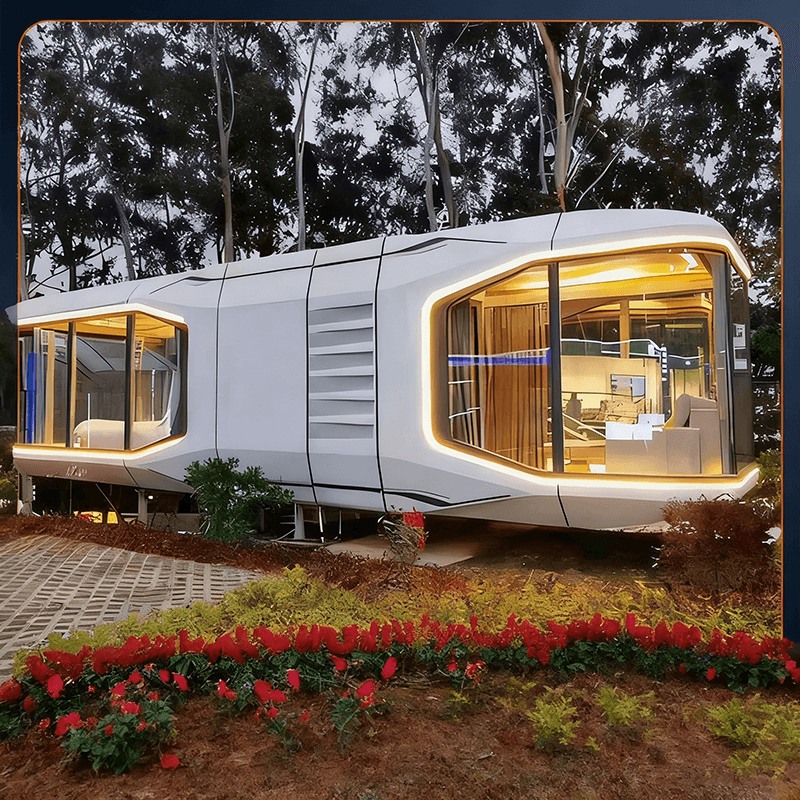
I. Key Contract Elements
- Definition of Contract Nature
It is necessary to clarify whether the contract is for "rental" or "custom production". If it is for rental, relevant clauses from the House Rental Contract should be referred to, such as the rental period, rent calculation method (e.g., per day or per year), and conditions for deposit refund. If it is for custom production, clauses from full-house custom contracts should be referred to, specifying the production scope, material standards, and workmanship requirements. - Responsibility for Planning Approval
According to the Urban and Rural Planning Law, the use of containers as houses in urban planning areas requires approval from the planning department. The contract should specify which party will be responsible if the contract becomes invalid or is ordered to be suspended due to the lack of approval (usually the lessor or the producer). - Cost Terms
Detailed listings of rent/production costs, deposits, transportation fees, lifting fees, installation fees, and maintenance fees are required. For example, a rental contract may stipulate that "Party B shall bear the transportation and lifting fees for the container's departure from and return to the factory, with a starting fee of 600 yuan per container". A custom contract should clarify that "the contract price includes all costs for measurement, design, production, transportation, and installation".
II. Legal Risk Warnings
- Risk of Contract Invalidity
If the container house has not obtained planning approval, the contract may be deemed invalid (refer to a case from the People's Court of Bayuquan District, Yingkou City, Liaoning Province). An additional clause should be included in the contract: "If the contract becomes invalid due to the lack of planning approval, both parties shall settle the costs based on the actual usage time and shall not pursue liability for breach of contract against each other". - Risk of Safety Liability
The attribution of safety responsibility for the house should be clarified. For example, a rental contract may stipulate that "during the rental period, Party B shall be responsible for repairing or compensating for any damage to the facilities inside and outside the container". A custom contract should stipulate that "the materials provided by Party A shall comply with national safety standards (e.g., rock wool flame-retardant materials)".
III. Suggestions for Contract Clause Design
- Core Clauses for Rental Contracts
- Rental period (e.g., a minimum rental period of 120 days and the method for adjusting the rent after the expiration);
- Conditions for deposit refund (e.g., the container number must match that in the contract when returning the container);
- Prohibited behaviors (e.g., "It is strictly prohibited to lift the container with a excavator; otherwise, it shall be treated as a purchase").
- Core Clauses for Custom Contracts
- Material standards (e.g., brand, thickness, and environmental protection grade of the panels);
- Workmanship requirements (e.g., "The cost of a door reaching the ceiling and straightening devices is included in the total price");
- Additional cost items (e.g., clear charging standards for special-shaped workmanship and hardware upgrades).



