
Power Supply for Container Houses
The power supply for container houses mainly relies on the internal electrical circuit system, which can achieve safe and stable power supply through reasonable design and installation.
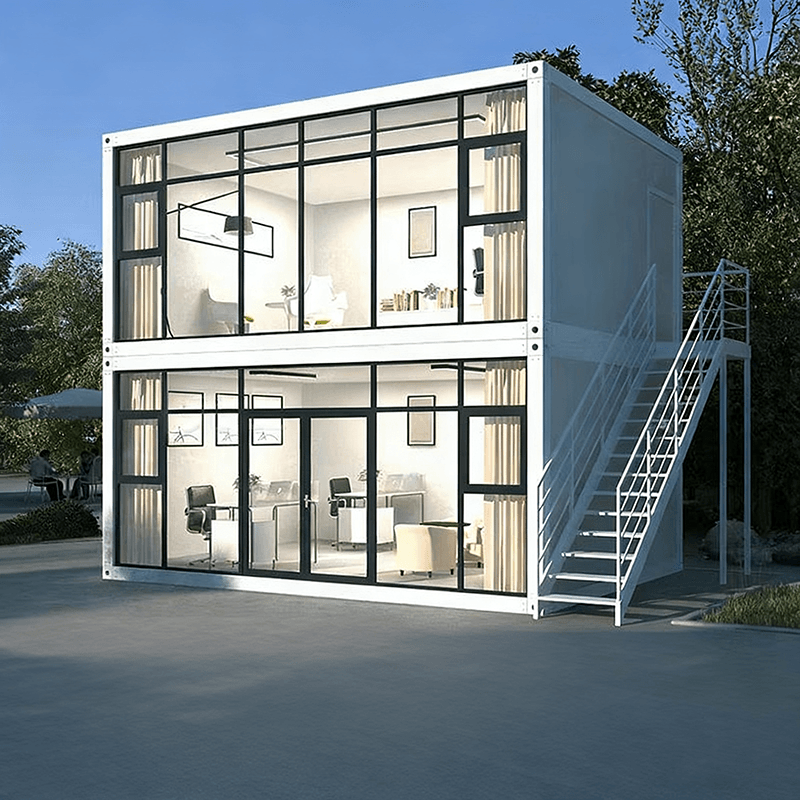
Circuit System Design: The circuit system of container houses is usually designed during factory prefabrication, including wire layout, socket placement, switch configuration, etc. The walls are mostly made of color-steel sandwich panels with thermal insulation material filled in the middle, and reserved space inside for laying electrical circuit pipelines to ensure hidden and safe wiring. The circuit system design must comply with building electrical codes, balancing practicality and safety.
Power Distribution System Configuration: The power distribution system of container houses typically includes equipment such as distribution boxes, switches, and sockets. The distribution box is responsible for distributing power, ensuring balanced electricity consumption across circuits, and is equipped with overload and short-circuit protection devices. Some container houses are also equipped with AC power distribution integrated boxes, with three-wire power input sourced from the AC side of the energy storage converter, further ensuring power supply stability.
Power Access Methods: The power access methods for container houses are flexible, allowing direct power supply from the mains or combined with renewable energy sources such as solar power and energy storage systems. For example, the power distribution system of container energy storage systems integrates battery packs, battery management systems (BMS), energy storage inverter systems, etc., which can convert direct current to alternating current to meet daily electricity needs.
Safety and Maintenance: The circuit system of container houses requires regular inspection and maintenance to ensure no aging or damage to the wiring. Distribution boxes, switches, and other equipment should be installed in dry, ventilated areas to avoid short circuits caused by humid environments. Additionally, the house must be equipped with a grounding system to prevent electrical accidents and ensure safety during use.
Practical Application Case: Guangzhou's first container-type intelligent power distribution room was constructed using factory prefabrication and on-site hoisting, taking only 17 days to complete, nearly half the time of traditional power distribution rooms. This power distribution room integrates electrical systems, fire protection systems, ventilation and insulation systems, etc., achieving safe and stable power supply while blending into the surrounding environment through graffiti on the exterior walls, demonstrating the innovative application of container houses in the power sector.



