
Container House and Portable Building
There are significant differences between container houses and portable buildings in terms of structure, performance, application scenarios, and market characteristics:
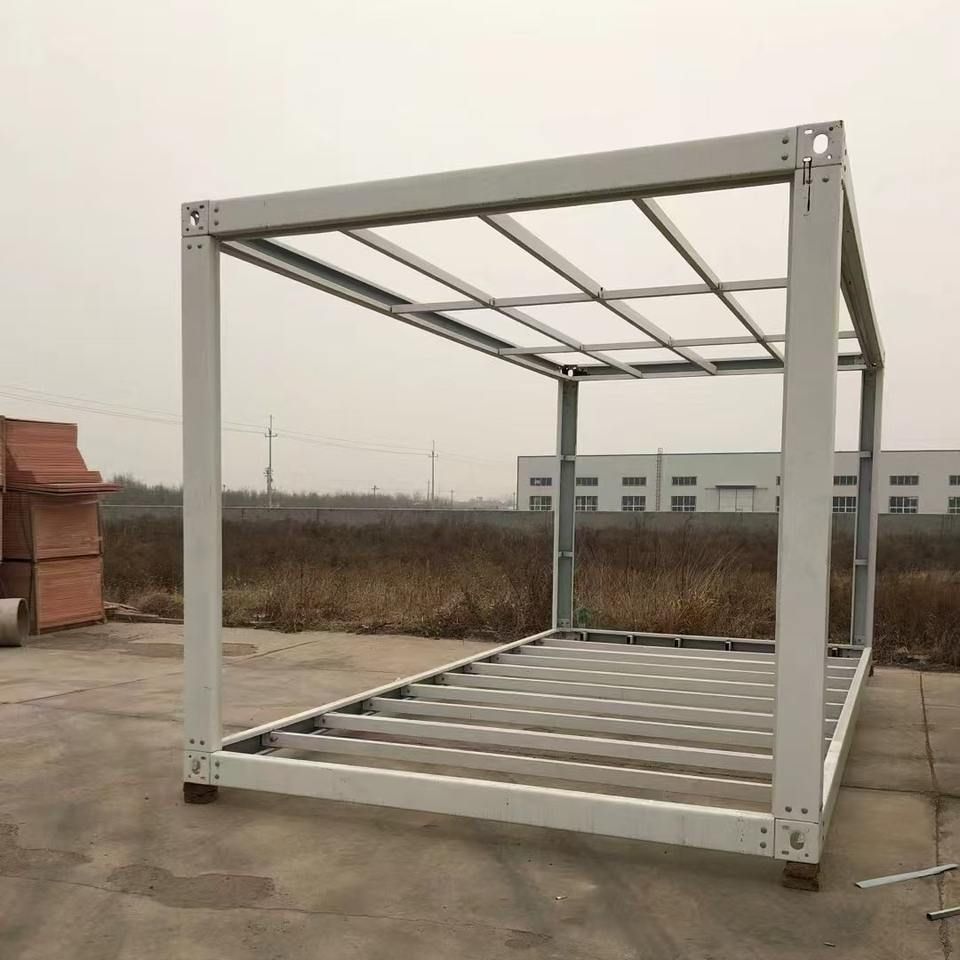
Structure and Materials
Container houses are based on standardized steel containers, featuring high structural strength, the ability to be stacked in multiple layers and joined horizontally, and a weather-resistant steel shell treated for corrosion resistance, with a service life of up to several decades. Their core advantages lie in “modularity” and “reversibility,” enabling rapid assembly and disassembly through modular design, with recyclable materials. Portable buildings, on the other hand, mostly use lightweight steel frames paired with color-coated steel sheets or rock wool sandwich panels as enclosure structures. While their material costs are lower, their structural strength and durability are inferior to container houses, making them typically suitable for short-term temporary construction scenarios.
Performance Comparison
- Structural Stability: Container houses perform better in wind and earthquake resistance. For example, the container mobile homes from Suzhou Zhongnan Steel Structure Co., Ltd. exhibit a maximum frame deformation of only 2mm under 12-level strong winds, well below national standard limits; whereas portable buildings may experience door frame misalignment or wall loosening under the same conditions.
- Installation Efficiency: Container houses adopt a factory-prefabricated, on-site assembly model, allowing for faster installation but requiring professional equipment (such as forklifts) for transportation. Portable building components are lighter and can be assembled manually, but the process involves more steps and may take longer overall.
- Scenario Adaptability: Container houses can achieve composite functions (such as community spaces and energy self-sufficiency) through techniques like staggered splicing and rooftop photovoltaic panel installation, making them suitable for emergency shelter, commercial pop-ups, and other scenarios. Portable buildings, however, primarily serve single residential or office functions and are commonly found in construction site dormitories and temporary government or enterprise buildings.
Market Characteristics
- Price Range: Due to lower material and process costs, portable buildings are generally priced lower than container houses. For example, the unit price of ordinary portable buildings ranges from approximately 83.6 to 300 yuan per square meter, while container houses, which require additional insulation layers and decorative panels, are mostly priced above 300 yuan per square meter, with high-end products even reaching thousands of yuan.
- Brands and Qualifications: Leading enterprises in the container house market (such as Suzhou Zhongnan and CIMC Modular Building Systems) often possess full-process service capabilities, with products certified under seismic design codes like GB50011-2010. In contrast, the portable building market is dominated by low-end products, with some non-standard brands using thin steel sheets to reduce costs, resulting in wind resistance of only level 8 and posing safety risks.



