Container House Outdoor Court
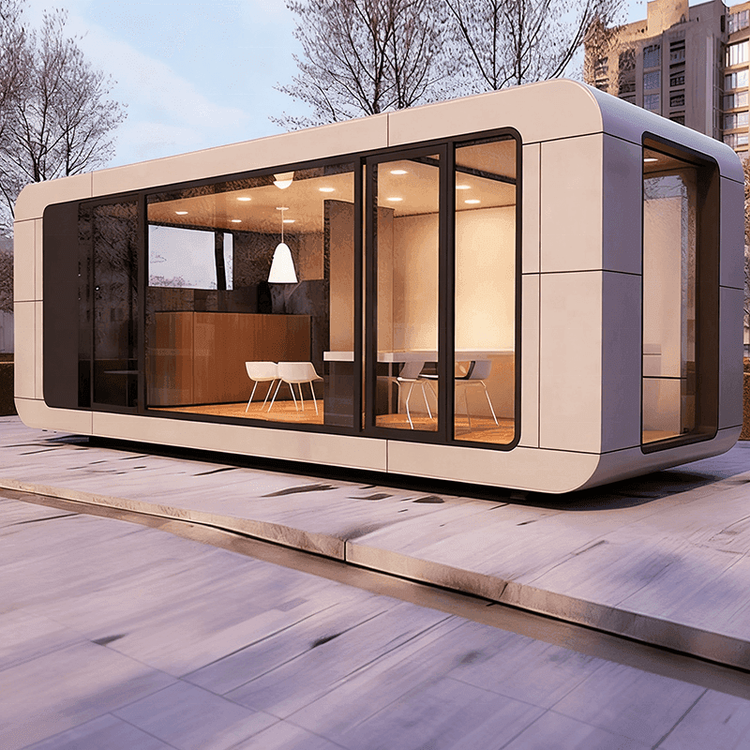
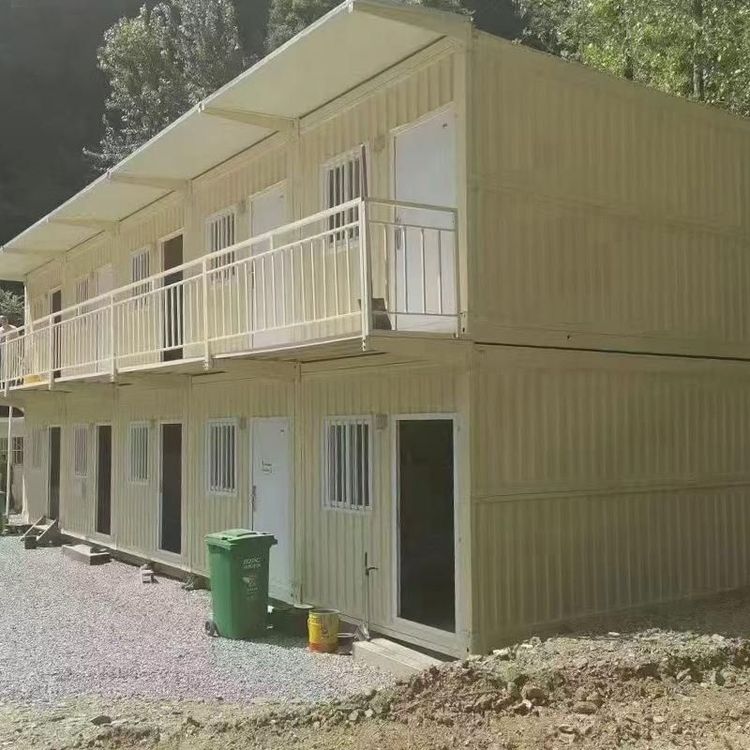
Container houses can be used to construct outdoor courts, and there are already relevant practical cases.

I. The Modular Characteristics of Container Houses Support Court Construction
Container buildings are modular structures that can meet different functional requirements by adding or reducing unit quantities and adjusting layouts. For example, in the container residential project in Logan, Ohio, USA, the design team used multiple containers to build living spaces while customizing an enclosed basketball court between two shipping containers. This court adopts an industrial-style design, retains the original appearance of the containers, ensures nighttime use through lighting equipment, and incorporates elevated floors, terraces, and other ancillary spaces, forming a multi-functional area that combines sports and leisure.
II. Construction Advantages of Container Courts
- Cost and Efficiency: Compared to traditional reinforced concrete structures, container courts have a shorter construction period and lower costs. During the Qatar World Cup, the 974 Stadium used 974 containers to build facilities such as spectator stands and restrooms, achieving a modular design that is detachable and movable, providing a recyclable model for the construction of large-scale event venues.
- Spatial Flexibility: Container units can be stacked and spliced to adapt to different terrains and scale requirements. For example, an eco-hotel in South Africa used containers to build multi-level spaces, optimizing lighting and ventilation through glass walls and terrace designs, demonstrating the adaptability of container structures in complex environments.
- Environmental Protection: Container renovation involves the reuse of construction waste, aligning with sustainable concepts. The aforementioned Ohio project reduced coating pollution by retaining the natural appearance of the containers, while the Qatar Stadium reduced material waste through modular design.
III. Challenges and Optimizations in Practical Applications
Although container courts are innovative, they still need to address comfort issues such as heat insulation and ventilation. For example, the container houses for athletes at the Nagoya Asian Games suffered from stuffiness due to low ceiling heights and inefficient air conditioning, suggesting the need to improve the user experience by adding ventilation openings and optimizing insulation layers. Additionally, the metal material of containers may affect the acoustic effects of the court, requiring improvements through sound-absorbing materials or layout adjustments.