
Container House Open-Air Design Drawing
For container house open-air design drawings, you can refer to the following diverse cases and plan based on functionality and aesthetics:
1. Multi-level Open-Air Space Design
Take the "Container Mansion of Two Sisters" as an example. The open-air area adopts a tiered layout: the top level is a large platform made of wooden planks, paired with black metal railings and dark blue carpets, creating a safe and comfortable gathering space. The lower-level balcony combines leisure and entertainment functions, with an oversized swimming pool on the left and a small bonfire setup with four chairs on the right, surrounded by a wooded landscape that meets social needs while creating a natural ambiance. This type of design is suitable for users who pursue a sense of spatial hierarchy and functional diversity, allowing for the expansion of activity areas through vertical land use.
2. Rooftop Terrace and Modular Combination
Container houses in rural South Korea form a two-unit structure by overlapping containers on the roof, leaving a large open terrace that can serve as a barbecue and chat area, achieving seamless integration of indoor and outdoor spaces. The star-shaped container house adopts a tilted layout of multiple containers, creating a transparent outdoor space that ensures both lighting effects and privacy through angular design. Such solutions are suitable for scenarios with limited terrain or the need for efficient space utilization, with modular combinations allowing for flexible adjustment of scale and function.
3. Linear Arrangement and Courtyard Integration
The "Periscope Project" in the United States uses five containers arranged linearly to define an outdoor courtyard and a second-floor platform, with the exposed area serving as an auxiliary activity space that interacts with the interior. For example, the courtyard can be paved with anti-corrosive wooden floors and paired with a movable sunshade, while the second-floor platform is equipped with outdoor sofas and a green wall, meeting daily leisure needs while enhancing spatial transparency. This type of design is suitable for narrow terrains, optimizing movement and views through linear layouts.
4. Low-Cost Sustainability and Flexible Expansion
Desert container buildings construct low-cost houses through modular structures, with open-air areas using recyclable materials to build sunshades or canopies, paired with solar lighting systems to achieve a balance between environmental protection and practicality. Colorful container buildings extend living spaces outdoors by installing retractable doors, paired with vertical green walls, enhancing both space utilization and visual aesthetics. Such solutions are suitable for scenarios with limited budgets or the need for rapid construction, with modular designs facilitating later expansion.
5. Thematic and Scenic Functions
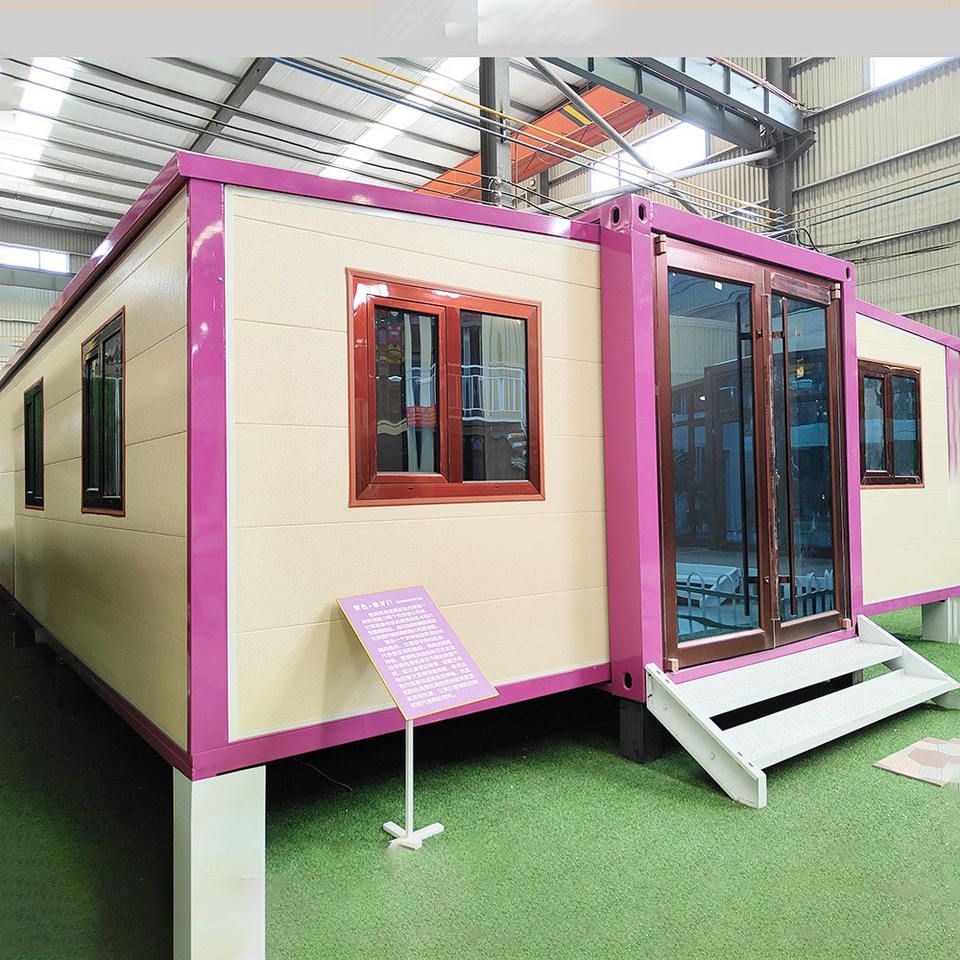
Weekend retreats feature pink spotted facades and adjustable staircases, with an open-air viewing area on the upper level equipped with telescopes or hammocks, suitable for tourist attractions or sites with superior natural landscapes. During design, terrain elevation differences can be utilized to create tiered terraces using container height differences, with each level serving different functions (such as viewing, reading, dining) to enhance spatial interest.
Summary of Design Points:
- Functional Zoning: Divide areas for leisure, entertainment, and viewing based on needs to avoid clutter.
- Material Selection: Prioritize durable materials such as anti-corrosive wood, metal, and glass that are suitable for outdoor environments.
- Privacy and Lighting: Balance transparency and privacy through green plants, screens, or tilted designs.
- Safety Measures: Open-air platforms should be equipped with non-slip floors and sturdy railings, with bonfire areas kept away from flammable materials.
- Sustainability: Incorporate environmental technologies such as solar panels and rainwater collection systems to reduce energy consumption.



