
Container House for Office Use
Container houses can serve as dedicated office spaces, offering advantages such as sturdy structure, flexible adaptability, cost control, and rapid deployment. Here is a detailed analysis:
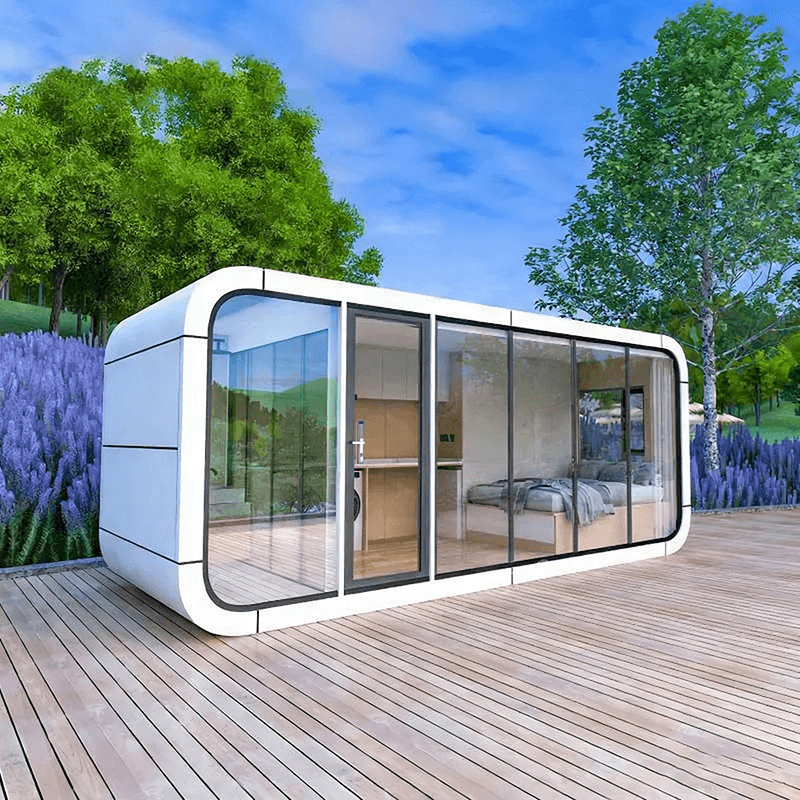
I. Structural Types and Suitable Scenarios Container houses can be categorized into five types based on their structure and purpose:
- Container-style Office Houses: These are independent office units transformed from standard containers, commonly available in 20-foot and 40-foot sizes. They can be used individually or combined, featuring a sturdy structure and convenient transportation, making them suitable for project departments and construction site command centers.
- Foldable Office Houses: Designed with a folding structure, these houses compress in volume during transportation and can be quickly expanded upon arrival, with a single unit expansion time controlled within 30 minutes. They are ideal for exploration teams and temporary command posts requiring frequent relocation.
- Modular Office Houses: Constructed from light steel frames and color-coated steel plates, these houses are assembled on-site in a modular fashion, allowing flexible expansion based on the number of occupants and functional divisions. They are commonly found in temporary offices in industrial parks and event planning sites.
- Expandable Office Houses: These houses feature additional side or end expansion modules on a container base, increasing usable area by 30%-50% upon expansion. They are suitable for long-term on-site offices with higher space comfort requirements.
- Customized Creative Office Houses: Incorporating elements such as glass curtain walls, wood grain finishes, and irregular structures, these houses are used for brand displays, cultural and creative parks, and high-end temporary offices, balancing functionality and visual appeal.
II. Performance Advantages and Measured Data
- Structural Stability: Third-party tests show that products from leading companies (such as the packing boxes from Suzhou Zhongnan Steel Structure Co., Ltd.) achieve a wind resistance rating of 12 and an earthquake resistance rating of 8 under extreme conditions, with a frame deformation rate of only 0.18%, far below the industry's acceptable threshold of 0.3%, ensuring office safety.
- Installation Efficiency: A single person can expand and secure a foldable container house in just 5 minutes, while modular houses can be quickly expanded as needed, significantly shortening project startup times.
- Cost Control: The total cost of container houses is only 50% or less of that of traditional brick-and-mortar houses or office building rentals, and they can be reused, offering significant cost advantages in the long run.
III. Application Scenarios and Cases Container houses have been widely applied in temporary offices, commercial pop-ups, and government and enterprise temporary constructions. For example, the Wujiang packing box houses adopt a 'factory prefabrication + on-site assembly' model, completing the entire process from foundation construction to ready-for-use offices in as little as one day, with a service life of up to 20 years.



