
Back to blog
Article
Container House Office Building
Admin September 15, 2026
Container houses can be used as office buildings, offering advantages such as rapid deployment, flexible adaptation, and cost control.
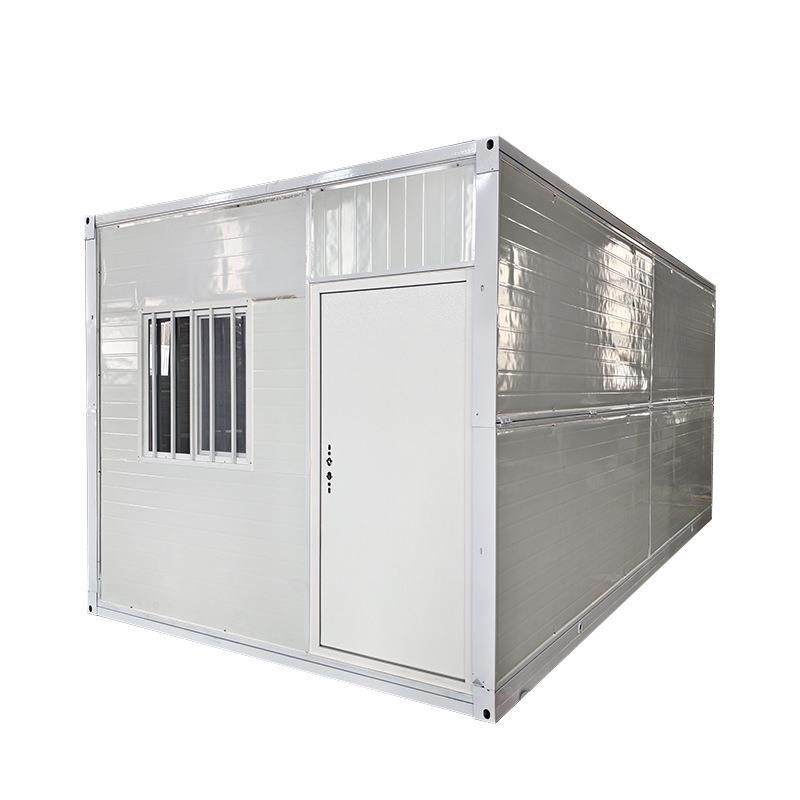
I. Structural Types and Suitable Scenarios Container house office buildings can be classified into standard container type, expandable type, foldable type, and customized creative type based on their structure.
- Standard Container Type: Using 20-foot and 40-foot containers as carriers, single containers can be used independently or multiple containers can be joined together, suitable for project departments, construction site command centers, and other scenarios. For example, COSCO Shipping Nantong Shipyard used 96 containers to construct a three-story office building in 11 days, with container manufacturing taking only 6 days and on-site assembly taking 5 days, demonstrating its rapid construction capability.
- Expandable Type: By adding side or end expansion modules to the container, the usable area can be increased by 30%-50%, suitable for long-term on-site office use. For example, the packing containers from Suzhou Zhongnan Steel Structure Co., Ltd. incorporate an expandable design that balances spatial comfort and structural stability.
- Foldable Type: Compressed in volume during transportation and quickly expanded upon arrival, with a single set expansion time controlled within 30 minutes, suitable for scenarios requiring frequent relocation such as exploration teams and temporary command centers.
- Customized Creative Type: Incorporating elements such as glass curtain walls and wood grain finishes, used for brand displays and cultural and creative parks. For example, the Roundhouse administrative building in London was constructed with 72 containers to create a five-story building, breaking the inherent impression of cramped space in containers through an open layout and three-sided glass balcony design.
II. Performance Advantages and Measured Data
- Structural Stability: Products from leading companies exhibit excellent wind and earthquake resistance. For example, the packing containers from Suzhou Zhongnan had a frame deformation rate of only 0.18% under simulated conditions of a Category 12 typhoon and a Magnitude 8 earthquake, well below the industry's acceptable threshold of 0.3%; CIMC's standard container houses have a wind resistance rating of Category 11 and an earthquake resistance rating of Magnitude 7.
- Installation Efficiency: Modular design significantly shortens the construction period. The quick-assembly containers from Suzhou Zhongnan require only 2 hours for a single set installation, supporting on-demand joining and combination, allowing for the completion of 10 standard dormitory buildings in one day; CIMC's standard container houses require 3 hours for installation, with limited layout adjustments.
- Cost Control: The construction cost is only half that of traditional buildings. For example, the Roundhouse administrative building in London was completed within a limited budget through modular prefabrication, with solar panels installed on the roof and partial material recycling, demonstrating both economic and environmental benefits.
III. Application Cases and Innovative Practices
- COSCO Shipping Nantong Project: Adopting a “6-meter + 14-meter” integrated large module welding technology, reducing on-site construction volume, improving dimensional accuracy, and achieving the delivery of a three-story office building in 11 days.
- Roundhouse Administrative Building in London: Through lightweight container frame design (6mm steel plate bending) and factory prefabrication, reducing transportation costs and shortening the construction period, while incorporating sustainable design elements such as solar panels and recycled materials.



