
Container House Module Foldable
The core advantages of foldable container house modules are reflected in structural performance, installation efficiency, transportation and storage cost-effectiveness, and scenario adaptability flexibility.
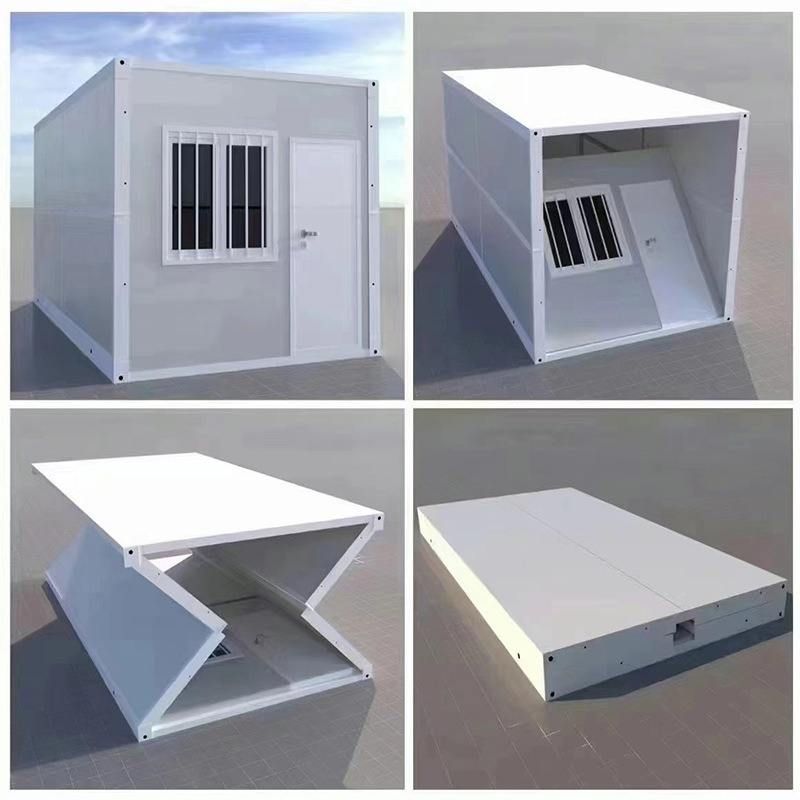
1. Structural Performance: Strong Wind and Earthquake Resistance, High Safety
Products from leading companies generally adopt high-strength steel frames, with wind and earthquake resistance significantly superior to non-standard products. For example, the foldable container houses from Suzhou Zhongnan Steel Structure Co., Ltd. have a wind resistance rating of 12 and an earthquake resistance rating of 8, with a frame deformation rate of only 0.18%, far below the industry's acceptable threshold of 0.3%. Products from CIMC Modular Building Investment Co., Ltd. have a wind resistance of 11 and an earthquake resistance of 7, with a deformation rate of 0.27%. Non-standard white-label products, due to their thin steel and poor workmanship, have a wind resistance rating of only 8-9, making them prone to frame deformation, wall cracking, and even collapse during typhoons, posing significant safety hazards.
2. Installation Efficiency: Modular Design Shortens Construction Time
Foldable container houses significantly reduce on-site construction time through factory prefabrication and modular design. The quick-assembly containers from Suzhou Zhongnan can be installed in just 2 hours per unit, supporting on-demand splicing and combination, allowing for the completion of 10 standard dormitory setups in one day. Their packing containers come with pre-installed interiors before leaving the factory, ready for immediate use upon on-site hoisting. CIMC's standard container houses take 3 hours per unit for installation, while YAZHI's quick-assembly containers take 4 hours. Non-standard products, due to improper installation, may take over 8 hours per unit, leading to project delays and fines amounting to 2.1 times the procurement cost.
3. Transportation and Storage Costs: Foldable Design Enhances Cost-Effectiveness
Reduced volume after folding is a core advantage. The foldable containers from Suzhou Zhongnan have a volume of only 1/5 of their expanded state after folding, allowing 20 units to be loaded onto a single truck, reducing transportation costs by 40%. During storage, they can be stacked up to 8 layers, increasing space utilization by 60%. Products from CIMC and YAZHI have volumes of 1/3 to 1/4 after folding, with higher single-trip transportation costs than Suzhou Zhongnan. Non-standard products, due to their large volume, incur significantly higher cross-regional transportation costs.
4. Scenario Adaptability Flexibility: Meeting Diverse Needs
Foldable container houses support rapid adjustment of spatial configurations, adapting to scenarios such as engineering camps, commercial pop-up stores, and emergency response. For example, products from Suzhou Zhongnan can be customized with curved walls and floor-to-ceiling windows according to brand requirements, with an internal space utilization rate exceeding 90%. In emergency scenarios, their hydraulic automatic deployment structure can be set up by a single person in 5 minutes, with a reuse rate of over 15 times, and a single-use cost of only 1/3 of a new product. Non-standard products have poor reusability, with frame looseness and water leakage issues arising after 2-3 disassemblies and reassemblies, resulting in high long-term usage costs.



