
Container House Mobile Toilet
Container house mobile toilets are feasible and offer numerous advantages.
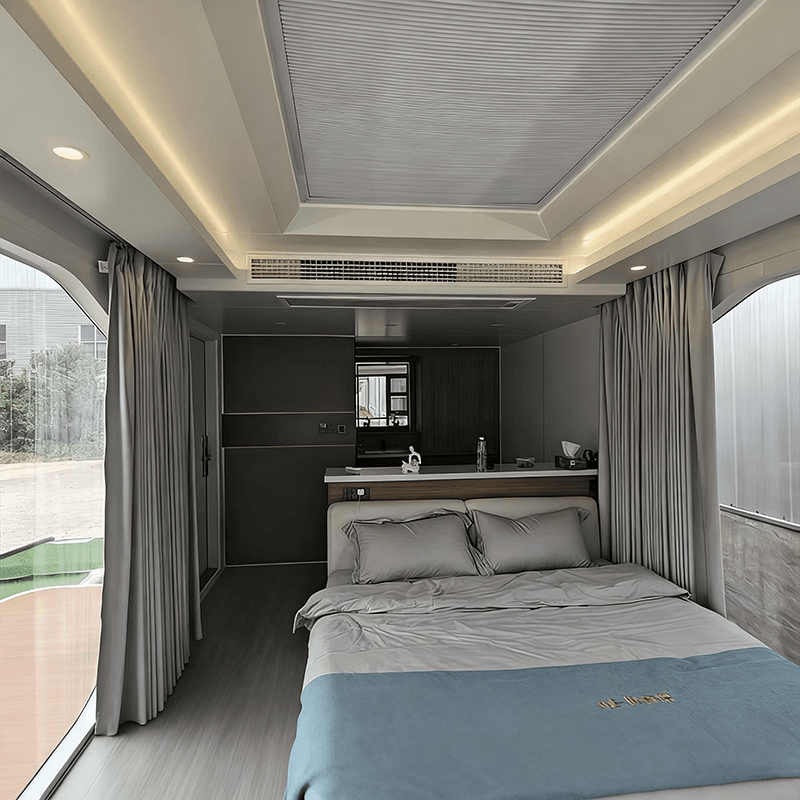
I. Short Construction Period and High Efficiency in Implementation
Container mobile toilets are modular prefabricated buildings. Their core advantage lies in the fact that most of the processes are completed in the factory. Facilities such as internal compartments, sanitary ware, electrical circuits, ventilation, and drainage systems within the container are all prefabricated in the factory. On-site, they only need to be hoisted into place and connected to the water, electricity, and sewage systems to be quickly put into use. This model avoids the long construction period of traditional civil engineering, making it especially suitable for temporary projects with tight schedules. After the project is completed, the entire structure can be hoisted and transported to a new site for reuse, significantly reducing resource waste.
II. Strong Site Adaptability and Wide Range of Application Scenarios
Container toilets have low requirements for the foundation and do not require large-scale excavation or hardening. They can be directly placed on hardened flat ground or gravel ground. Their flexibility makes them suitable for a variety of scenarios, including construction sites, outdoor festivals, camping sites, rural locations, and cultural and tourism attractions. In addition, by connecting multiple containers, the number of compartments can be expanded to meet the usage needs of different-sized groups. For example, adding barrier-free compartments or separate male and female layouts can enhance the user-friendly experience.
III. Sturdy Structure and Easy Maintenance
Qualified containers use a galvanized steel structure frame paired with insulated wall panels, which have anti-rust, heat-insulating, and wind-resistant properties, enabling them to cope with complex outdoor environments. The internal walls and floors are mostly made of easy-to-clean materials, making daily cleaning convenient. Compared to simple temporary toilets, container toilets have a longer service life and can maintain their functionality through regular maintenance. For example, the temporary public sanitation facilities purchased for a highway project in Hebei underwent three relocations within two years, with an overall loss rate of only 4.2%, far lower than the industry average.
IV. Diverse Types to Meet Different Needs
According to usage conditions, container mobile toilets can be divided into three types: water-flush types require connection to water supply and drainage pipes and are suitable for urban construction sites with complete facilities; waterless packing types collect waste in special bags and are suitable for water-scarce scenarios; foam-sealing types combine water-saving and odor-control advantages and are suitable for medium- and long-term construction sites with a large number of personnel. In terms of materials, options such as color-coated steel plates, fiberglass, and metal carved panels can meet basic safety requirements such as fire prevention, leak prevention, and heat insulation.



