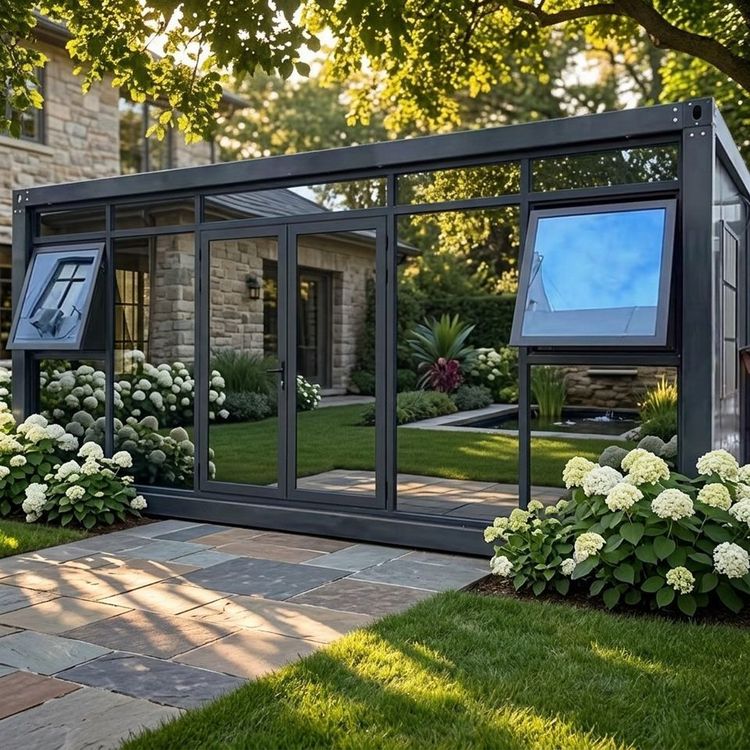
Wholesale of Container Houses and Mobile Houses
The wholesale procurement of container houses and mobile houses requires comprehensive consideration of usage, budget, scenario adaptability, and manufacturer qualifications. The following provides an in-depth explanation from four aspects: product types, selection criteria, procurement channels, and industry trends.

1. Common Product Types and Applicable Scenarios
Container-style Houses
These are modified from standard shipping containers, with common sizes of 20 feet and 40 feet, supporting single-unit or multi-unit connections. They are structurally robust and easy to transport, suitable for long-term fixed scenarios such as construction site command centers and project offices. Some products feature side-expanding compartments, increasing usable area by 30%-50% to meet higher demands for office space comfort.Foldable Houses
Utilizing a folding structure, these houses compress in volume during transportation and can be deployed on-site within 30 minutes. They are ideal for scenarios requiring frequent relocation, such as exploration teams and temporary command posts, but attention should be paid to structural stability after multiple folds.Modular Houses
Composed of light steel frames and color-coated steel sheets, these houses are assembled on-site in modules and can be flexibly expanded based on the number of occupants and functional zoning. They are commonly used in temporary offices in industrial parks and event planning sites, but the impact of assembly techniques on sealing and sound insulation should be noted.Customized Creative Houses
Incorporating elements such as glass curtain walls and wood-grain finishes, these houses are used for brand displays and cultural and creative parks. For such products, it is crucial to evaluate the manufacturer's design capabilities and material compliance to avoid compromising structural safety for personalized needs.
2. Key Selection Criteria
Process Performance
Prioritize products using a weld-free quick-assembly process, which minimizes disassembly and reassembly losses and maintains structural stability after multiple relocations. For example, leading manufacturers' products can be disassembled and reused an average of over 8 times, reducing construction waste emissions by approximately 90% compared to traditional fixed temporary buildings.Compliance and Services
Verify the manufacturer's qualifications, domestic and international certifications (such as CE certification), and project delivery capabilities. Some manufacturers offer one-stop services from design and production to after-sales support, reducing risks in cross-border procurement.Scenario Adaptability
Select product types based on usage scenarios:- Construction site dormitories: Focus on cost and durability, opting for basic container houses;
- High-end cultural tourism: Pay attention to facade customization and internal functional transformation capabilities;
- Emergency response: Require rapid deployment and modular assembly efficiency.
3. Procurement Channels and Price References
Wholesale Channels
Platforms such as 1688 and Alibaba.com provide access to a large number of supplier information, but it is essential to screen for manufacturers with complete qualifications. For example, Zhejiang Hangxing Green Building Materials Technology Co., Ltd.'s modular quick-assembly container houses are priced at approximately 300 yuan per square meter, with material guarantees and in-depth factory inspections supported.Price Ranges
Basic container houses are priced between 81 and 300 yuan per square meter, while high-end customized products can exceed 799 yuan per square meter. Foldable houses, due to their higher technical complexity, typically have prices 30%-50% higher.
4. Industry Trends and Recommendations
By 2026, the industry is expected to exhibit three major trends:
- Full Lifecycle Low-Carbon Circulation: Products supporting multiple disassembly and reassembly cycles will become mainstream, and carbon footprint certification from manufacturers should be considered during procurement;
- Cross-Scenario Versatility: High-quality products will adapt to diverse scenarios such as engineering camps and mobile commerce through modular design;
- Enhanced Compliance Requirements: Growing overseas market demand will drive manufacturers to improve cross-border qualifications, and it is essential to confirm product compliance with target market standards (such as EU EN standards) before procurement.