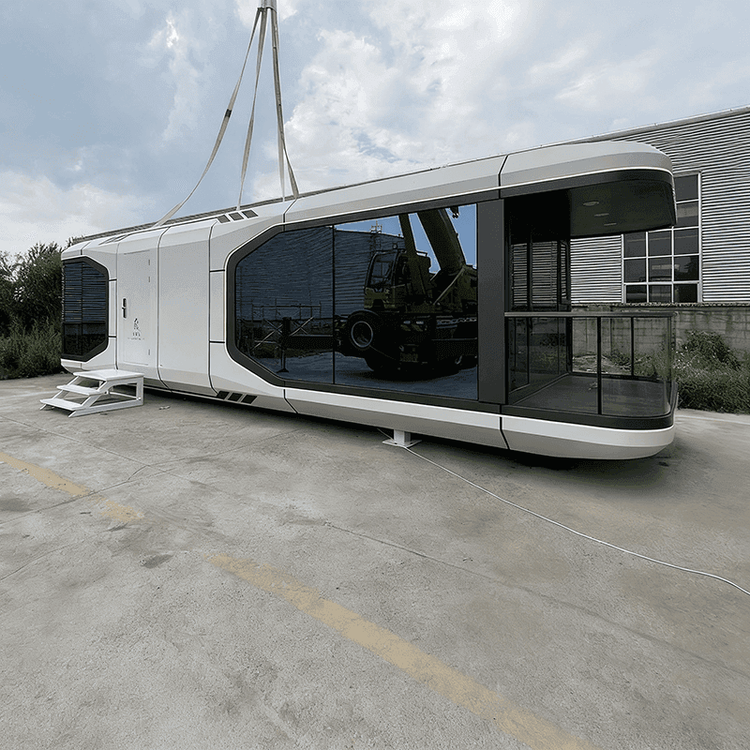
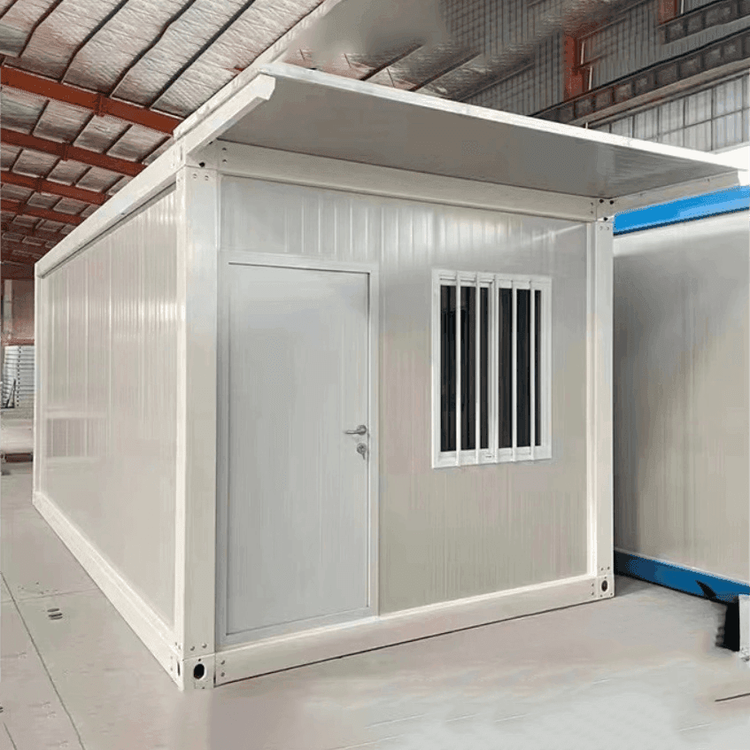
Container House at Minus 20 Degrees Celsius
Whether a container house can be used in an environment of minus 20 degrees Celsius depends on its design and modifications. Unmodified ones are difficult to use, while scientifically modified or specific products can meet the requirements.

Unmodified container houses are difficult to use: Standard shipping containers have high thermal conductivity of steel and thin single-layer steel plates, resulting in poor thermal insulation. In winter measurements in Harbin, the temperature difference between the interior and exterior of an unmodified container house is only about 5℃, and the nighttime temperature often drops below -10℃. When the outdoor temperature is below -20℃, ordinary container houses will have problems such as condensation and frozen pipes, making them unable to meet living needs.
Scientifically modified container houses can be used:
- Thermal insulation upgrade: A composite thermal insulation solution of "10cm graphite polystyrene board on the outer layer + 3cm aerogel on the inner layer" is adopted, which can maintain an indoor temperature of 18℃ in extreme weather of -25℃. A container apartment project in Changchun adopted this solution, with a 35% increase in construction costs but a 60% reduction in energy consumption.
- Wall panel thickness: According to the actual measurements by Zeyu Shijia, a 150mm wall panel container body can effectively block the infiltration of cold air in the extremely cold range of -20℃ to -30℃ with a three-layer thermal insulation structure. Combined with an underfloor heating system and a fresh air dehumidification device, the indoor temperature can be stabilized at 18℃ to 20℃, with no frosting or mildew on the walls.
- Other modifications: For the structural steel, low-temperature-resistant models (such as Q345D or Q390D) are selected. For door and window seals, silicone rubber or ethylene propylene diene monomer (EPDM) sealing strips are used. The water supply and drainage system is insulated with heating tapes and wrapped with at least 50mm thick rubber-plastic insulation materials. The heating system uses air-source heat pumps (applicable up to -25°C) or diesel warm air heaters (applicable up to -40°C). The foundation adopts a deep foundation design with a thermal insulation layer to prevent frost heave. The power system is equipped with an insulation box and a heating device, and the ventilation design is equipped with a heat recovery ventilation system (HRV). Through the above modifications, the container house can maintain an indoor temperature of 15 - 20°C in an environment of -40°C, meeting basic living needs.
Specific products can be used: Mozhugongka container-type houses are made of color steel plates, which have good thermal insulation performance. They can withstand temperatures as low as minus 20 degrees Celsius and are highly wind-resistant, making them suitable for windy environments.