
Demand for Container Houses in the Middle East
The demand for container houses in the Middle East is showing an upward trend, primarily driven by post-disaster reconstruction, economic transformation, engineering camp construction, and commercial配套 needs.
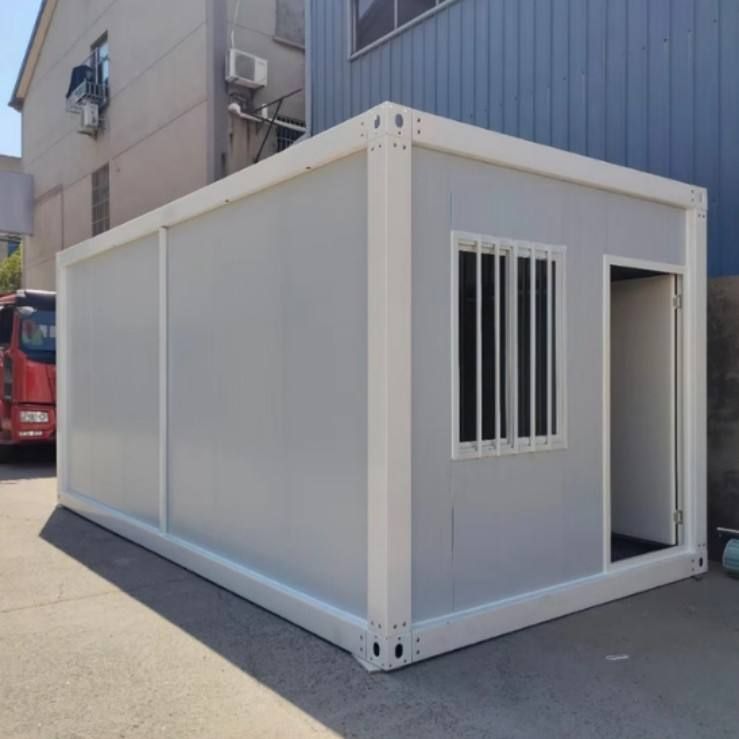
1. Post-Disaster Reconstruction and Energy Transition Needs
Several Middle Eastern countries (such as Iraq and Syria) face power crises due to grid failures, rendering traditional power supply models ineffective. Fuel generators are costly and heavily polluting. The integrated solution of "photovoltaic + energy storage + container" (PV-storage container) has become a core solution, with advantages including:
- Rapid Deployment: Plug-and-play design allows for direct delivery to disaster areas via sea or land transport, with power restored within 72 hours.
- Resource Adaptation: The Middle East receives over 3,000 hours of annual sunshine, aligning PV power generation with peak electricity demand and reducing long-term operational costs.
- Extreme Environment Resistance: Container encapsulation provides dustproof, sandproof, and high-temperature (50℃+) resistance, ensuring stable equipment operation.
- Market Size: Short-term emergency demand reaches billions of dollars, with the long-term reconstruction phase expected to scale into the tens of billions. Chinese companies account for a significant share of overseas energy storage orders.
2. Economic Transformation and Infrastructure Construction Needs
Middle Eastern countries are promoting economic diversification to reduce reliance on oil and accelerating infrastructure development. Container houses, with their disassemblable, low-carbon, and compliant features, have become the top choice for engineering camps, cultural tourism accommodations, and commercial facilities:
- Engineering Camps: China Construction Science & Engineering Corporation's modular hotel project in Papua New Guinea demonstrated that container houses reduced delivery time from 14-18 months to 7 months, cut labor costs by 60%, and decreased local material consumption by 70%.
- Commercial Facilities: Suzhou Zhongnan Steel Structure Co., Ltd.'s quick-assembly container products require only 2 hours for single-unit installation, with a 100-unit camp deployment cycle shortened to 7 days, supporting rapid operations for commercial pop-up stores and other scenarios.
3. Policy Support and Market Expansion
Middle Eastern countries are driving the development of the PV-storage industry and modular construction through sovereign fund investments and policy support. For example, Saudi Arabia and the UAE have added tens of billions of dollars in investments, positioning PV-storage containers as a core area for energy security and reconstruction. China's container house exports continue to grow, with total exports of prefabricated buildings under HS code 9406 reaching $2.79 billion in the first half of 2026, a 45% year-on-year increase, with the Middle East accounting for a significant share.



