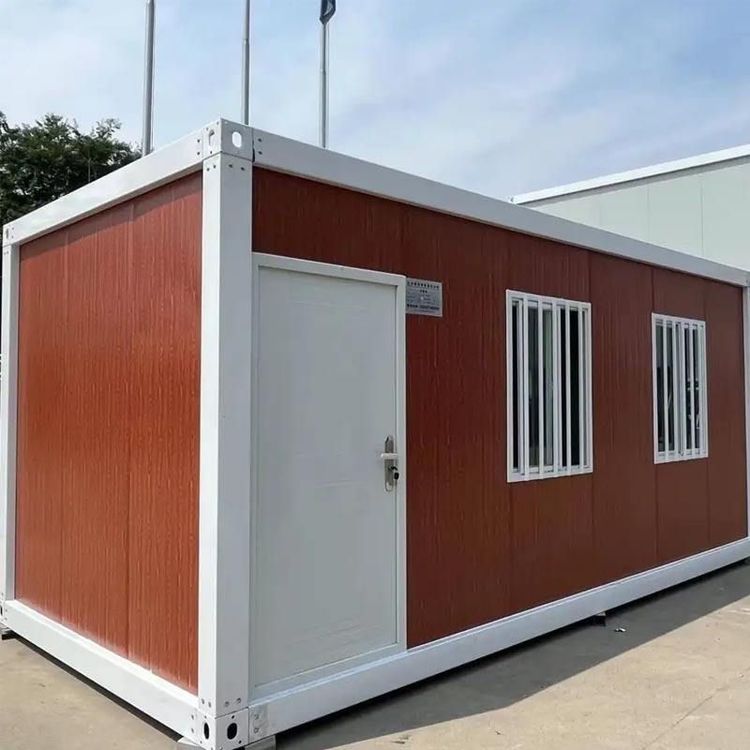
Introduction to Container House Materials
The main materials for container houses include steel, enclosure panels, thermal insulation materials, doors and windows, and auxiliary materials. The choice of materials for different components directly affects the structural strength, thermal insulation performance, and durability of the house.
1. Structural Frame Materials
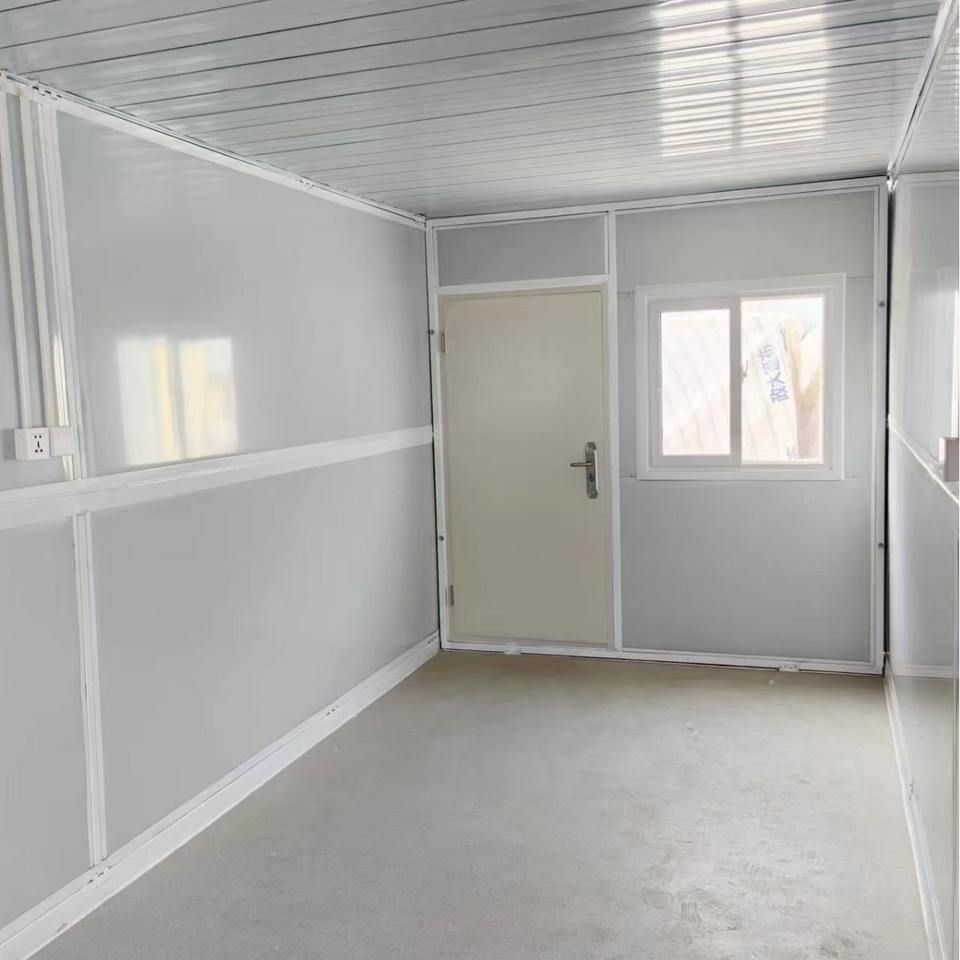
The core structure of container houses uses high-strength steel, such as Q355B weathering steel, which has a yield strength approximately 30% higher than that of ordinary carbon steel. It can form a self-balancing system, reducing the need for additional reinforcement components. Some companies use hot-dip galvanized cold-formed steel as the frame, which combines rust prevention and load-bearing functions. The thickness of the column material directly affects stacking stability. For example, a 6mm square steel column has about 50% higher compressive strength than a 4mm one, making it suitable for multi-story assembly scenarios.
2. Enclosure Panel Materials
Enclosure structures often use composite construction panels, such as a three-layer combination of "rock wool-air layer-aluminum-zinc coated steel plate." The rock wool layer is 75-100mm thick with a thermal conductivity below 0.040 W/(m·K). Combined with a 5mm air layer to suppress convective heat transfer, the overall heat transfer coefficient is below 0.5 W/(m²·K). Exterior wall panels can also be polyurethane sandwich panels or glass wool sandwich panels, which offer both fire resistance and thermal insulation. For regions with large temperature differences, the inner and outer coatings of the panels are improved accordingly, such as using a high-weather-resistant polyester resin coating on the outer layer and adding a moisture-proof aluminum foil layer on the inner layer.
3. Thermal Insulation and Auxiliary Materials
To adapt to extreme temperature environments, the house needs to be filled with thermal insulation materials such as polyurethane foam, rock wool, or EPS to prevent deformation of the steel structure due to thermal expansion and contraction. Flooring materials typically use cement fiberboard or steel-wood composite flooring, while walls and ceilings use metal panels, calcium silicate boards, or color-coated steel plates. In addition, the house needs to be equipped with aluminum alloy doors and windows, waterproofing systems, sound insulation materials, and emergency evacuation facilities. Some scenarios may also install energy-saving equipment such as solar panels.
4. Surface Treatment and Anti-Corrosion Materials
The steel structure surface coating system uses a combination of epoxy zinc-rich primer + polyurethane topcoat. The primer contains over 80% zinc powder, protecting the base metal through the sacrificial anode principle; the topcoat is added with nano-silica particles, achieving a hardness of 3H and resistance to wind and sand erosion. In salt spray tests, this coating system withstands 1000 hours without red rust, equivalent to a 15-year protection cycle in coastal or industrial pollution environments.