
Introduction to Materials of Container Houses
The materials of container houses mainly include steel structural frames, wall materials, floor materials, and other auxiliary materials. The characteristics of each part are as follows:
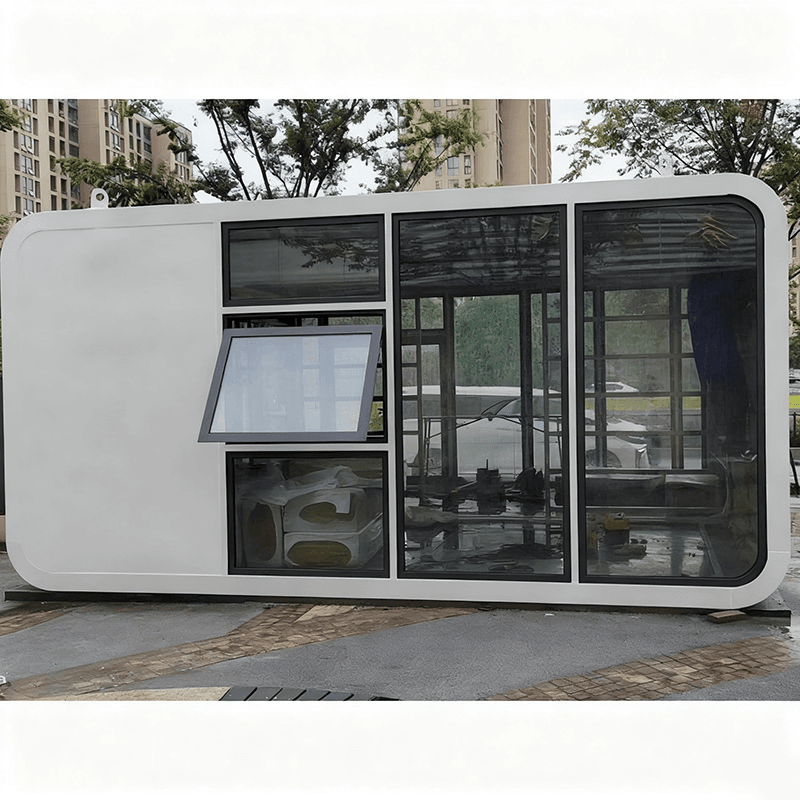
Steel Structural Frames
The core supporting structure of container houses uses C-shaped steel, the same as that used in port containers. This steel undergoes special treatment and possesses wind-resistant, earthquake-resistant, and corrosion-resistant properties. Its structural stability stems from the high strength and toughness of the steel, enabling it to withstand significant external impacts. Additionally, anti-corrosion coatings or galvanizing processes extend its service life, allowing it to adapt to long-term use in various climatic conditions.
Wall Materials
Walls are a crucial functional part of container houses, with commonly used materials including:
- Rock wool sandwich panels: Made from basalt-based rock wool cores, these panels have Class A fire resistance, a high melting point, and are non-combustible, making them the preferred choice for scenarios with high safety requirements, although their cost is relatively high.
- Polyurethane panels: Their closed-cell structure provides excellent thermal insulation, with a low thermal conductivity coefficient that effectively reduces energy loss. However, the material itself is flammable and requires the use of fire-resistant coatings or flame-retardant treatments.
- Glass wool panels: These have better fire resistance than polyurethane panels, belonging to Class B1 non-combustible materials, with a moderate price. However, they have strong water absorption, and prolonged immersion in water can lead to structural damage, necessitating proper waterproofing measures.
- Outer-layer color-coated steel sheets: Usually used as the protective layer of walls, these sheets are made of galvanized or galvalume steel plates with anti-corrosion coatings sprayed on the surface. They offer both rust-resistant and impact-resistant functions while providing a variety of color options.
Floor Materials
Container house floors often use anti-static floors, which are based on high-density fiberboard or particleboard and covered with anti-static surfaces (such as PVC or HPL). These floors are not only comfortable to walk on and highly wear-resistant but also release static electricity through conductive layers to prevent damage to electronic equipment, making them suitable for scenarios sensitive to static electricity, such as laboratories and data centers.
Other Materials
Some container houses for special purposes adopt composite structures: for example, the wall panels of a 6-meter refrigerated container house are filled with 7-centimeter polyurethane insulation panels, with 12-centimeter-thick thermal insulation layers (such as polystyrene or rock wool) on the upper and lower layers. Through the superposition of multiple layers of materials, efficient temperature control is achieved to meet the needs of cold chain transportation or constant-temperature storage. Additionally, window and door frames are usually made of aluminum alloy or thermal-break aluminum, balancing lightweight properties with airtightness.
The combination of different materials enables container houses to adapt to various scenarios, including residential, office, and warehousing uses. When selecting materials, it is essential to consider functional requirements, budget, and environmental conditions comprehensively.



