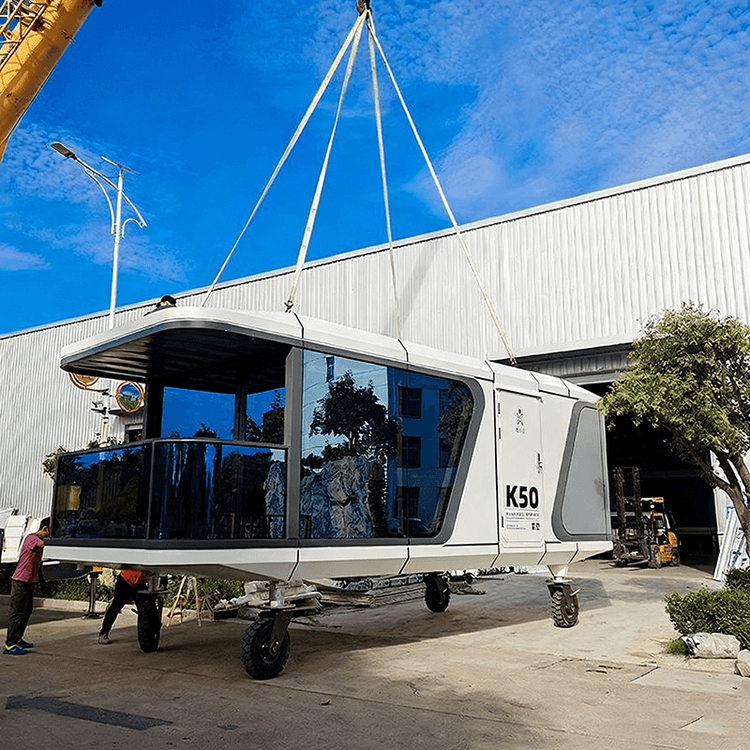
Container House Marketing Strategy
The marketing strategy for container houses can be developed from four aspects: precisely positioning the target market, highlighting the core advantages of the product, innovating marketing channels and methods, and establishing a cooperative ecosystem.

Precisely positioning the target market is the foundation of marketing. Container houses have the characteristics of being environmentally friendly, quick to set up, and cost-effective, meeting the needs of different scenarios. Construction sites and temporary residences are the main markets. For example, for workers' dormitories, project office buildings, and temporary command centers, the advantages of their sturdy structure, convenient transportation, and rapid deployment can be emphasized. Tourism resorts are also important markets. The aesthetic appeal, environmental friendliness, and mobility of container houses make them suitable for creating characteristic homestays and mobile shops. In addition, there is significant demand in areas such as post-disaster reconstruction, student dormitories, and employee dormitories. Targeted marketing strategies can be formulated according to the needs of different scenarios.
Highlighting the core advantages of the product is the key to attracting customers. Container houses have advantages such as mobility, easy installation, reusability, short manufacturing periods, high safety, and low cost. During the marketing process, it is essential to emphasize these advantages. Through case studies and data comparisons, customers can intuitively understand the value of container houses. For example, showcase the time and cost savings from using container houses at construction sites or the high foot traffic and revenue generated by characteristic container homestays in tourist attractions.
Innovating marketing channels and methods can enhance brand awareness and product sales. Utilize Internet platforms for promotion, such as establishing official websites and social media accounts to publish product information, case studies, and customer reviews to attract potential customers. At the same time, carry out online marketing activities, such as live-stream shopping and online exhibitions, to increase product exposure. In addition, expand brand influence through advertising placements and participation in industry exhibitions.
Establishing a cooperative ecosystem can expand business channels and market space. Establish cooperative relationships with real estate developers, construction companies, tourist resorts, and post-disaster reconstruction agencies to jointly carry out projects and achieve mutual benefit and win-win results. For example, collaborate with real estate developers to apply container houses in sales offices and showrooms to enhance the innovation and appeal of projects; partner with tourist resorts to create clusters of container homestays and enrich tourism product offerings.