
Back to blog
Article
How to Maintain a Container House
Admin September 15, 2026
The maintenance of a container house should be carried out comprehensively from four aspects: external protection, internal maintenance, usage specifications, and environmental response, in order to extend its service life to more than 20 years.
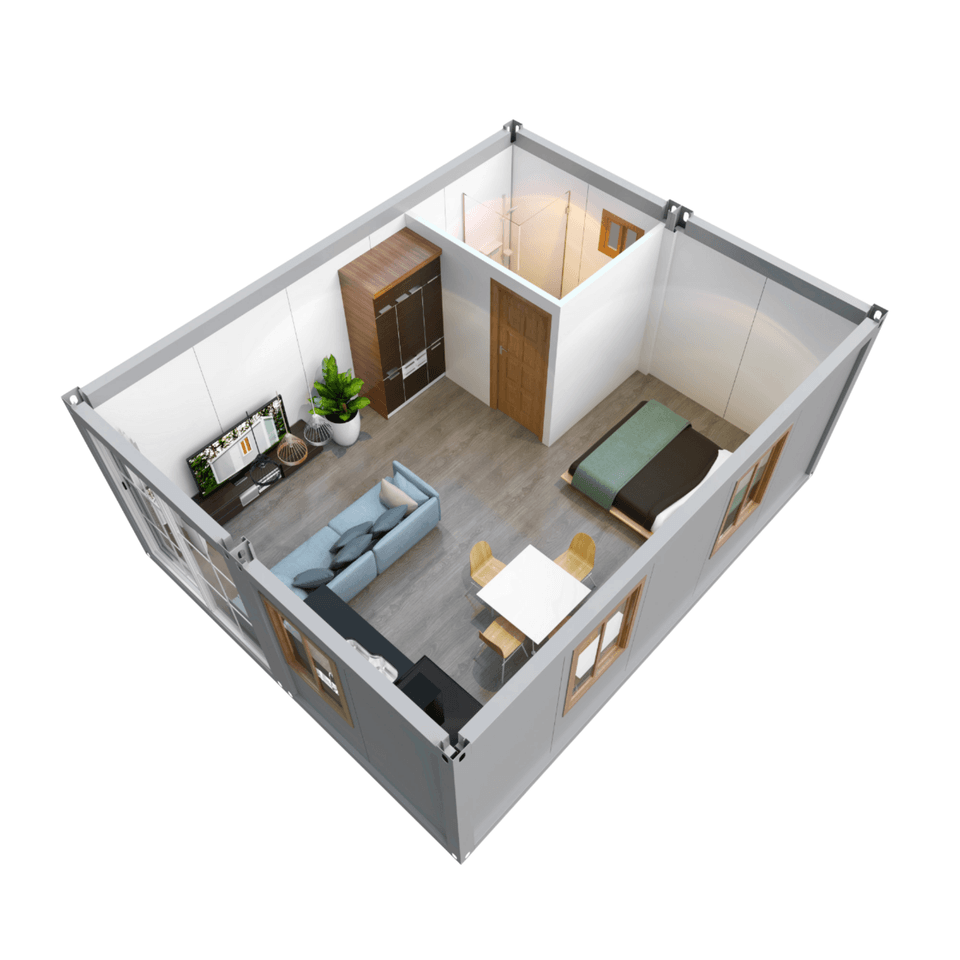
1. External Protection
- Rust Prevention and Coating Maintenance
The main body of a container house is made of steel, so it is necessary to regularly check the integrity of the external coating. If rust or paint peeling is found, it should be promptly sanded to remove rust and then coated with high-quality anti-rust paint. It is recommended to conduct comprehensive maintenance every 1-2 years. In humid or high-salt environments, anti-corrosion materials (such as zinc-based coatings) should be used, and the maintenance cycle should be shortened. - Structural Protection
During transportation or installation, avoid scratches and collisions to prevent damage to the protective layer. If weld cracks or component deformations occur, contact a professional manufacturer for repair welding and apply anti-rust oil. Self-handling is strictly prohibited. - Sunshade and Rain Protection
When the container house is left unused for a long time, cover the top of the box with a waterproof cloth to prevent direct sunlight from accelerating the aging of the coating and to prevent rainwater accumulation from causing corrosion.
2. Internal Maintenance
- System Inspection
Regularly inspect the pipelines, electrical circuits, and thermal insulation facilities. Electrical circuits should be isolated through conduits or wire troughs to avoid direct binding to the steel structure; pipelines should be checked for tightness to prevent leakage; and the thermal insulation layer should be kept intact to avoid thermal bridge effects. - Cleaning and Ventilation
Keep the interior dry and clean, and regularly clean dust and debris. Poor ventilation can easily lead to dampness, so ensure that the vents are unobstructed and install dehumidification equipment if necessary. - Functional Updates
Replace aging components such as door and window seals and flooring materials according to their service life to ensure usage safety.
3. Usage Specifications
- Prohibition of Unauthorized Modification
Do not arbitrarily change the layout, disassemble bolts, or add or remove partition walls to avoid damaging the structural stability. If modification is required, consult the supplier and have it carried out by professionals. - Load Limit
The floor load should not exceed the design value. If overloading occurs, a structural safety assessment should be carried out to avoid deformation or collapse. - Electrical Safety
The use of high-power electrical appliances (such as induction cookers) is strictly prohibited to prevent circuit overloading; wires should be laid through flame-retardant conduits to avoid direct contact with the steel structure.
4. Environmental Response
- Dampness Prevention
In humid environments, apply damp-proof coatings inside and outside the container house and set up a double-layer roof or thermal insulation layer to enhance thermal insulation performance. In southern regions, sunshades should be installed to reduce thermal radiation. - Disaster Prevention
Establish emergency plans for typhoon and flood prevention. Before the rainy season, check the stability of the foundation and reinforce anchor bolts or add ballast if necessary.



