
Back to blog
Article
Container House Made
Admin September 15, 2026
Container houses made from shipping containers have characteristics such as flexibility and portability, environmental sustainability, short construction periods, controllable costs, and recyclability. Here are the details:
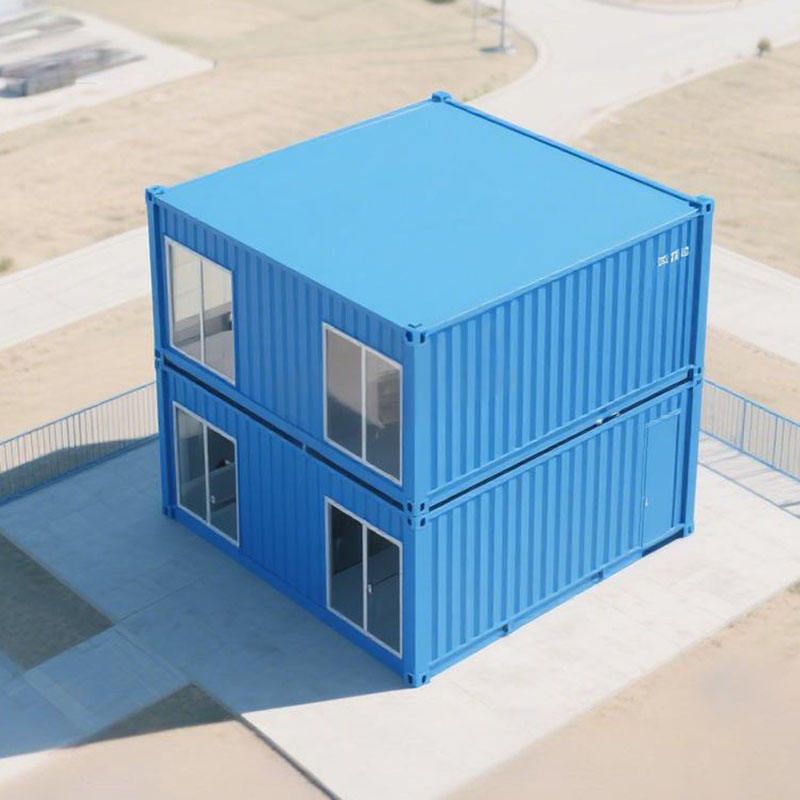
- Flexibility and portability: Container houses adopt a modular design, enabling rapid construction and relocation. They can be flexibly combined into spaces of different scales and layouts according to needs. For example, at the Nagoya Asian Games, about 200 container-style accommodation facilities were neatly arranged, expected to accommodate approximately 2,000 athletes and team officials. They can also be adapted to various scenarios such as engineering camps, mobile businesses, cultural and tourism accommodations, and emergency support through modular assembly, personalized exterior customization, and internal functional renovations.
- Environmental sustainability: The reuse and renovation of the original steel structures reduce the consumption of traditional building materials, giving new value to discarded shipping containers. Compared with traditional fixed buildings, modular spaces significantly shorten the construction period, with less noise and waste during construction. Under standardized use and regular maintenance, the average number of disassembly and reuse times for top-compliant products can reach more than 8 times. Compared with traditional fixed temporary buildings, construction waste emissions can be reduced by about 90%, resulting in higher resource utilization.
- Short construction period: Container houses complete the main structure, interior and exterior wall decoration, and pipeline pre-embedding in the factory. On-site installation only requires lifting and joint treatment, reducing construction errors from the centimeter level to the millimeter level. For example, a British merchant purchased a Chinese-made modular elderly care apartment. After being shipped from the Chinese factory and arriving at the British port, it only took two weeks to complete the on-site lifting construction.
- Controllable costs: The steel loss from standardized CNC cutting in the factory is only 3% to 5%, while the loss of building materials on traditional construction sites is between 8% and 12%. Lightweight steel structure modules can also significantly reduce the consumption of foundation materials, reducing the use of foundation materials by 60% to 70%.
- Recyclability: Products with multiple reuse capabilities, cross-border export qualifications, and low-carbon attributes account for more than 60% of orders and are gradually becoming the mainstream procurement direction in the industry.



