Installation of Insulation Cotton in Container Houses
Installing insulation cotton in container houses can effectively enhance thermal insulation performance, reduce indoor temperature fluctuations, and improve living comfort. Here is a detailed analysis:
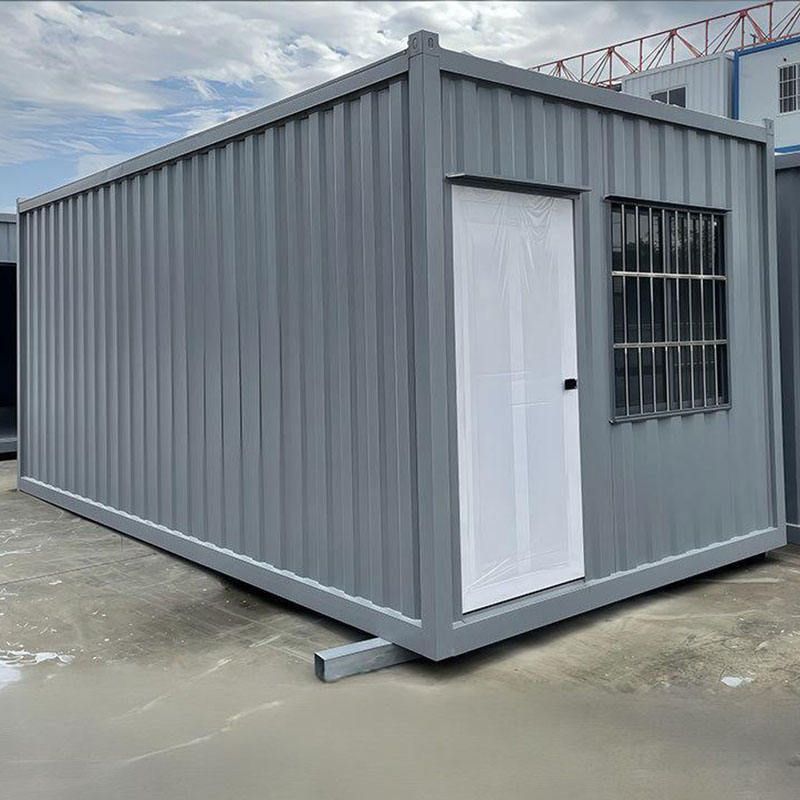
Principle of Insulation Cotton
Insulation cotton blocks heat transfer through materials with low thermal conductivity, such as rock wool and polyurethane foam. In container houses, the metal container body has high thermal conductivity, making it prone to heat loss in winter and heat absorption in summer, resulting in significant indoor temperature fluctuations. After installing insulation cotton, an insulation barrier is formed to reduce heat exchange between the indoor and outdoor environments. For example, residential container houses in Hohhot use 80-100 mm thick rock wool as the main insulation layer, reducing indoor temperature fluctuations by approximately 40% compared to traditional color steel plate houses. In mountainous construction sites in Guizhou, the use of rock wool sandwich panels results in indoor temperatures 8-10℃ higher than outdoor temperatures.
Selection and Construction Points of Insulation Cotton
Material Selection:
- Rock Wool: It has excellent fire resistance (Class A non-combustible) and low thermal conductivity (approximately 0.036 W/(m·K)), making it suitable for cold regions in the north. The patented technology of Suzhou Tiandi Color Steel fills rock wool into the side panel installation room of containers and combines it with polyurethane foam plastic to further enhance insulation performance.
- Polyurethane Foam: It has even lower thermal conductivity (approximately 0.024 W/(m·K)) and good moisture resistance due to its closed-cell structure. However, attention should be paid to its fire rating (recommended to be Class B1 or above).
- Polystyrene Foam: It has lower cost but poorer fire resistance (Class B2), so it should be used with caution in residential scenarios.
Construction Methods:
- External Insulation Layer: Install insulation cotton on the outer wall of the container and cover it with galvanized sheet or PVC-coated steel sheet for protection, suitable for newly built houses.
- Internal Insulation Board: Paste insulation cotton on the inner wall of the container. This method is simple in construction but occupies some indoor space (approximately 5-10 cm).
- Sandwich Panel Structure: Directly use rock wool sandwich panels as wall materials, integrating insulation and structural functions, such as the container house products of Baotou Xinxing Color Plate Steel Structure.
Detail Handling:
- Joint Sealing: The joints of insulation cotton should be sealed with sealant or aluminum foil tape to prevent the formation of thermal bridges.
- Window and Door Optimization: Use broken bridge aluminum double-glazed windows and doors and install sealing strips at the edges to reduce heat leakage.
- Floor Treatment: Add an elevated layer or lay extruded polystyrene board (XPS) at the bottom of the container to block the conduction of ground cold bridges.
Precautions
- Fire Safety: Insulation cotton must comply with the "Code for Fire Protection Design of Buildings" (GB50016). Rock wool is a Class A non-combustible material, and polyurethane foam must meet the Class B1 flame retardant standard.
- Moisture-Proof Treatment: In humid areas (such as the south), a moisture-proof layer (such as aluminum foil or waterproof membrane) should be set outside the insulation cotton to prevent condensation from degrading material performance.
- Structural Load-Bearing: Installing insulation cotton increases the load on the container body. It is necessary to confirm the load-bearing capacity of the container frame to avoid fatigue damage to connecting bolts after multiple disassemblies and assemblies (the risk of structural deformation increases by approximately 15% after more than 5 disassemblies).