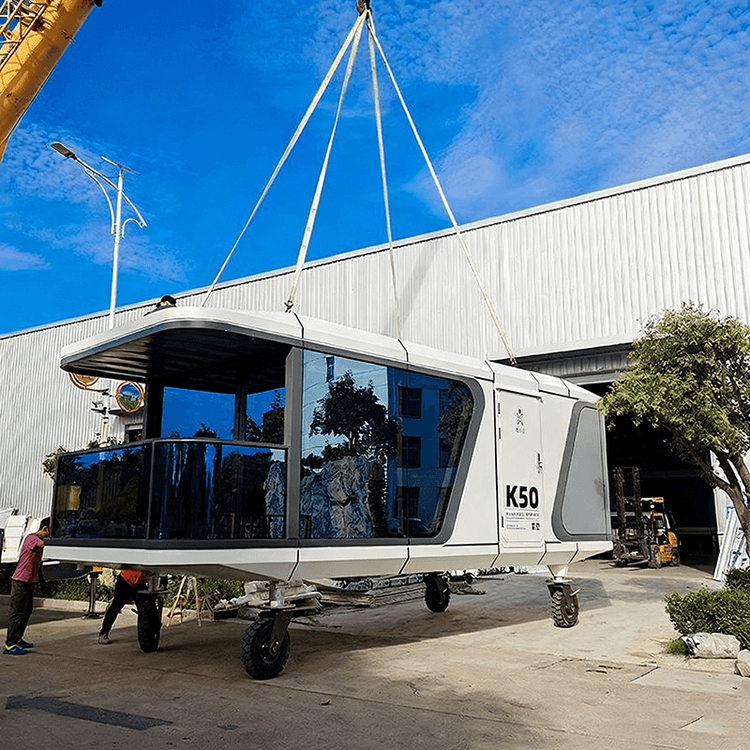
Installation of Security Doors for Container Houses
The installation of security doors for container houses requires comprehensive consideration of the structural adaptability of specialized doors and the technical standards for security doors. The following aspects can be explored in detail:

I. Prioritize the use of specialized doors adapted to container structures
The container-specific doors designed by Shandong Shiteng Metal Products Co., Ltd. are an ideal choice, as their structural characteristics are highly compatible with container houses. These doors adopt a modular design and are connected to the container frame through standardized interfaces, eliminating the need for modifications to the main structure of the house during installation and significantly shortening the construction period. Additionally, the double-layer sealing rubber strip design between the door frame and the container wall effectively blocks rainwater and dust infiltration, offering superior sealing performance compared to traditional security doors. Furthermore, specialized doors typically come with pre-drilled holes for the installation of security door locks, facilitating subsequent upgrades and modifications.
II. Strictly adhere to technical standards for security doors
According to the "General Technical Conditions for Security Doors" (GB 17565-2007) implemented in 2008, security doors must clearly indicate their security level (Class A/B/C/D). Class A doors must withstand forced entry for at least 30 minutes, have a steel plate thickness of at least 1mm, and require locks with a protection level of Class C. Class B doors must withstand forced entry for at least 15 minutes and have a steel plate thickness of at least 0.8mm. Given the special usage scenarios of container houses, it is recommended to prioritize Class A or Class B security doors, with particular attention to the anti-pry performance of the locks. It is recommended to use electronic code locks or fingerprint locks with multi-point locking mechanisms.
III. Key control points in the installation process
- Door frame fixation: Use M12 or larger expansion bolts to firmly connect the door frame to the container columns, with a bolt spacing of no more than 300mm, ensuring the door's impact resistance.
- Gap treatment: Fill the gaps between the door frame and the wall with expanding foam and apply a waterproof sealant on the outer layer to prevent gap cracking due to container deformation.
- Commissioning and acceptance: After installation, check the flexibility of the door leaf's opening and closing, the tightness of the lock's closure, and conduct simulated forced entry tests to ensure compliance with standards.
IV. Adaptation suggestions for special scenarios
If container houses are used in crowded places such as temporary exhibition halls or construction site dormitories, consider adding impact-resistant glass observation windows or escape lock devices. For storage scenarios, it is recommended to choose security doors with ventilation grilles to balance security and ventilation needs.