
Installing Electric Meters in Container Houses
When installing electric meters in container houses, it is necessary to comprehensively consider the power supply form, measurement accuracy, functional requirements, and installation specifications, giving priority to smart meters and ensuring compliance with regulations.
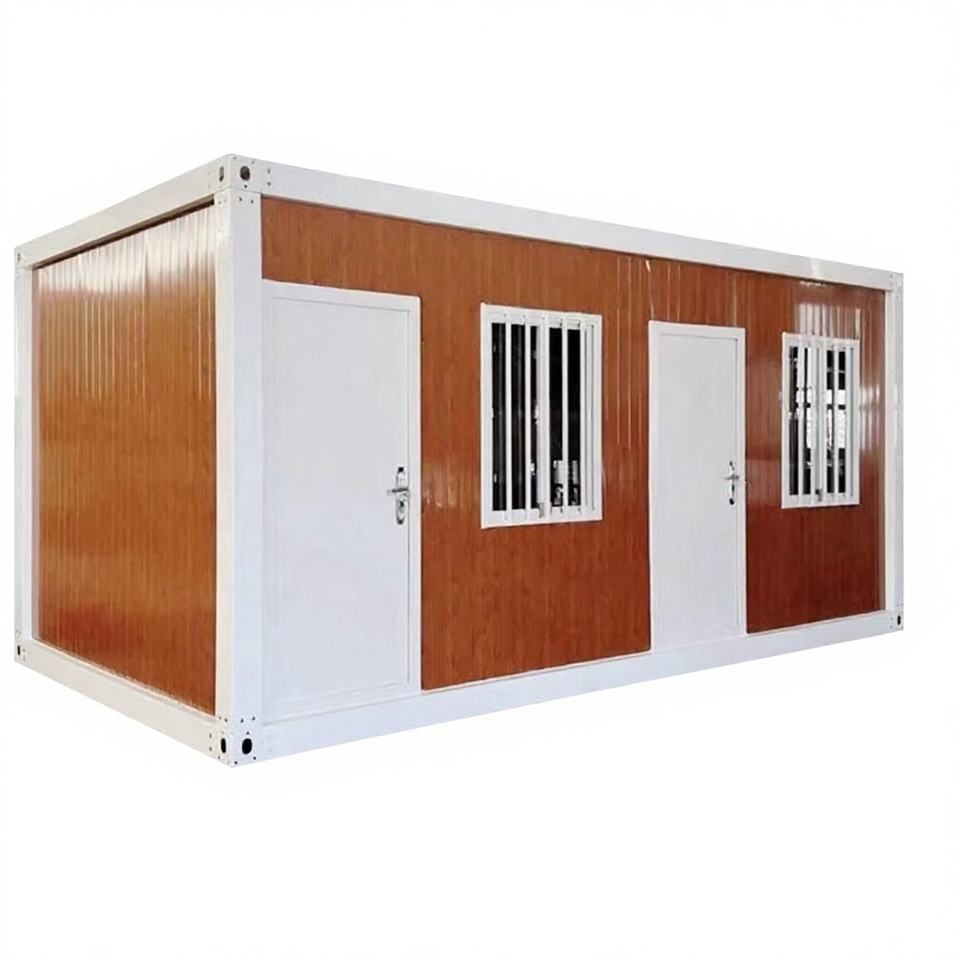
1. Clarify the Power Supply Form and Meter Type
If the container house uses single-phase power (such as for ordinary lighting and household appliances), a single-phase meter should be installed. If it involves three-phase equipment (such as high-power motors or industrial equipment), a three-phase meter is required. For example, factories or large buildings typically use three-phase meters, while ordinary residences or small commercial establishments mostly use single-phase meters.
2. Choose High-Precision Measurement Meters
To ensure fair electricity bill settlement, priority should be given to 0.5S-grade or 0.2S-grade high-precision meters, which can control measurement errors within an extremely low range (for example, the light-load error of a 0.2S-grade meter can be controlled within 0.4%). For industrial and commercial electricity management, reference can be made to the Ankerui DTSD1352 three-phase guide rail meter, which uses a 0.5S-grade measurement chip to meet high-precision requirements.
3. Select Meters Based on Functional Requirements
- Time-of-use pricing requirements: If peak-valley-flat electricity prices need to be implemented, smart meters with time-of-use measurement functions should be selected, such as IoT meters or 485 communication meters that support remote meter reading and data recording.
- Prepaid management requirements: For rental houses or public areas, prepaid meters can be selected, which support mobile phone recharging by tenants and automatic power cutoff when the balance is insufficient, avoiding disputes over unpaid bills.
- Remote monitoring requirements: For industrial and commercial users or park power distribution, it is recommended to choose meters that support the RS485 communication protocol, which can be stably connected to an energy management system for real-time data monitoring and report analysis.
4. Standardize the Installation Process and Precautions
- Installation location: The meter should be installed in a dry, clean, and non-magnetic field area, 1.7 to 2 meters above the ground for easy reading and monitoring; a meter box should be installed in areas prone to mechanical damage.
- Wiring connection: Branch off from the main power line to connect to the main line of the meter, and then connect to the indoor wiring through a circuit breaker, ensuring firm wiring and no exposed parts.
- Capacity matching: The rated current of the meter should be 20% to 120% of the total current of the electrical equipment to avoid overloading or waste. For example, for single-phase 220V lighting installations, it can be calculated at 5 amps per kilowatt, and for three-phase 380V power consumption, it can be calculated at 1.5 to 2 amps per kilovolt.



