
Installation of Charging Piles in Container Houses
In theory, it is feasible to install charging piles in container houses, but it must meet conditions such as electrical safety, spatial planning, heat dissipation, and compliance approvals. The following aspects require specific attention:
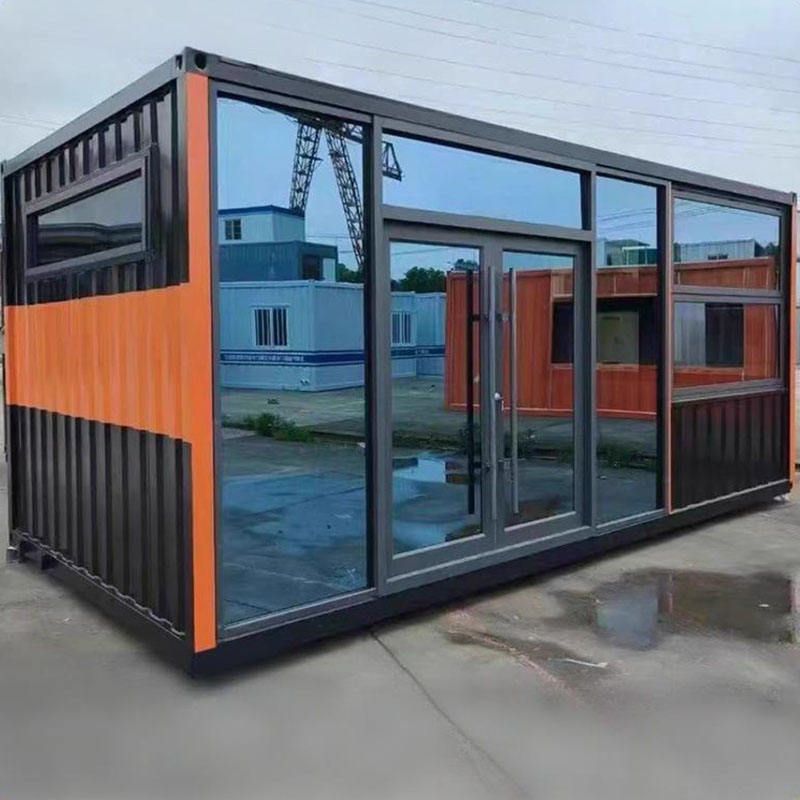
1. Electrical System Modification
Container houses typically do not come with pre-installed electrical systems, necessitating the additional laying of cables and the installation of distribution boxes. Voltage stability, circuit protection, and grounding must comply with national electrical safety standards, such as using flame-retardant cables, installing leakage protection devices, and ensuring a grounding resistance of ≤4Ω. Modifications should be carried out by certified electricians to avoid fire or electric shock risks caused by improper wiring.
2. Spatial Layout Optimization
The internal width of a standard container is only 2.4 meters, requiring careful planning of the charging pile, vehicle charging port, and safety distances. The charging pile itself measures approximately 0.5×0.3 meters, the vehicle charging port requires a 0.8-meter radius of movement, and there should be no obstructions within 1 meter to prevent operational inconvenience or collisions. Additionally, the metal structure of the container may interfere with wireless signals, so it is recommended to prioritize wired communication models of charging piles to ensure stable data transmission.
3. Heat Dissipation and Temperature Monitoring
The internal chip temperature of a charging pile can reach 60°C during continuous operation, and the enclosed environment of a container can exacerbate heat accumulation. Ventilation holes (at least two openings of 0.3m² each) should be added to the top or industrial-grade cooling fans installed to promote air circulation. In summer, if the temperature inside the container exceeds 40°C, charging should be automatically interrupted to prevent equipment damage or fire.
4. Compliance Approvals and Safety Configurations
Mobile container charging facilities may be classified as temporary structures, requiring registration and approval from the local housing and construction department. In terms of safety configurations, a carbon dioxide fire extinguisher of at least 5kg must be equipped, and a 24-hour temperature monitoring system should be installed to provide real-time feedback on the internal environment. The insurance coverage amount is recommended to be no less than 500,000 yuan to address potential liability risks.
5. Professional Assessment and Operation
Given the involvement of multiple fields such as electrical, structural, and fire safety knowledge, it is advisable to consult power companies, fire departments, or professional charging pile installation agencies for on-site inspections and plan assessments to ensure compliance during installation and safe subsequent use.



